
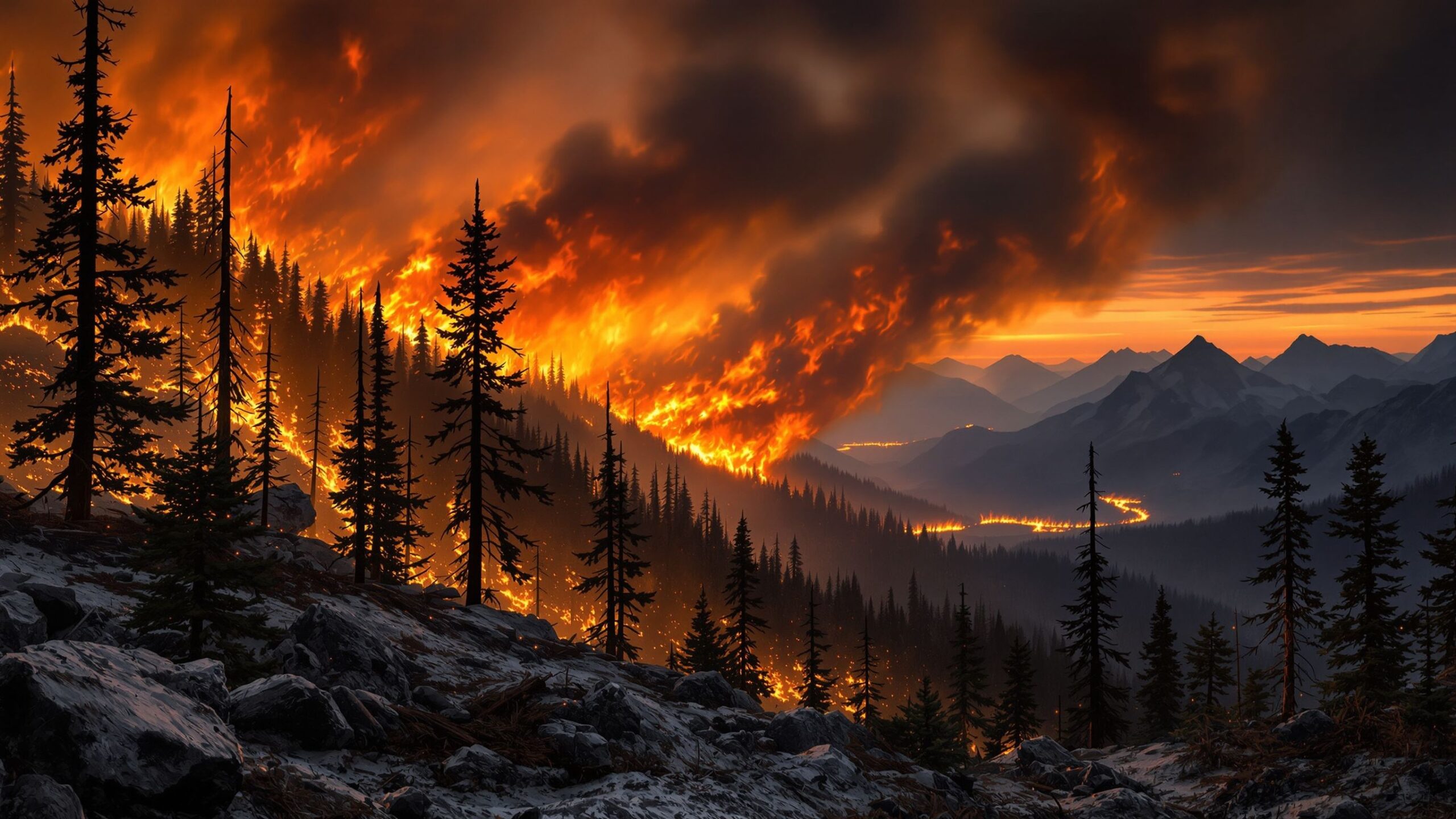
Fire has always been a force of renewal and destruction, but in a warming world, wildfire behavior is shifting into more extreme and unpredictable territory. Welcome to Wildfire Landscapes, where we explore how rising temperatures, prolonged droughts, and changing weather patterns are reshaping forests, grasslands, and communities. Longer fire seasons, faster-spreading blazes, and more intense heat are transforming once-resilient ecosystems into vulnerable terrain. The impacts stretch far beyond the flames — smoke-choked skies, altered habitats, soil damage, and lasting economic and human consequences. In this collection, we examine the science behind wildfire intensification, the environmental conditions fueling larger and more destructive fires, and the strategies communities use to adapt and recover. From scorched wilderness to regeneration and resilience, these stories reveal the complex relationship between climate and fire. Landscapes are burning, recovering, and changing — and understanding this evolving cycle is essential to grasping the future of our environment.
A: In many regions, warming and drying trends are raising fire risk and lengthening seasons.
A: High winds, dry fuels, steep terrain, and unstable atmosphere drive explosive growth.
A: Fine particles travel long distances via atmospheric circulation.
A: Often yes, though recovery speed and composition depend on severity and frequency.
A: A controlled fire used to reduce fuels and restore ecosystem balance.
A: Heat rises, preheating fuels above the flame front.
A: They dry vegetation, lowering ignition thresholds.
A: The water content in vegetation affecting flammability.
A: Through defensible space, fire-resistant materials, and evacuation planning.
A: Earlier warming, hotter summers, and delayed autumn rains extend burn windows.