
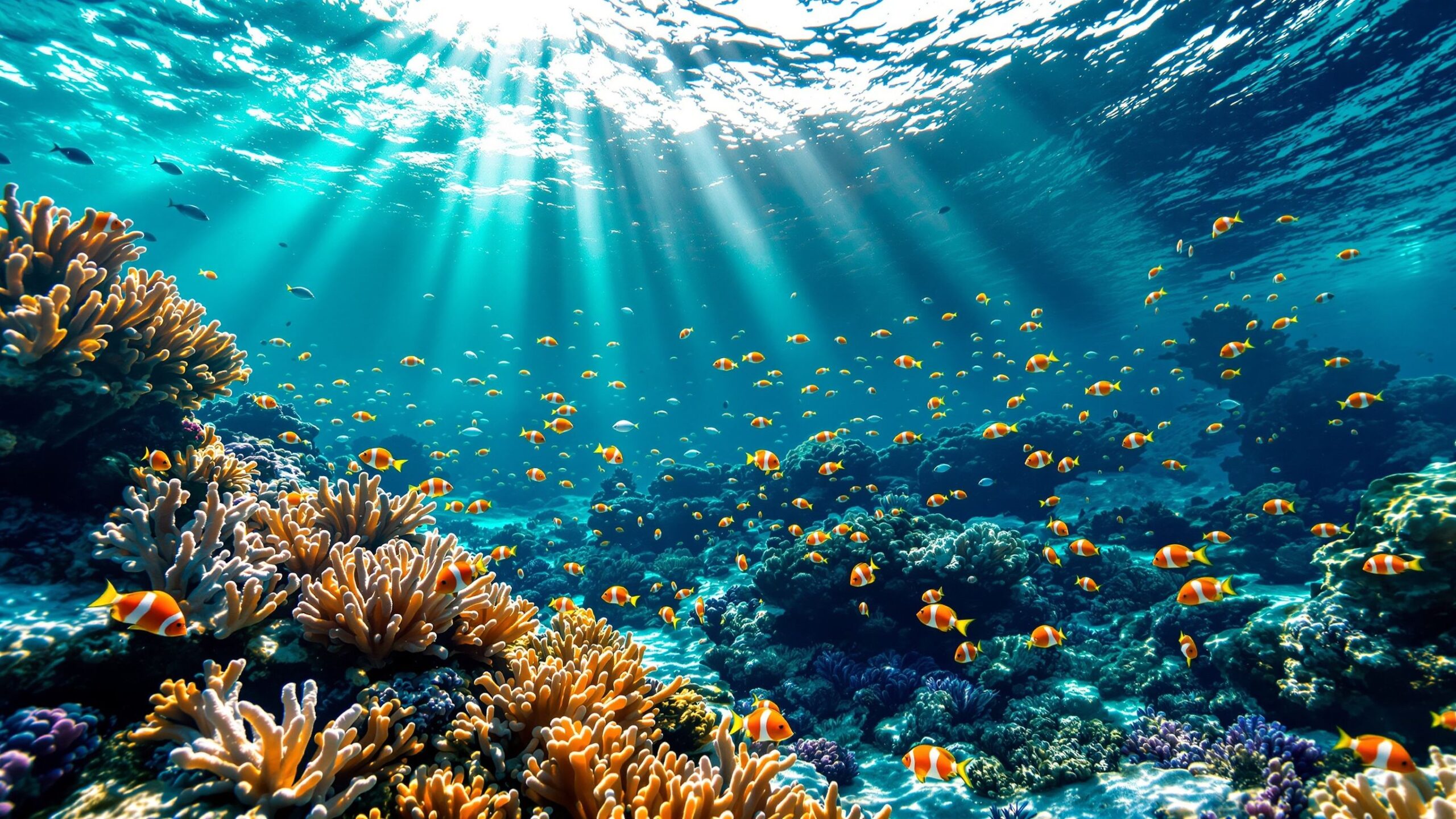
Beneath the rolling surface of the world’s oceans lies a vast, living engine that helps regulate Earth’s climate. Oceans absorb nearly a quarter of the carbon dioxide released into the atmosphere, acting as one of the planet’s most powerful carbon sinks. From drifting phytoplankton to sprawling coral cities like the Great Barrier Reef, marine ecosystems capture carbon, circulate nutrients, and sustain extraordinary biodiversity. Even the deep waters of the Pacific Ocean store immense amounts of carbon for centuries, quietly buffering the impacts of global warming.
Coral reefs, mangroves, and seagrass meadows—often called “blue carbon” ecosystems—are climate champions. They trap carbon in sediments, shield coastlines from storms, and provide habitat for countless species. Yet rising ocean temperatures, acidification, and pollution threaten these delicate systems, weakening their ability to store carbon and support life.
In this section of Climate Streets, dive into the science of blue carbon, explore reef resilience, and uncover how protecting marine ecosystems strengthens climate solutions worldwide. The ocean’s story is one of power, fragility, and possibility—where climate action begins below the waves.
A: Bleaching is loss of symbiotic algae; corals can recover if stress ends quickly, but prolonged stress can kill them.
A: It reduces the building blocks corals need to grow skeletons and can weaken existing structures.
A: Most are tropical, but cold-water corals also form reefs in deep, cooler seas.
A: Sometimes—recovery is more likely with good water quality, healthy fish communities, and fewer repeat heat waves.
A: Pollution and runoff, overfishing, coastal development, and destructive tourism practices.
A: Many do—especially when strongly enforced and designed to protect key habitats and breeding zones.
A: Carbon stored in coastal ecosystems like mangroves, seagrass, and salt marsh soils.
A: Animals can ingest or get entangled; microplastics can move through food webs and stress organisms.
A: Coral cover, diversity, fish biomass, water quality, disease levels, and structural complexity.
A: Cut runoff and plastic use, support reef-safe practices, choose sustainable seafood, and back climate action that reduces warming.