
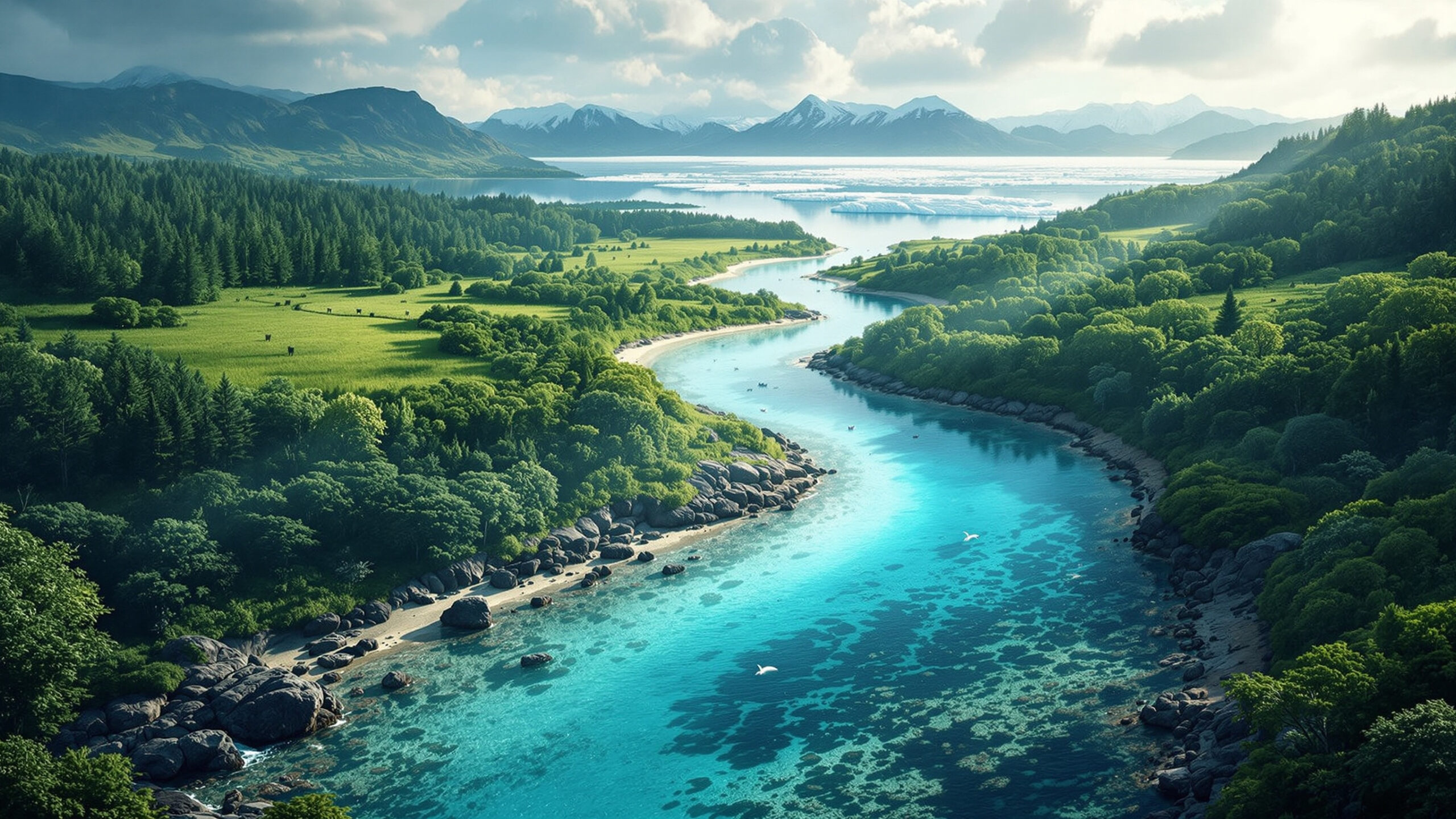

Forests & Carbon Sinks
Forests are the planet’s quiet powerhouses—vast, breathing ecosystems that pull carbon from the air and store it in trunks, roots, soil, and leaf litter. From the towering canopies of the Amazon Rainforest to the misty evergreens of the Pacific Northwest, these living landscapes work around the clock to balance Earth’s climate. Through photosynthesis, trees absorb carbon dioxide and lock it away for decades—or even centuries—making forests one of our most

Oceans, Reefs & Marine Life
Beneath the rolling surface of the world’s oceans lies a vast, living engine that helps regulate Earth’s climate. Oceans absorb nearly a quarter of the carbon dioxide released into the atmosphere, acting as one of the planet’s most powerful carbon sinks. From drifting phytoplankton to sprawling coral cities like the Great Barrier Reef, marine ecosystems capture carbon, circulate nutrients, and sustain extraordinary biodiversity. Even the deep waters of the Pacific

Freshwater Systems
Rivers, lakes, wetlands, and streams are the planet’s lifelines—dynamic freshwater systems that quietly shape climate, ecosystems, and human survival. Though smaller in scale than oceans or forests, freshwater environments play a crucial role in the global carbon cycle. Wetlands, peatlands, and marshes store vast amounts of carbon in waterlogged soils, slowing decomposition and locking away greenhouse gases for centuries. Iconic waterways like the Mississippi River and biodiverse wetlands such as

Polar & Alpine Ecosystems
At the top of the world and high above the tree line, polar and alpine ecosystems stand as some of Earth’s most fragile yet powerful climate regulators. From the vast ice sheets of Antarctica to the frozen tundra of Arctic, these regions store immense amounts of carbon in permafrost, glaciers, and cold soils. In alpine zones like the Himalayas and the Rocky Mountains, snowpack and mountain ecosystems regulate freshwater supplies

Grasslands & Savannahs
Vast, open, and often underestimated, grasslands and savannahs are powerful climate allies hiding in plain sight. Beneath sweeping horizons and waving grasses lies a dense underground network of roots that stores enormous amounts of carbon in soil. Unlike forests, where carbon is held primarily in trunks and branches, grasslands lock it deep below the surface—making these ecosystems remarkably resilient to fire and drought. Iconic regions such as the Serengeti and

Wildlife Migration & Adaptation
Across continents and oceans, wildlife migration is one of nature’s most extraordinary climate survival strategies. From vast herds crossing the Serengeti to monarch butterflies traveling thousands of miles toward the forests of Michoacán, migration allows species to follow food, water, and favorable temperatures. These epic movements are tightly linked to seasonal cycles and climate patterns that have shaped ecosystems for millennia.As global temperatures shift, migration routes are changing. Some species

Species at Risk
Across forests, oceans, wetlands, and grasslands, countless species are standing at the edge of survival. Climate change, habitat destruction, pollution, and overexploitation are accelerating biodiversity loss at an unprecedented pace. From the shrinking sea ice of the Arctic threatening iconic wildlife to fragile reef systems like the Great Barrier Reef facing bleaching events, ecosystems worldwide are under strain.When a species declines, the ripple effects travel far beyond a single population.

Invasive Species Dynamics
In a rapidly changing climate, invasive species are rewriting the rules of ecosystems worldwide. When plants, animals, or microorganisms are introduced—intentionally or accidentally—into regions where they have no natural predators, the ecological balance can shift dramatically. Warmer temperatures and altered rainfall patterns make it easier for non-native species to establish themselves, spread quickly, and outcompete local wildlife. From wetlands in the Everglades to fragile island systems like the Galápagos Islands,

Ecosystem Collapse & Recovery
Ecosystems are intricate living networks—woven from species interactions, climate patterns, soil health, and water cycles. But when pressures intensify beyond a tipping point, collapse can happen faster than expected. Coral reefs bleached by rising temperatures, forests lost to wildfire, wetlands drained for development—each example reveals how delicate balance can unravel. In places like the Great Barrier Reef and the Amazon Rainforest, climate stress, habitat loss, and human activity combine to