
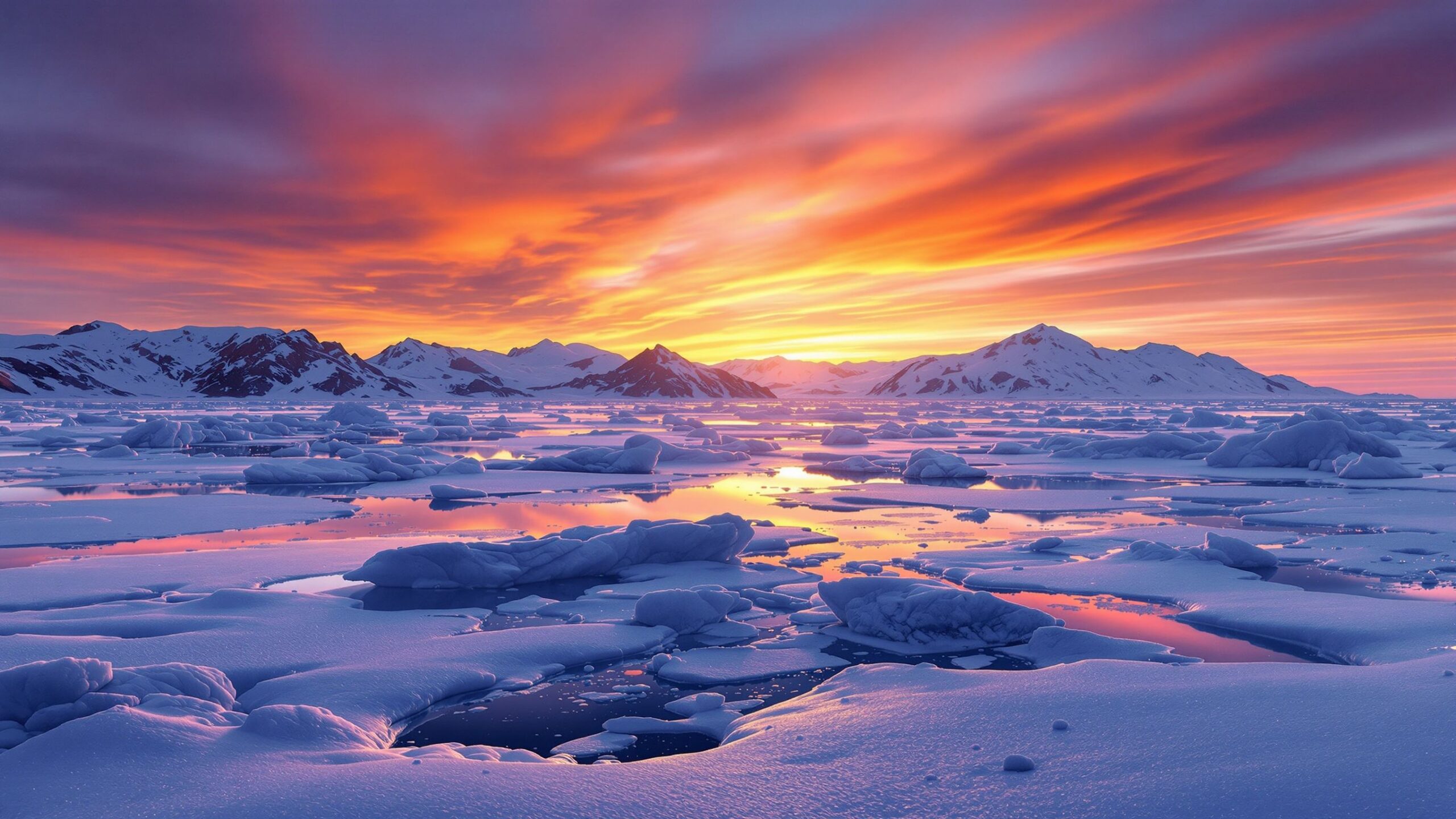
At the top of the world and high above the tree line, polar and alpine ecosystems stand as some of Earth’s most fragile yet powerful climate regulators. From the vast ice sheets of Antarctica to the frozen tundra of Arctic, these regions store immense amounts of carbon in permafrost, glaciers, and cold soils. In alpine zones like the Himalayas and the Rocky Mountains, snowpack and mountain ecosystems regulate freshwater supplies for billions of people downstream.
Permafrost acts like a frozen vault, trapping ancient carbon that has been locked away for thousands of years. But as global temperatures rise, thawing ground releases greenhouse gases, accelerating warming in a powerful feedback loop. Meanwhile, melting glaciers and shrinking snow cover reshape water cycles, sea levels, and biodiversity patterns worldwide.
In this section of Climate Streets, explore how icy landscapes influence global climate systems, why alpine biodiversity matters, and how protecting these extreme environments strengthens planetary resilience. In the coldest corners of Earth, the future of climate balance is being quietly decided.
A: Ice loss reduces reflectivity, causing more solar heat absorption and accelerating warming.
A: It can release greenhouse gases and destabilize soil and infrastructure.
A: They store winter snow and release meltwater gradually through warmer months.
A: They share harsh conditions, but species differ by continent and elevation.
A: It provides hunting platforms and breeding grounds for polar species.
A: It controls the timing and volume of spring runoff.
A: Some migrate upward, but habitat limits reduce long-term options.
A: The accelerated warming of Arctic regions compared to global averages.
A: They reveal past climate conditions and atmospheric composition.
A: Reducing emissions, supporting conservation, and protecting intact habitats.