The idea of a “point of no return” in Earth’s climate is one of the most urgent and debated questions in climate science. It reflects a deep concern that gradual warming could eventually trigger changes so profound that they cannot be reversed, even if human influence stops. Earth’s climate has remarkable resilience, but it is not limitless. Understanding whether such a point exists—and what it really means—requires looking at climate feedbacks, tipping points, and the timescales on which the planet responds to change.
A: No—there are multiple thresholds across different systems, each with its own risks and timelines.
A: Some changes (like partial ice loss) may already be committed, even if future warming slows.
A: Yes—every fraction of a degree avoided lowers the risk of triggering irreversible shifts.
A: Committed means impacts will unfold; irreversible means reversing them would take impractical time or cooling.
A: Often the trigger is subtle, while consequences unfold gradually but relentlessly.
A: Because uncertainty spreads risk across ranges rather than single temperatures.
A: Adaptation reduces harm but usually can’t reverse large Earth-system feedbacks.
A: Past climate shifts show abrupt, self-sustaining changes have happened before.
A: No—outcomes scale with choices made now; delaying increases irreversible risk.
A: Earth’s climate has limits—and staying farther from them keeps more futures open.
What a Climate Point of No Return Really Means
A point of no return does not mean the planet suddenly becomes uninhabitable. Instead, it refers to thresholds beyond which certain parts of the climate system continue changing on their own. Once crossed, these systems gain internal momentum. Even if global temperatures stabilize, the processes set in motion may continue for centuries or longer, locking in long-term consequences such as sea-level rise or ecosystem loss.
Climate Is Not a Single Switch
Earth’s climate is not controlled by one master switch. It is a network of interconnected systems—ice sheets, oceans, forests, atmosphere, and carbon cycles—each with its own thresholds. This means there is no single moment when “everything is lost.” Instead, there are multiple points of no return, each tied to specific components of the climate system.
Tipping Points and Self-Reinforcing Change
Tipping points are central to the idea of irreversibility. They occur when gradual change pushes a system past a critical threshold, activating feedbacks that amplify change rather than slow it. Once these feedbacks dominate, the system shifts rapidly toward a new state. Reversing that shift can be extremely difficult or impossible on human timescales.
Ice Sheets and Long-Term Sea-Level Rise
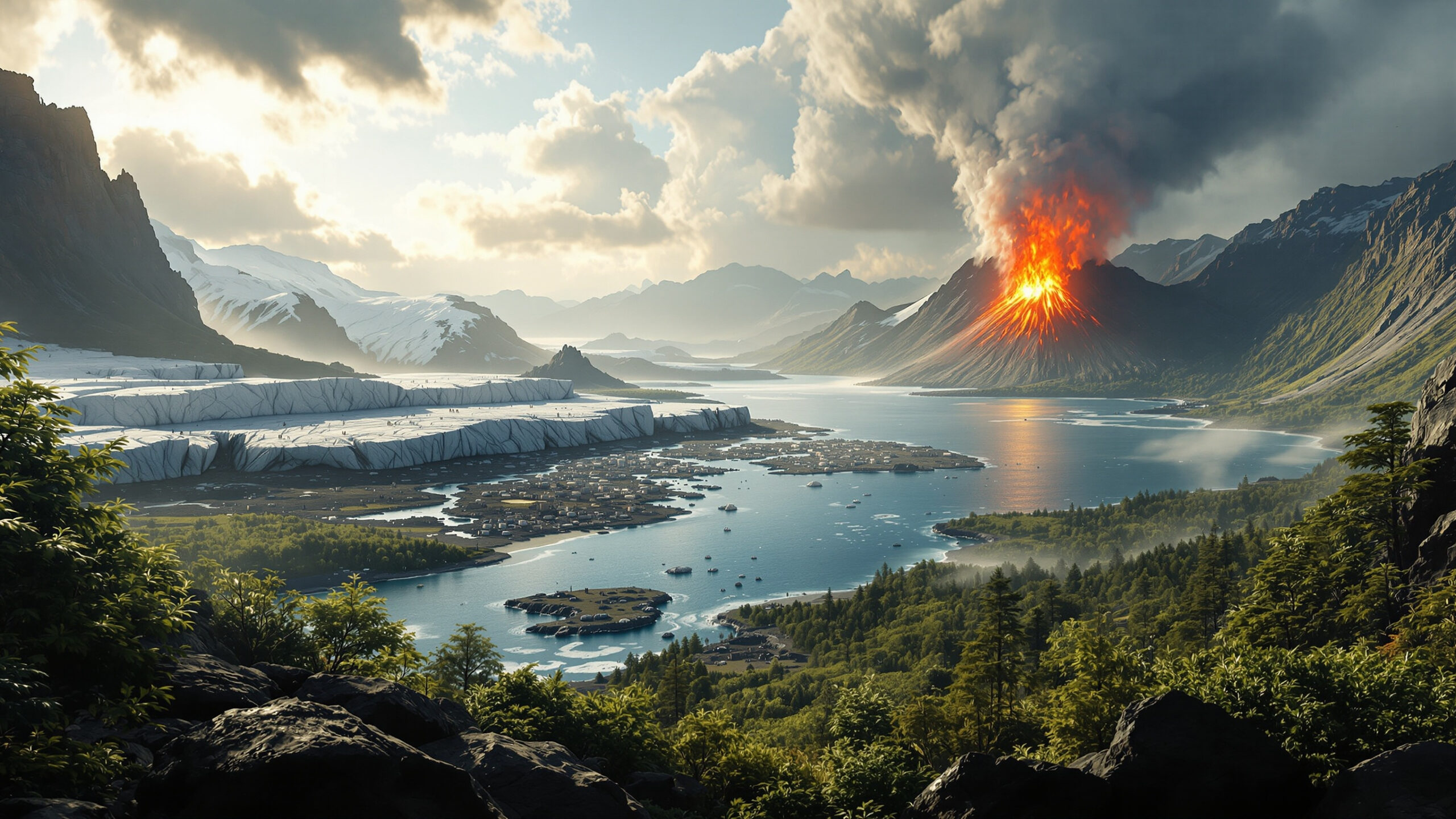
Large ice sheets store enough frozen water to raise global sea levels by many feet. As temperatures rise, surface melting and ice flow accelerate. Beyond certain thresholds, ice sheets can lose stability and retreat rapidly. Even if temperatures later fall, regrowing ice sheets would take thousands of years. This makes ice loss one of the clearest examples of a climate point of no return.
Permafrost and Locked-In Warming
Permafrost contains enormous amounts of frozen carbon. When it thaws, microbes release carbon dioxide and methane, adding heat-trapping gases to the atmosphere. This additional warming causes more thaw, creating a self-sustaining feedback loop. Once widespread permafrost thaw begins, stopping it becomes extremely difficult, even if human emissions are reduced.
Ocean Circulation and Irreversible Shifts
The global ocean circulation helps regulate climate by moving heat around the planet. Freshwater from melting ice can disrupt this circulation by changing ocean density. If circulation weakens past a threshold, regional climates could shift abruptly. Restarting a disrupted circulation system could take centuries, making it another potential point of no return.
Ecosystem Collapse and Recovery Limits
Ecosystems can tolerate stress up to a point. Beyond that, they may collapse into entirely different states. Coral reefs, tropical forests, and polar ecosystems are especially vulnerable. Once lost, these systems may not recover even if climate conditions improve, because the biological and chemical conditions that supported them no longer exist.
The Carbon Cycle as a Climate Accelerator
The carbon cycle can either stabilize or destabilize climate. As warming progresses, natural systems may shift from absorbing carbon to releasing it. Forest dieback, soil carbon loss, and ocean outgassing can all add carbon to the atmosphere. Once this shift occurs at large scales, it amplifies warming and reduces humanity’s ability to control future climate outcomes.
Time Lags and Hidden Commitments
One of the most dangerous aspects of climate change is delay. The climate system responds slowly, especially oceans and ice sheets. This means that today’s emissions commit the planet to future change that has not yet fully appeared. By the time impacts are obvious, some thresholds may already have been crossed.
Lessons from Earth’s Past
Earth’s geological history shows that rapid climate shifts have happened before. Past warming events triggered massive ice loss, ocean acidification, and widespread extinctions. Recovery often took hundreds of thousands to millions of years. These records demonstrate that Earth can enter long-lasting altered states once certain limits are exceeded.
Is There Still a Window of Control?
The existence of points of no return does not mean all outcomes are predetermined. Many thresholds depend on how much and how fast the planet warms. Slowing warming reduces the risk of crossing tipping points and limits how many irreversible changes occur. The difference between 1.5°C, 2°C, and higher levels of warming is not incremental—it can determine which systems remain stable.
Reversibility Versus Timescale
Some climate changes are technically reversible but not within meaningful timeframes. Sea levels might eventually fall if ice sheets regrow, but this would take thousands of years. From a human perspective, such changes are effectively permanent. Understanding timescales is key to interpreting what “no return” truly means.
The Myth of Total Collapse
It is important to distinguish scientific risk from apocalyptic narratives. Earth will not suddenly become lifeless if certain thresholds are crossed. Life will persist, and some regions will remain habitable. The real danger lies in the loss of climate stability that modern civilizations depend on—stable coastlines, predictable rainfall, and manageable extremes.
Why Every Fraction of a Degree Matters
Climate change is not an all-or-nothing problem. Each increment of warming increases the likelihood of irreversible change. Avoiding some tipping points while crossing others still makes a profound difference for future generations. Reducing warming limits damage, even if some change is unavoidable.
Human Choice and Climate Trajectories
Whether Earth reaches specific points of no return depends largely on human actions. Emissions choices, land use decisions, and ecosystem protection all influence how close the climate system comes to critical thresholds. The future is not fixed, but it is constrained by physics and past actions.
A Planet With Memory
Earth’s climate has memory. Ice, oceans, soils, and ecosystems respond slowly and retain the imprint of past conditions. This memory means that change accumulates over time, making delayed action more costly. Once certain processes are underway, they continue long after the original cause has stopped.
The Real Question We Face
The most accurate way to frame the issue is not whether Earth has a single point of no return, but how many irreversible changes we are willing to accept. Some may already be locked in. Others can still be avoided. The choices made in the coming years will determine which future Earth inhabits.
Understanding Risk to Shape the Future
Recognizing the possibility of irreversible climate change is not about despair. It is about clarity. Science shows that while Earth’s climate can cross thresholds, it also shows that rapid action reduces risk. Knowing where the dangers lie allows society to steer away from the most damaging paths.
A Future Still Being Written
Earth’s climate has crossed points of no return before, and life endured—but at great cost. Today, humanity has the rare ability to understand these risks in advance. Whether the climate reaches new irreversible thresholds depends on decisions being made now. The future remains open, but the window to shape it is narrowing.