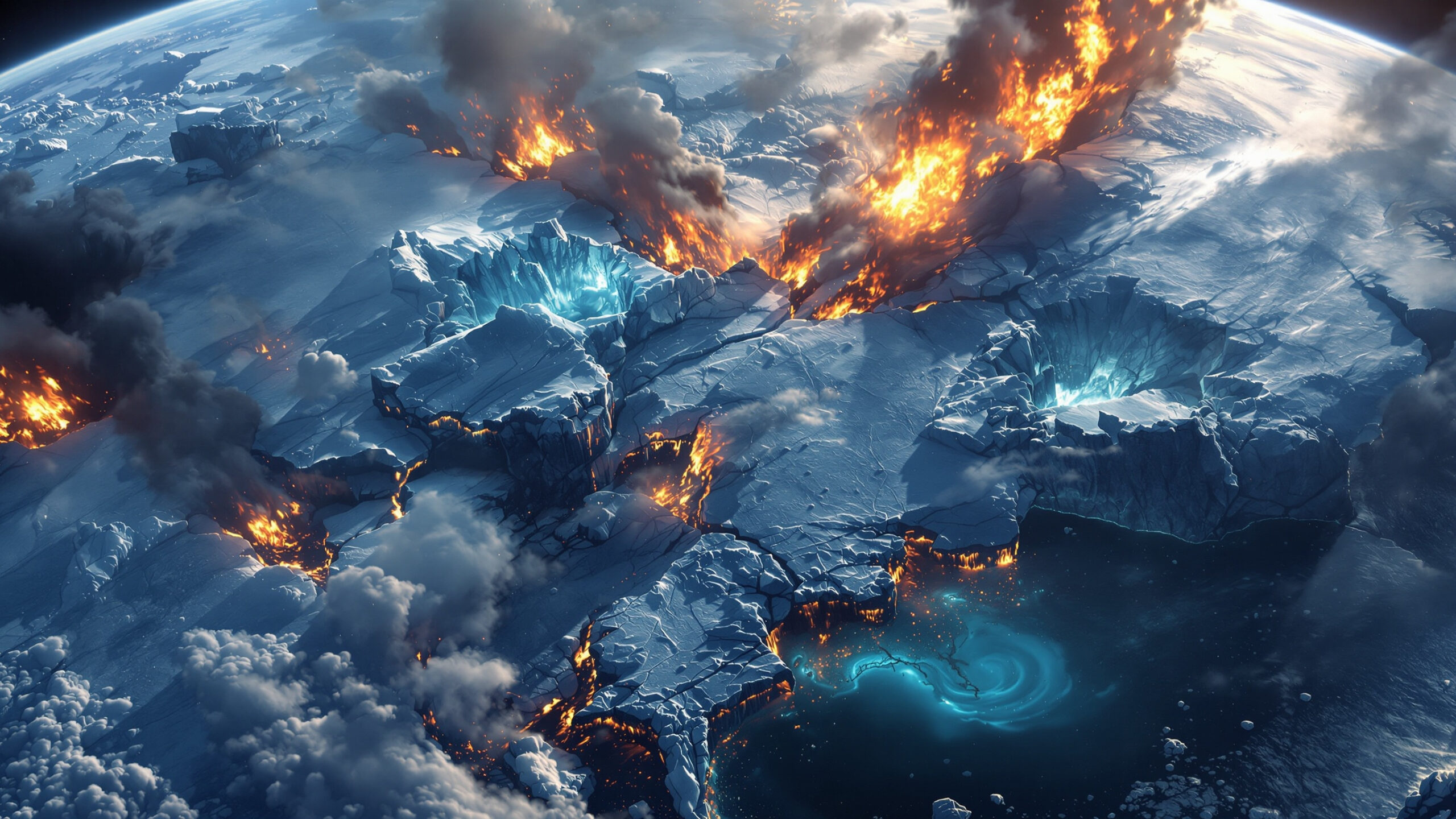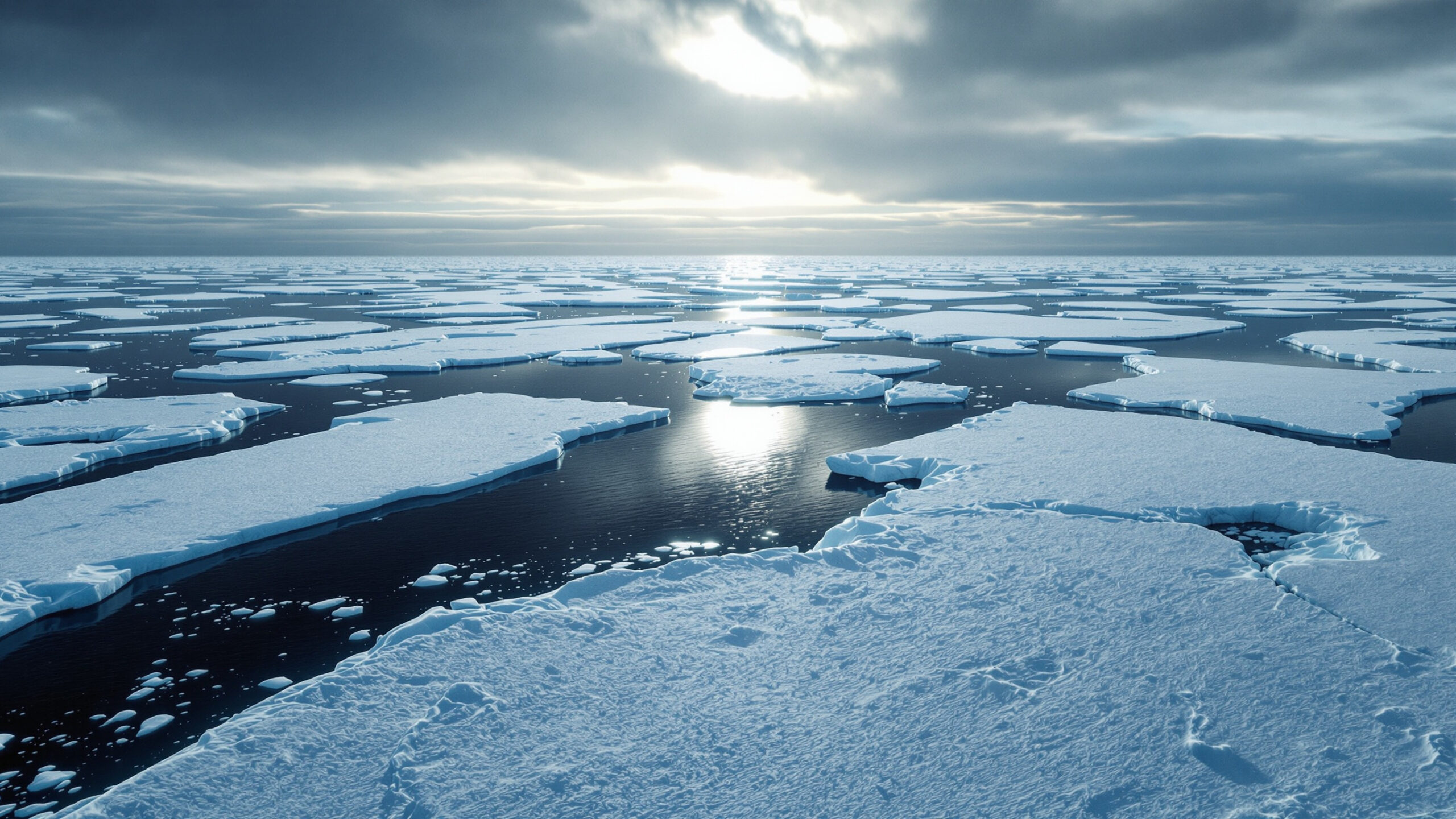
The Arctic may seem distant and isolated, a frozen realm far removed from everyday life. In reality, it is one of the most influential regions on the planet. What happens in the Arctic does not stay in the Arctic. Changes unfolding at the top of the world are reshaping global weather patterns, accelerating sea-level rise, altering ocean circulation, and amplifying climate change worldwide. The Arctic acts as a critical regulator within Earth’s climate system, and its rapid transformation carries consequences that reach every continent.
A: Because Arctic change affects sea level, global heat balance, and can influence weather patterns and ocean circulation.
A: Sea ice melt itself doesn’t raise sea level much (it’s already floating), but Greenland land ice melt does.
A: The Arctic warms faster because melting ice removes reflectivity, exposing darker surfaces that absorb more heat.
A: It adds water to the ocean, raising sea levels and increasing coastal flood risk globally.
A: It may influence large-scale patterns that steer storms, but effects vary—what’s most certain is the rapid regional warming and sea-level contribution.
A: Thaw can release greenhouse gases and damage infrastructure, creating both climate feedbacks and local hazards.
A: It darkens snow and ice, lowering reflectivity and accelerating melt even with small deposits.
A: Wildlife is important, but the Arctic is also about climate regulation, oceans, sea level, and human communities.
A: The Arctic is Earth’s early-warning system—rapid change there signals broader climate risks ahead.
A: Cutting greenhouse gas emissions and reducing soot/black carbon helps slow warming and ice loss.
The Arctic as Earth’s Cooling System
For much of Earth’s history, the Arctic has functioned as a planetary cooling system. Vast expanses of snow and ice reflect a large portion of incoming sunlight back into space, preventing excessive heat absorption. This reflectivity, known as albedo, helps keep global temperatures in balance. As long as Arctic ice remains extensive, it acts as a protective shield that limits warming not just locally, but globally.
Arctic Amplification: Why the Region Is Warming Faster
The Arctic is warming at more than twice the global average, a phenomenon known as Arctic amplification. As ice melts, darker ocean and land surfaces are exposed, absorbing more solar energy. This additional heat accelerates further ice loss, creating a powerful feedback loop. The result is rapid regional warming that destabilizes systems far beyond the polar circle.
Melting Ice and Rising Seas
While much Arctic sea ice floats and does not directly raise sea levels, the Arctic is also home to massive land-based ice, particularly in Greenland. As this ice melts, it adds freshwater to the oceans, contributing to global sea-level rise. Even modest increases in sea level dramatically increase the risk of coastal flooding, erosion, and storm surge impacts for communities around the world.
Freshwater Disruption and Ocean Circulation
The Arctic plays a vital role in driving global ocean circulation. Cold, salty water formed in polar regions sinks and helps power deep ocean currents that redistribute heat across the planet. As ice melts, large amounts of freshwater enter the ocean, reducing salinity and density. This can weaken or disrupt ocean circulation, altering heat transport and potentially triggering abrupt climate shifts far from the Arctic itself.
The Arctic’s Influence on the Jet Stream
The jet stream is a fast-moving ribbon of air that steers weather systems across the Northern Hemisphere. It is driven by the temperature contrast between the cold Arctic and warmer lower latitudes. As the Arctic warms faster than the rest of the planet, this contrast weakens. A weaker jet stream becomes more wavy and sluggish, increasing the likelihood of prolonged heatwaves, cold snaps, heavy rainfall, and droughts in mid-latitude regions.
Extreme Weather Connections
Changes in the Arctic are increasingly linked to extreme weather elsewhere. Persistent weather patterns associated with a disrupted jet stream can cause storms to stall, delivering intense rainfall and flooding. They can also trap heat over regions for extended periods, intensifying heatwaves. These events highlight how Arctic warming can magnify weather extremes thousands of miles away.
Permafrost and the Global Carbon Cycle
Beneath Arctic landscapes lies permafrost—permanently frozen ground that stores vast amounts of carbon. As temperatures rise, permafrost thaws, allowing microbes to decompose organic matter and release carbon dioxide and methane. These greenhouse gases further warm the planet, reinforcing climate change globally. Once widespread thaw begins, this carbon release can continue independently of human emissions.
Methane and Climate Feedbacks
Methane released from thawing permafrost and wetlands is particularly concerning because it is far more effective at trapping heat than carbon dioxide over short timescales. Even relatively small increases can significantly accelerate warming, pushing other climate systems closer to tipping points and amplifying global climate risks.
Arctic Oceans and Heat Absorption
As sea ice retreats, the Arctic Ocean absorbs more heat. Warmer Arctic waters delay ice formation in winter and speed melting in summer. This additional heat does not remain confined to the region. Ocean currents and atmospheric circulation redistribute it, contributing to broader changes in climate patterns across the Northern Hemisphere.
Impacts on Global Ecosystems
The Arctic supports unique ecosystems adapted to cold, stable conditions. As the region warms, species distributions shift, altering food webs and biodiversity. Migratory species that depend on Arctic breeding grounds are affected, influencing ecosystems far beyond the polar regions. These ecological changes ripple through global biological systems.
Human Communities and Indigenous Knowledge
Millions of people live in or depend on Arctic regions, including Indigenous communities whose cultures and livelihoods are closely tied to ice, wildlife, and seasonal patterns. Rapid Arctic change threatens infrastructure, food security, and traditional ways of life. These impacts underscore that Arctic change is not just an environmental issue, but a human one with global ethical dimensions.
Economic and Geopolitical Implications
Melting ice is opening new shipping routes and access to natural resources. While this may appear economically advantageous, it introduces geopolitical tension, environmental risk, and long-term instability. Increased activity in the Arctic also raises the likelihood of ecological damage in a region already under stress, with consequences that extend globally.
Lessons from Earth’s Climate History
Past climate records show that changes in polar regions have often preceded major global climate shifts. Ice loss, freshwater release, and circulation changes have triggered abrupt transitions in Earth’s climate system. These lessons reveal that the Arctic acts as an early warning system for broader planetary change.
Why Arctic Change Affects Everyone
The Arctic matters because it influences how heat, moisture, and energy move around the planet. Its ice regulates temperature, its oceans drive circulation, and its atmosphere shapes weather patterns. When these systems change, the effects propagate outward, touching coastlines, farmlands, cities, and ecosystems worldwide.
Can Arctic Change Be Slowed?
The future of the Arctic depends largely on global actions. Reducing greenhouse gas emissions slows warming and gives Arctic systems more time to adapt. While some ice loss is already unavoidable, limiting further change reduces the risk of triggering irreversible feedbacks that would reshape the global climate.
The Arctic as a Climate Signal
The Arctic is not a remote curiosity—it is a signal. Its rapid transformation reveals how sensitive Earth’s climate system is to added heat. What is happening there today offers a preview of potential changes elsewhere if warming continues unchecked.
A Region That Connects the World
The Arctic connects the planet through atmosphere, oceans, ecosystems, and climate feedbacks. Its fate is inseparable from the rest of the world. Understanding why the Arctic matters clarifies that protecting this region is not about saving ice alone—it is about preserving the stability of Earth’s entire climate system.
The Global Stakes of a Warming Arctic
As the Arctic continues to warm, its influence on the rest of the world will only grow. Sea levels, weather extremes, carbon feedbacks, and climate stability are all tied to what happens at the top of the planet. Recognizing the Arctic’s global role is essential for understanding climate change—and for shaping a future that remains livable for generations to come.