


Earth’s Climate Engine
Earth’s climate is not driven by a single force, but by a vast, interconnected engine that operates across oceans, atmosphere, land, ice, and energy flowing in from the Sun. This climate engine powers everything from daily weather patterns to long-term planetary shifts that unfold over centuries. At its core are dynamic systems—circulating winds, migrating ocean currents, shifting pressure zones, and the constant exchange of heat and moisture—that work together to
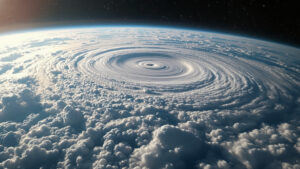
Atmospheric Dynamics
The atmosphere is in constant motion, driven by energy from the Sun and shaped by Earth’s rotation, surface features, and temperature contrasts. Atmospheric dynamics is the study of how air moves—horizontally and vertically—to create winds, storms, pressure systems, and global circulation patterns that influence life everywhere on the planet. Warm air rises, cool air sinks, and the planet’s spin bends these movements into sweeping wind belts and powerful jet streams
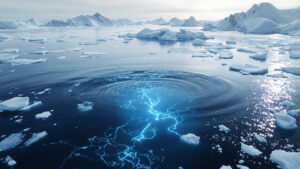
Ocean & Cryosphere Systems
The oceans and the frozen regions of Earth form a powerful, tightly linked system that regulates climate, stores heat, and shapes planetary stability. Ocean currents act as vast conveyors, moving warmth from the equator toward the poles and returning cold, dense water back through the depths, moderating temperatures across continents. At the same time, glaciers, ice sheets, sea ice, and snowfields—collectively known as the cryosphere—reflect sunlight, lock away freshwater, and

Carbon Cycle & Feedback Loops
Carbon moves constantly through Earth’s atmosphere, oceans, land, and living systems, forming a cycle that quietly governs climate stability. Plants draw carbon dioxide from the air, oceans absorb it at the surface, soils and sediments store it for centuries, and natural processes release it back again through respiration, decay, and volcanic activity. This balance has shaped Earth’s climate for millions of years. Feedback loops emerge when changes in one part
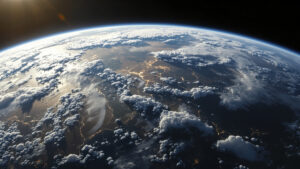
Climate Modeling & Forecasting
Climate modeling and forecasting turn Earth’s complex systems into predictive tools, allowing scientists to explore how the planet responds to natural forces and human influence. Using vast streams of data—from satellites, ocean buoys, weather stations, and ice cores—models simulate interactions between atmosphere, oceans, land, and ice across time scales ranging from days to centuries. These digital Earths help researchers test scenarios, trace cause-and-effect relationships, and anticipate future risks long before

Paleoclimate & Earth History
Earth’s climate story stretches back billions of years, written into ice, rock, fossils, and ocean sediments that act as time capsules of ancient worlds. Paleoclimate science uncovers how temperatures, sea levels, atmospheric composition, and ecosystems have shifted through ice ages, warm periods, mass extinctions, and rapid transitions long before modern instruments existed. Ice cores preserve trapped air from ancient atmospheres, sediments record ocean conditions layer by layer, and fossil evidence

Extreme Weather Mechanics
Extreme weather emerges when Earth’s climate systems align in powerful and sometimes unstable ways. Heat, moisture, atmospheric pressure, and circulation patterns interact to push ordinary weather beyond familiar limits, producing hurricanes, heatwaves, floods, droughts, and severe storms. Warm oceans can supercharge tropical systems, feeding them energy that transforms organized storms into destructive cyclones. In the atmosphere, stalled jet streams and blocking patterns can trap heat or cold over regions for
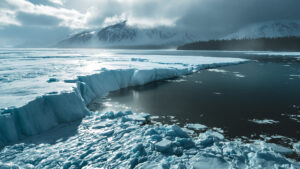
Climate Thresholds & Tipping Points
Earth’s climate does not always change gradually. In some systems, slow pressure can build until a critical threshold is crossed, triggering rapid and sometimes irreversible transformation. These moments—known as climate tipping points—occur when natural balances give way to new states, reshaping ecosystems, circulation patterns, and global stability. Melting ice sheets can accelerate once reflective ice gives way to darker water, absorbing more heat and speeding further loss. Warming soils can
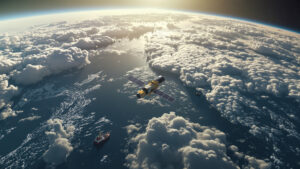
Measurement, Satellites & Sensors
Understanding Earth’s climate begins with observation. Measurement, satellites, and sensors form the eyes and ears of climate science, capturing continuous streams of data from the deepest oceans to the outer edge of the atmosphere. Orbiting satellites track shifting clouds, rising temperatures, melting ice, sea level change, and atmospheric gases with global reach and remarkable precision. On the ground and at sea, weather stations, ocean buoys, radar systems, and airborne instruments