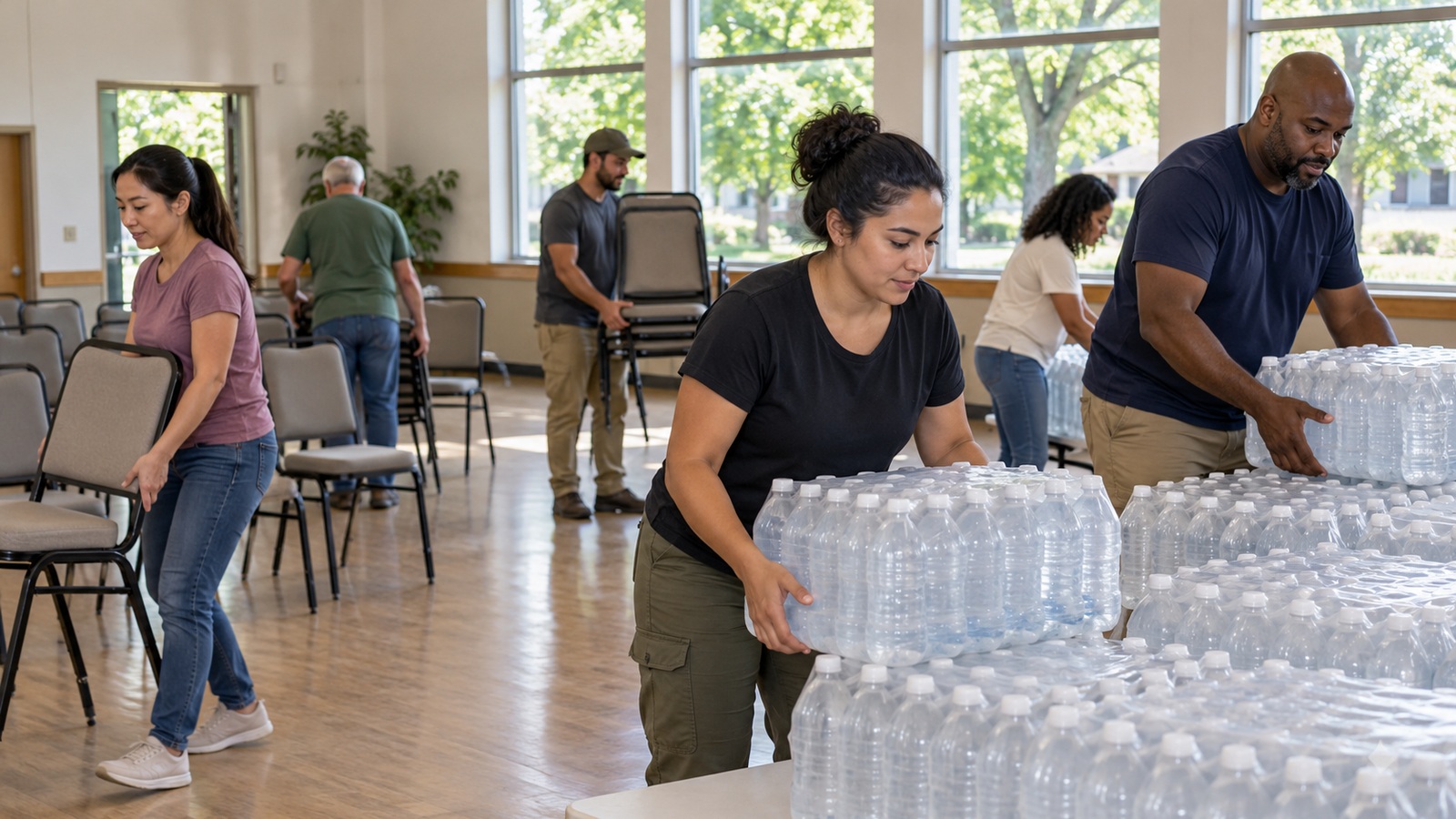
A forecast protects health when people can act on it
A heat alert arrives, a smoky-air forecast changes, or heavy rain threatens essential services. The information can be accurate while a person still lacks transport, a suitable indoor space, reliable care, or someone who can help. Public-health preparedness connects those needs with services before conditions become difficult. Agencies assess hazards and health risks, work with partners to organize protection, communicate available actions, and use experience to improve the next response. Housing, water, transport, schools, and emergency services all influence whether that chain works. Its purpose is to prevent illness across a population and maintain care for people who already depend on it. Reliable preparation is therefore part of ordinary community life as well as disaster response, sustained through accessible services, clear responsibilities, and relationships that continue between emergencies.
A: Identify official information, usable support locations, access arrangements, and the relevant plan for continuing essential needs.
A: Assessment, projections, intervention choices, implementation, and evaluation of climate-health adaptation.
A: No; people need practical ways to act and services that function.
A: They can reveal access barriers and conditions missing from broad assessments.
A: Loss of utilities, staffing, supplies, or access can interrupt operations.
A: Availability can conceal unequal practical access among intended users.
A: It does not establish that messages reached people or reduced exposure.
A: An action suitable for one hazard may conflict with protection from another.
A: Resources, staff, contacts, community needs, and hazard conditions can change.
A: Clear responsibilities, usable services, outcome evidence, and visible correction of gaps.
Before an event, connect the forecast with the support you could use
For a resident, preparedness becomes concrete through a few local arrangements: where official warnings come from, which support locations operate during the hazard, how to reach them, and how essential needs would continue during disruption. A cooling location’s address is only part of its usefulness. Opening hours, accessibility, transport, and whether it remains available overnight can affect the people it is intended to serve. CDC’s heat-health information directs people toward local cooling resources and health departments. The useful preparation is to connect that resource with actual circumstances before an alert makes the need urgent.
Public-health agencies need the same connection at population scale. Their assessment examines where people are exposed, which health conditions matter, and where the ability to protect health is limited. The CDC vulnerability-assessment guide explains how health outcomes, risk factors, adaptive capacity, and geography contribute. An overheated home, outdoor work, and dependence on a disrupted service require different responses. Residents and community organizations can help identify those conditions, while agencies and service providers organize the resources and responsibilities needed to address them. The plan becomes useful when the available action matches the barrier people actually face.
A framework helps agencies move from assessment to implementation
CDC’s Building Resilience Against Climate Effects framework, or BRACE, links assessment of climate impacts and vulnerabilities with projected disease burden, intervention assessment, implementation, and evaluation. An agency can use that sequence to connect a specific health risk with protective services and later improvements. Staffing, funding, data, and partner capacity affect what it can deliver. A plan becomes operational through assigned responsibilities, available resources, and services that function during the hazard. Information gathered afterward can then guide changes before the next event.
Surveillance helps reveal changing exposure and unmet needs
Public-health surveillance involves systematic information used to understand and respond to health conditions. Climate-sensitive work can combine health observations with environmental data and reports from services or communities. The relevant measure depends on the hazard. Heat planning, for example, needs information about exposure and health effects rather than temperature observations alone.
Health records capture only part of the experience during an event. Some affected people do not reach care, while other effects emerge after the most visible disruption. A cancelled journey or an inaccessible building can leave a person outside routine service records. Community observations help reveal those gaps alongside hospital and clinic information. Changes in reporting practices also affect apparent trends, making consistent records useful for understanding whether demand, detection, or both have changed.
Surveillance contributes to protection through an operational response. Rising heat-related visits can prompt review of outreach or service access, while reports of outages can identify people losing their usual protection. Named staff and agreed procedures connect signals with timely decisions. Health information still requires appropriate privacy protections during urgent work. The practical gain comes when an emerging problem reaches someone able to address the exposure, continuity failure, or unmet need behind it. For example, reports that an advertised support location has lost power can prompt a service change and updated public information. The communication and replacement arrangement need to follow together so residents do not make an unusable journey.
Early warning includes responsibilities as well as a message
An early-warning system joins hazard information with an agreed response. A forecast may prompt outreach, service adjustments, staffing changes, or activation of protective spaces. The appropriate trigger and action depend on local conditions and the population being served. A message sent without those arrangements can leave residents aware of danger but unable to reduce exposure. Effective planning identifies who acts, when the action begins, and how the public can use the service. It also considers failures in power, communications, or transport that could undermine the response at the same time the warning is most needed.
Communication needs a feasible next step
Trusted communication explains the relevant risk and the action available in a usable format. Language, disability access, literacy, communication channels, and local trust all influence whether information reaches people effectively. A technically accurate alert can fail if the audience cannot understand it, does not receive it, or has previously found the named service inaccessible. Feedback from residents helps identify those problems before an emergency.
The next step must also be practical. Telling someone to move to a safer environment does not establish that transport exists or that the destination will be open and suitable. Messages should connect with verified service arrangements and reflect current local guidance. The public-health task is partly communicative and partly organizational: make the protective action possible, then communicate it clearly enough that people can use it.
Essential care requires a continuity plan
Health services depend on water, energy, staff, transport, communications, buildings, and supplies. WHO’s framework for climate-resilient and low-carbon health systems addresses the system functions that need strengthening. Continuity planning asks what happens when one or more dependencies fail and how essential care will be maintained. It includes community and home settings as well as major facilities. An installed backup or written agreement is only part of readiness; maintenance, testing, staffing, and realistic access determine whether it works during disruption. Planning also needs to follow people whose ongoing needs continue after the immediate emergency response ends.
Community partners can find barriers a central plan misses
Residents, local organizations, care providers, employers, schools, and other partners see different parts of daily exposure. Their participation can reveal why an intervention that looks adequate on paper is difficult to use. A support space may be far from people who need it, while a transport arrangement may fail to accommodate mobility requirements or care responsibilities. Those details shape actual protection.
Participation is most useful when it influences decisions and receives a response. Collecting concerns without explaining what changed can weaken trust. Agencies can make the process more accountable by identifying how input affected service design, what remains unresolved, and who is responsible for follow-up. The goal is a working relationship that improves preparedness before a crisis and supports adaptation as conditions change.
Equity can be assessed through who actually benefits
Climate-related health protection should be evaluated against the barriers people face. Income, housing, occupational conditions, disability, discrimination, and access to services can influence both exposure and the ability to respond. A broadly available intervention may still be easier to use for people who already have transport, flexible work, or reliable information. Counting availability alone can hide that difference.
A practical equity assessment asks whether the groups facing the greatest relevant risk can access the service during the hours and conditions that matter. It examines costs, physical access, eligibility rules, language, and trust. Measures should reflect the intended beneficiary and hazard. A high attendance total is encouraging only when it is understood alongside who attended, who could not, and whether exposure was reduced.
This approach makes equity part of implementation rather than a separate statement in an introduction. It connects a documented barrier with a specific design choice and a measure of whether that choice helped. It also requires care with data collection: information should be necessary, appropriately protected, and interpreted without stigmatizing communities. The purpose is to improve protection, not to label people as inherently deficient or responsible for conditions they cannot control.
Combined events test whether separate plans fit together
Heat, smoke, flooding, power interruptions, and other disruptions can overlap. A service suitable for one hazard may become harder to use during another. EPA’s guidance on heat and smoke co-exposure illustrates why the conditions need to be considered together. Joint exercises and coordination can reveal conflicts before an event occurs. The test is whether organizations can maintain a coherent protective response under plausible combinations, rather than whether each has a satisfactory plan when considered alone. Clear responsibilities and shared assumptions help prevent gaps at the boundaries between agencies.
After an event, identify which link in protection failed or worked
A public review should follow what happened to people, as well as count what the programme did. An alert may have reached a household while transport remained unavailable; a support space may have opened while its hours left an exposed group without access. These are different failures from a warning that never arrived. Recording the route from information to protection helps distinguish them.
For residents, reporting a concrete barrier can make the next plan more useful: an inaccessible entrance, a cancelled journey, unclear opening information, or a service that could not continue. Agencies then need to connect those observations with exposure and health evidence, including the conditions of the event. A more severe hazard can affect outcomes even when a programme improves. The review should explain what changed, what remained unresolved, and which practical adjustment follows. That turns an emergency’s experience into better preparation rather than another general appeal for awareness.
Preparation is maintained between emergencies
Staff turnover, changing contact information, aging equipment, shifting service hours, and new community needs can make a previously workable plan obsolete. Routine maintenance and review keep arrangements usable. Training and exercises can reveal whether responsibilities are understood and whether a service can operate with the resources actually available. Preparedness is therefore a continuing function rather than a document completed once. The periods between major events are when many practical gaps can be corrected most effectively, before urgent demand and damaged systems make improvement harder.
Public health connects preparation before, during, and after disruption
Before an event, establish usable sources of local information and understand the support and continuity arrangements relevant to your circumstances. During it, updated official guidance and functioning services need to work together: a changed forecast may alter where protection is available or which route remains usable. The details belong to the local situation, and people with continuing care needs should make the relevant plans with their care team and providers. A community response must account for people who cannot independently arrange every part of that chain.
Afterward, the record should show which people reached protection and where the chain broke. Residents’ experience and health-service information can help target improvements in communication, access, staffing, transport, or continuity. Public health is the work connecting those stages across a population. Climate change makes the task more demanding, while dependable local relationships and services make prevention practical. Everyone should be able to understand the support available, and institutions should be able to explain how it will remain useful when difficult conditions arrive.