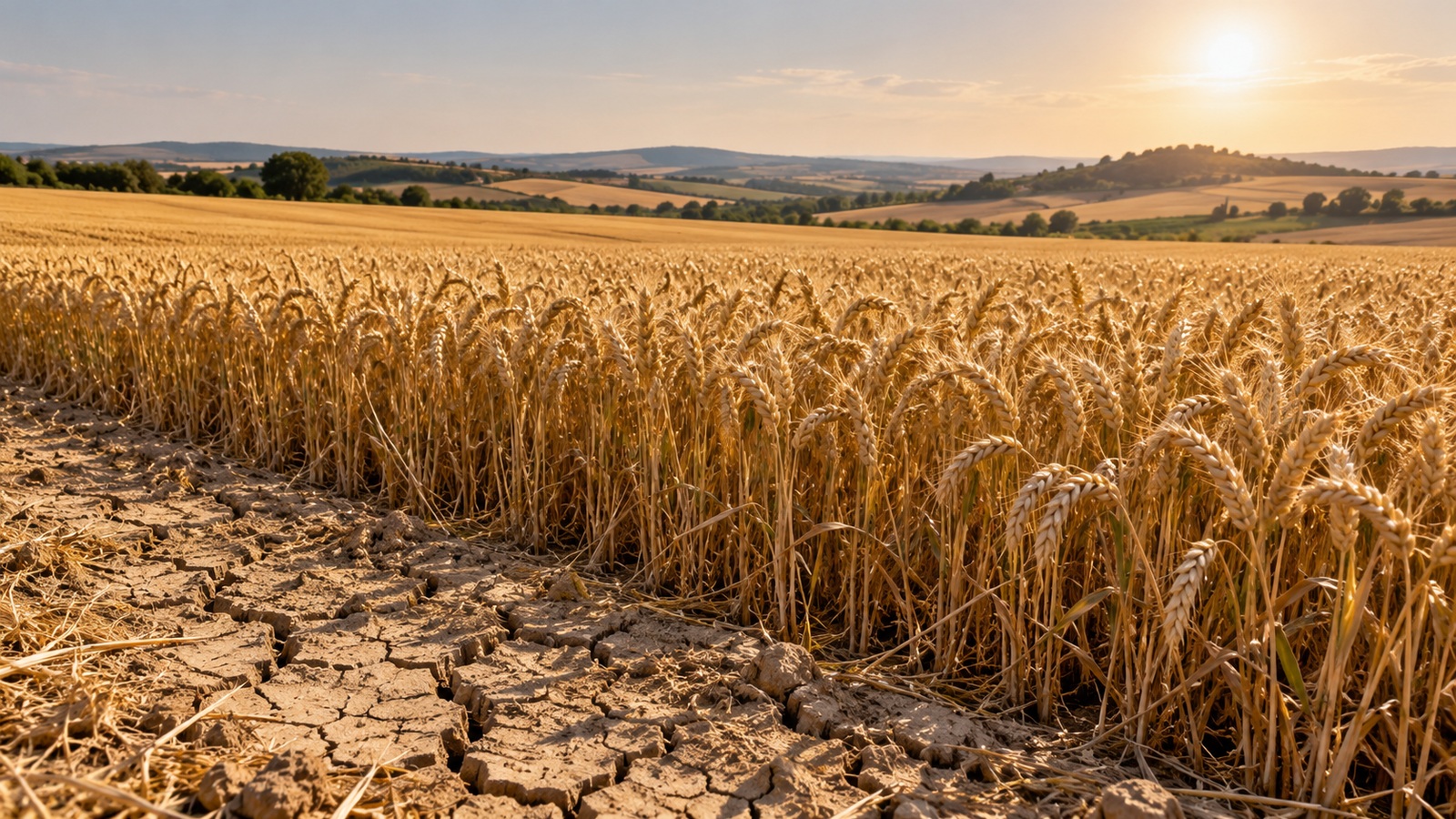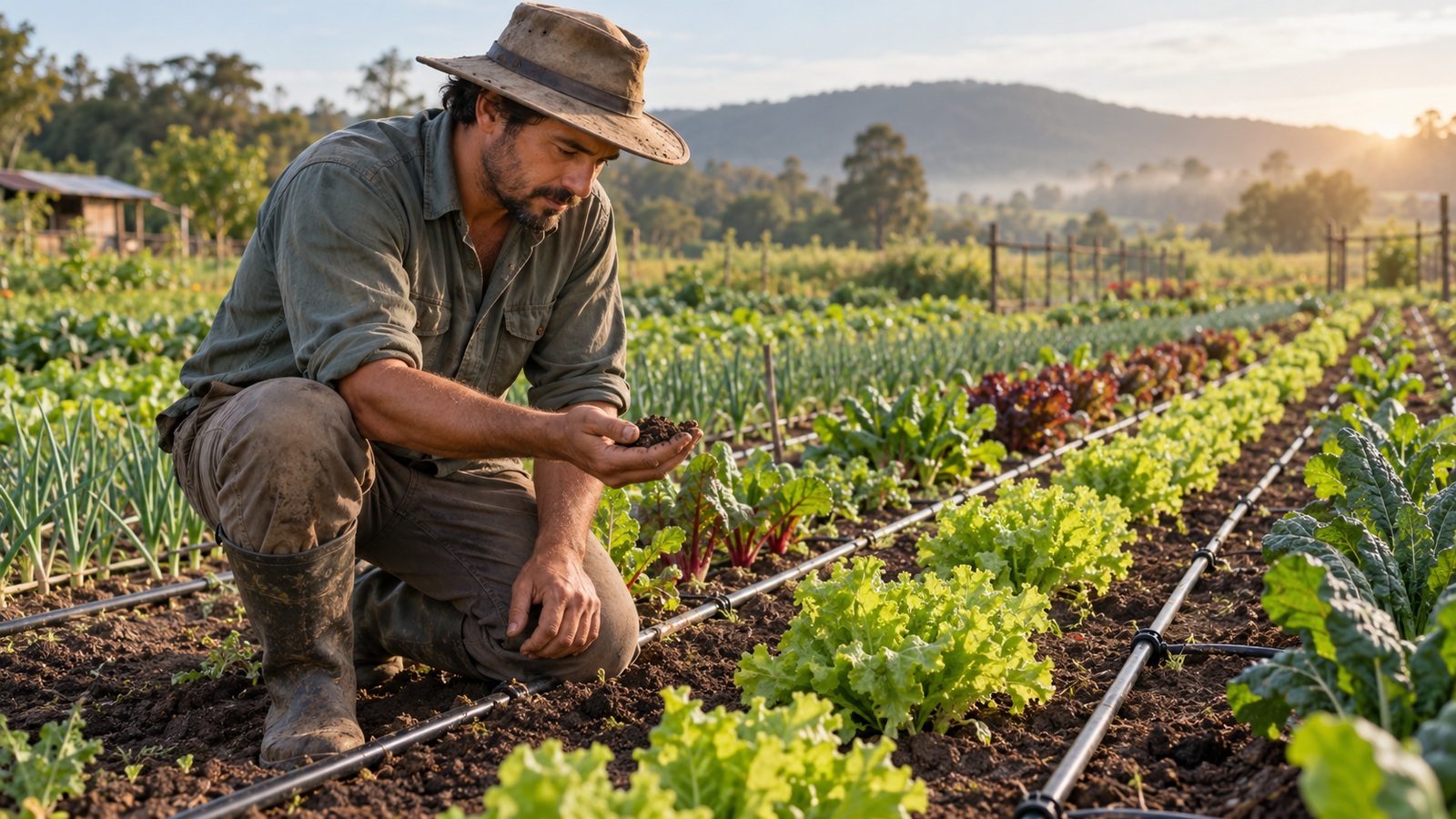
Every adaptation choice has to work on a real farm
Choosing when to plant means more than selecting a favorable day. A farmer needs soil that machinery can enter, seed suited to the season, labor and equipment at the right time, and a reasonable chance that the resulting crop can be sold. Climate change can alter those conditions without removing the need to make decisions before the outcome is known. A forecast may point toward a hotter or drier period while leaving uncertainty about the weather that will affect one field. Meanwhile, a different crop can require unfamiliar equipment, a new buyer, or money the farm cannot readily risk. Understanding what farmers face therefore means looking at adaptation as a series of connected decisions. The practical challenge is to reduce climate exposure while maintaining a viable business, protecting workers and animals, and retaining enough flexibility to respond when the season develops differently from expectations.
A: They may share an irrigation source, a vulnerable road, or an overlapping labor and equipment bottleneck.
A: No; forecasts and climate trends still need local observations and judgment.
A: The wider result depends on allocation and subsequent water use.
A: A trial can reveal performance and requirements while limiting exposure.
A: Yes; markets, quality, costs, equipment, and other requirements also matter.
A: Limited reserves, debt exposure, or uncertain returns can make the risk unacceptable.
A: Not if the enterprises face the same shocks or create unmanageable demands.
A: Animal care, worker protection, and other essential time-sensitive tasks remain necessary.
A: Many water, infrastructure, supply, and market dependencies lie beyond one farm.
A: It links the decision's purpose with actual conditions, costs, and results.
Farm decisions join climate information with local experience
Climate trends, seasonal outlooks, and short-range forecasts answer different questions. A long-term trend can inform investment or crop suitability, while a near-term forecast may guide an immediate operation. Neither replaces field observations and knowledge of local soils, drainage, and management history. Farmers need information suited to the decision’s timescale rather than one general statement that conditions are changing.
The USDA Climate Hubs describe their role in connecting research and practical information with agricultural producers and professionals. Such services can help translate broad evidence into regional decisions. Their usefulness depends on accessibility, local relevance, and the opportunity to discuss trade-offs. Advice is more actionable when it identifies both the expected benefit and the conditions under which the recommendation could fail.
A changing season can rearrange the whole working calendar
Planting, tending, harvesting, storage, and delivery are linked operations. Changing one date can affect machinery demand, labor availability, and the timing of exposure later in the season. A planting adjustment that avoids one hazard may place a sensitive stage near another. The relevant question is therefore the performance of the full production schedule rather than whether an isolated operation can occur earlier. Farms with several crops or enterprises may also face conflicts when different tasks move into the same narrow window. Those practical bottlenecks can make an apparently simple timing adjustment difficult to implement reliably.
Water planning must account for supply as well as demand
A farmer may need water at a time when rainfall is less dependable or evaporative demand is high. Access depends on the source, legal and institutional arrangements, infrastructure, and competing users. An irrigation proposal must be evaluated against those conditions rather than treated as a universal solution. Even where water is physically available, the costs of moving and applying it can influence feasibility.
Efficiency can reduce some waste, but a field-level improvement does not automatically establish a reduction in total demand across a catchment. What happens to saved water and how production changes afterward both matter. A sound plan considers the broader water balance alongside the farm’s immediate need. It also asks how the source and equipment perform during the difficult periods when several users may require water at once.
For rain-fed systems, options can involve soil management, crop choice, timing, and other adjustments suited to the setting. None creates unlimited water. Evaluating them means observing whether they improve establishment, reduce damaging stress, or stabilize output under relevant conditions. The decision needs realistic expectations about which part of the problem can be reduced and which limits remain.
Soil condition influences the available options
Soils influence infiltration, storage, rooting, drainage, and the ability to enter a field with equipment. The USDA agricultural climate resources cover the diversity of systems and management responses. A practice interacts with the soil and rainfall pattern already present. Surface cover can protect against erosion while crop establishment still depends on moisture, temperature, and the available planting window. Heavy machinery entering wet soil can also affect structure and later rooting conditions. Farmers therefore face several connected outcomes: a field that becomes accessible sooner is not necessarily storing more water or losing less soil. Changes in one property can help a particular task while leaving another constraint intact. Field observations through wet, dry, and busy periods reveal how the arrangement performs when the farm actually needs it. A practice that fits one soil can create different demands elsewhere because drainage, texture, and prior management change the conditions it encounters.
Changing a crop can require changing a business
A crop with greater tolerance of a particular stress may be promising, but suitability includes more than survival. The farm needs appropriate seed or planting material, knowledge, equipment, labor, storage, and a market. A new product can also have different quality standards or delivery requirements. These dependencies influence whether a biological opportunity becomes a viable enterprise.
A small trial can limit the financial and operational exposure of a crop change. The farm can follow growth, saleable quality, input costs, and labor while checking whether a buyer accepts the product. Scaling up then changes the demands on equipment, storage, and working time. A successful small area can become difficult across the whole farm if harvesting overlaps another enterprise or the buyer cannot take a larger volume. The transition depends on those business connections as well as the crop’s tolerance of stress. Testing them before expansion preserves more room to revise the choice. A new harvest can also change the timing of income. If payment arrives later than for the previous crop, seed, fuel, and other bills may fall due before the sale. Working capital then becomes another requirement even when the eventual selling price looks attractive.
Livestock care creates obligations that cannot wait for better weather
Animals need appropriate care through heat, water stress, and other difficult conditions. Farmers must consider direct exposure alongside feed, shelter, water, energy, and labor. A protective system has to operate when it is most needed, including during disruptions that affect several inputs together. This makes maintenance and contingency planning central parts of adaptation rather than optional extras. The appropriate arrangement depends on the species and production method, so a successful response in one enterprise cannot simply be assumed suitable elsewhere. Animal welfare and worker protection remain integral to the farm’s viability.
Worker protection depends on how tasks are organized
Heat and other hazards can affect the time and conditions under which people can work safely. Demanding operations may be difficult to reschedule when crops or animals require timely attention. That constraint does not remove the need for protection; it makes advance planning more important. Staffing, equipment, task design, and access to appropriate recovery conditions can influence the available options.
The WHO overview of workplace heat stress emphasizes the combination of work demands, environmental conditions, and worker circumstances. A farm response needs to match those practical conditions. Telling workers to take care is insufficient if schedules, pace, or access to relief make protective choices unrealistic. A workable plan clarifies responsibilities and the response when conditions change.
Financial exposure can constrain otherwise sensible changes
Adaptation can require an upfront investment while benefits depend on future conditions. A farm with limited reserves may find it difficult to risk money on equipment, infrastructure, or a crop transition, even when the expected long-term benefit is positive. Access to finance, technical support, and suitable risk-sharing arrangements can influence what is possible. These constraints should not be mistaken for a lack of awareness or willingness to change.
A decision also needs to consider what happens if the expected benefit is delayed or the season develops differently. Debt commitments and other fixed costs continue even when output disappoints. Evaluating adaptation therefore involves cash flow and downside risk as well as average performance. A technically effective system can still create unacceptable exposure for a household that cannot absorb an unsuccessful transition.
Support programs are more useful when their design reflects those realities. Eligibility, timing, paperwork, matching funds, and the suitability of available advice can affect participation. Counting a program’s total budget does not show whether the farms facing the greatest barriers can use it. Evaluation should follow access, implementation, and outcomes rather than assume that offering assistance guarantees uptake.
Diversification works through the farm calendar, not the crop count
Consider a farm growing winter wheat that adds chickpeas on part of its land. The second crop could create a different planting and harvesting schedule, but it still needs a suitable variety, workable soil, and a buyer accepting its quality. Both crops might depend on one limited irrigation allocation or need harvesting equipment during an overlapping window. Adding a crop changes several linked decisions rather than automatically dividing risk in half. A small trial gives the farm experience with the new calendar, costs, and handling requirements before a larger commitment. Separate records of water use, labor, output, and saleable quality can reveal whether the enterprises buffer one another or compete for the same constrained resources. A crop finishing at a useful time may still need storage the farm does not have. Reliable demand also matters because an unsold crop cannot supply the income expected from diversification. The benefit comes from the way the enterprises fit the working farm, including its busiest weeks and its ability to absorb an unsuccessful season. The same farm can also gain flexibility when tasks genuinely occur at different times. Equipment and labor used outside the old peak may spread work more manageably, provided the new enterprise does not create another conflict later. Diversity becomes an operational benefit through that fit, rather than through the number of crop names alone.
Some choices need coordination beyond the farm boundary
Water systems, roads, extension services, seed supply, processing, and markets connect farms with other institutions and businesses. A farmer can make careful decisions while remaining exposed to failures outside direct control. Regional coordination can address those dependencies and avoid shifting costs or risks onto neighboring users. It is especially relevant where several farms face the same changing resource or infrastructure constraint.
The FAO account of climate-smart agriculture presents an integrated approach to productivity, adaptation, and emissions where feasible. Applying such an approach requires context-specific choices and support rather than a single fixed package. The practical task is to connect farm decisions with the enabling conditions that allow them to work, while evaluating their wider effects on people and resources.
Keep a record that explains the next decision
Field-level learning helps the next decision when records connect a change with the conditions it encountered. For an adjusted planting date, useful observations include soil access, variety, flowering, irrigation, damaging weather, harvest quality, and work displaced elsewhere in the calendar. A good yield can still require costs or labor the business cannot sustain. A difficult season can reveal a bottleneck without establishing that every version of the change must fail. That learning takes place within wider constraints: a broken road, unreliable power, unavailable finance, or a missing buyer can defeat an otherwise workable field choice. Public services and commercial arrangements influence which options become realistic. A farm able to keep producing, protect people and animals, and retain resources for later choices has more capacity to respond when the season develops differently from expectations.