A changing climate affects more than the size of a harvest
A loaf of bread, a carton of milk, and a serving of fish begin in different environments, but each depends on living organisms operating within physical limits. Temperature, water, soil, and ecological relationships influence production before food reaches storage, processing, and transport. Climate change can alter every part of that journey. The result is not a uniform decline in every place or a simple replacement of one growing season with another. Risks differ among crops, animals, fisheries, regions, and the resources producers can use to adapt. A favorable change in one location can coexist with serious losses elsewhere, and a large national harvest can conceal a difficult year for a particular community. Understanding global food production therefore requires tracing biological effects, the timing of damaging events, and the networks that connect local output with the food people can actually obtain.
A: Yes; delayed access, damaged stores, and lost equipment can also disrupt the following production cycle.
A: Yes; water, soils, pests, timing, and infrastructure can constrain the opportunity.
A: A brief event can overlap a particularly sensitive stage of development.
A: No; supply, infrastructure, cost, and competing demands constrain its usefulness.
A: Animals may depend on feed produced in places experiencing different climate pressures.
A: No; access, infrastructure, management, and distance shape the available benefit.
A: Unsuitable storage, damaged transport, or failed cooling can reduce the amount reaching consumers in usable condition.
A: It can, where supply, distribution, policies, and purchasing power support access.
A: Irrigation can buffer rainfall variability while making production more dependent on a water source, energy, and reliable equipment.
A: People's access, use, and stability depend on more than aggregate output.
A damaged rice field can disrupt more than one harvest
Pakistan’s 2022 floods interrupted several parts of food production together. In a January 2023 account, FAO reported an estimated 4.4 million acres of damaged farmland and more than 800,000 livestock lost. Standing crops, animals, equipment, and agricultural land were affected within the disaster. Fields could remain inaccessible after the heaviest rain, while lost animals also removed sources of future production and income. Restoring output required working land, inputs, and services to become available again. The disruption extended beyond the crop that had been growing when flooding began.
Yield measures output per unit of harvested area, while total production also depends on the area harvested. A flooded rice field may lose a crop and remain inaccessible when the next operation is due. Damaged stores can remove food already produced, and livestock losses can reduce income and later output. A household needs adequate food consistently, whether from its own production or purchases. Higher yields on an unaffected field cannot repair lost storage or restore another household’s purchasing power. Recovery can therefore proceed at different speeds across fields, supply routes, and consumers.
Crop responses depend on the plant and the conditions around it
Crops develop through stages with different environmental requirements. Temperature can influence the pace of development, and water conditions affect both growth and the ability to manage heat. The USDA Climate Hubs crop resources emphasize regional differences and the importance of resources such as soil and water. A broad annual average does not capture whether suitable conditions occur at the stage when a crop most needs them.
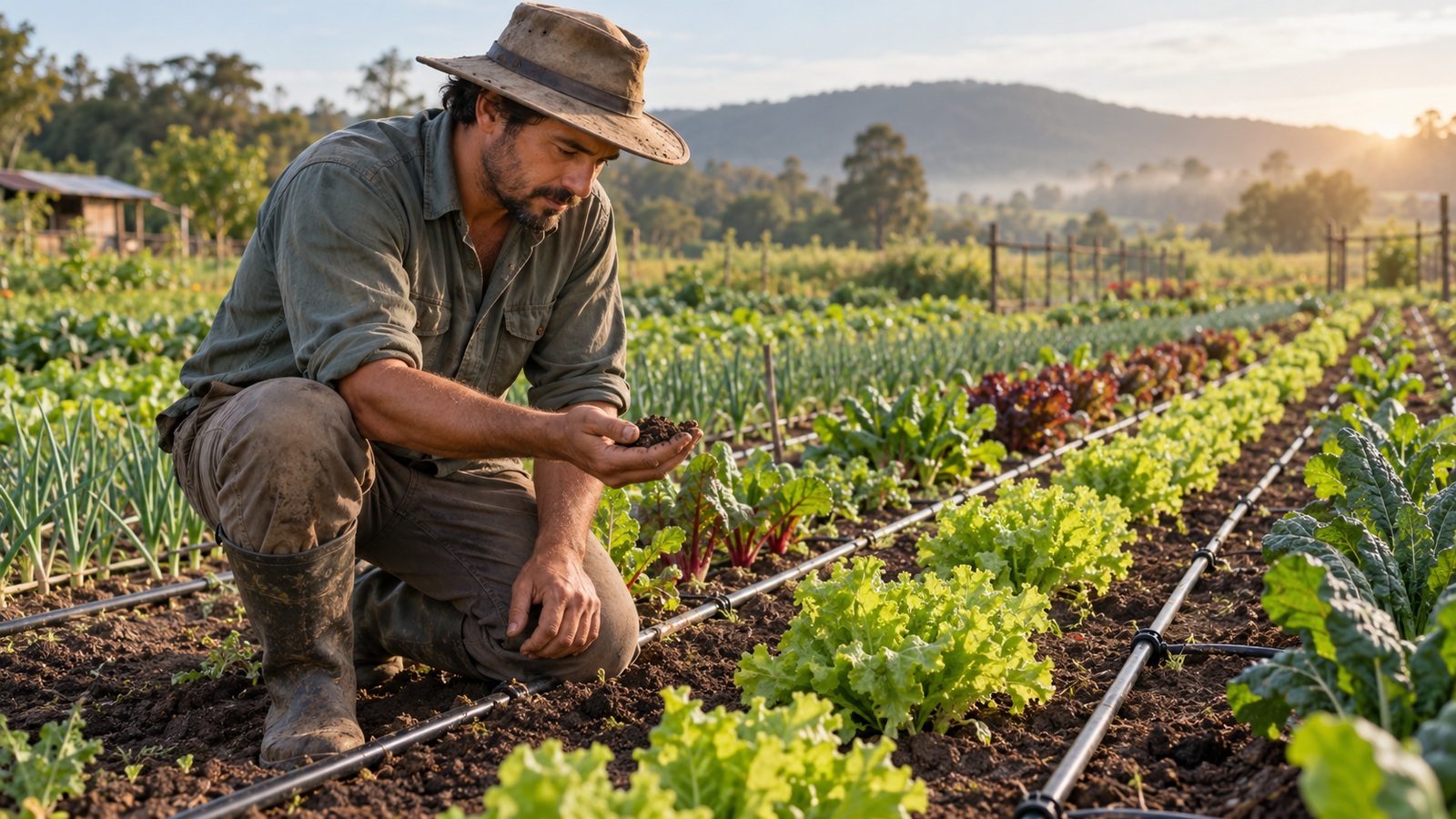
A longer frost-free period can create opportunities in some locations, but it does not guarantee a larger or more reliable harvest. Soil suitability, day length, water availability, pest pressure, and access to infrastructure can limit the benefit. Moving a crop on a map is therefore different from establishing a viable production system. Farmers also need suitable varieties, knowledge, labor, equipment, and markets able to handle the product.
A warming increment can affect the same crop differently near a cool growing margin and in a location already experiencing damaging heat. Farmers in the two places begin with different soils, water supplies, and infrastructure. Adaptation can change the result when suitable varieties, equipment, and knowledge are available. Where access is limited, the crop may remain exposed to losses that another producer can partly avoid. Regional gains can consequently coexist with declining reliability for farms and communities elsewhere.
Short extremes can have consequences that seasonal averages miss
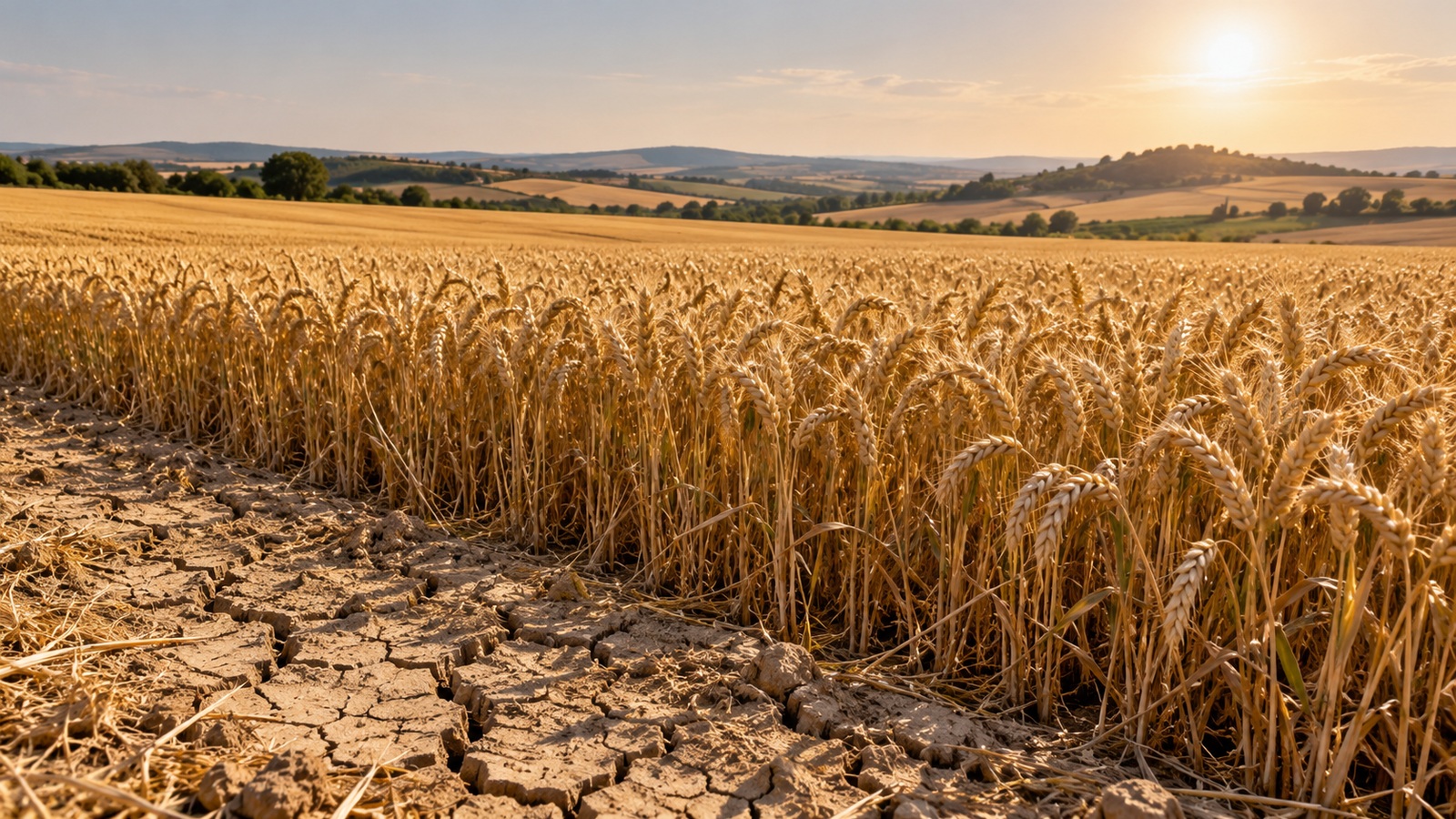
A crop can experience a damaging event during a relatively short developmental window even when the season’s average conditions seem ordinary. Heat, insufficient water, flooding, or other stresses can affect establishment, reproduction, or harvest quality. The 2026 FAO–WMO assessment of extreme heat and agriculture describes heat as a concern across agrifood systems. The key questions include duration, timing, intensity, and the organisms exposed.
A later event acts on the crop’s earlier history. Plants already short of water may have less capacity to manage a hot period, while damaged roots can restrict access to resources after flooding. The growth stage determines which part of production is exposed: establishment affects the stand, flowering affects reproduction, and harvest conditions affect the usable product. A short period can therefore influence the final output far beyond its share of the season’s calendar. Recovery opportunities afterward depend on how much development remains possible.
Water connects the climate signal with the working farm
Agricultural water depends on rainfall, stored water, soils, infrastructure, and decisions about allocation. Changes in rainfall timing or evaporative demand can alter the balance between supply and crop need. Irrigation can buffer some rainfall variability, but it requires an adequate source, suitable infrastructure, and resources to operate it. It cannot be assumed available wherever crops face stress. In some locations, adding irrigation would also transfer pressure to rivers, aquifers, energy systems, or other users. The relevant assessment is therefore the performance of the whole water arrangement, including its reliability during difficult periods, rather than the presence of an irrigation system alone.
Livestock production depends on animals, feed, and care together
Animals experience heat directly while also depending on the quantity and quality of feed and available water. Reproductive performance, health, and production can be affected through several connected pathways. The IPCC assessment of food and ecosystem products describes these pressures across livestock and other production systems. Effects vary among animals, management arrangements, and environments rather than following a single global response.
Shade, cooling, dependable water, and changes to feeding or care can reduce some livestock pressures. Those arrangements need energy, labor, maintenance, and resources when demanding conditions arrive. A farm can have installed equipment yet lose its protection during a power failure or supply interruption. Feed shortages can also originate elsewhere and reach animals through purchases. Several inputs may therefore become difficult together, increasing the burden on farmers trying to maintain both production and animal welfare.
Fisheries face changing habitats rather than fixed production boundaries
Aquatic production is linked to temperature, oxygen, food webs, and habitat conditions. Changes can influence where organisms live, reproduce, and feed, with consequences for the fisheries and communities using them. NOAA Fisheries describes these changing ocean conditions and the information used to understand them. A shifting distribution does not simply transfer an identical fishing opportunity to every neighboring community.
Boats, landing sites, management arrangements, processing facilities, and local knowledge influence whether people can use a changing resource. A stock that becomes more distant can be harder or more costly to reach, while arrival in a new location can create management questions. Production risk therefore involves both the ecological response and the institutions that govern access and sustainability.
Aquaculture depends on the water surrounding cultivated organisms and on the infrastructure supporting them. Temperature, oxygen, disease conditions, and changes in water quality can affect survival and growth. A system using pumps or other equipment also depends on reliable power and maintenance. Different organisms and production methods face different combinations of these pressures. Shelter from one outdoor hazard can add a service dependency elsewhere, connecting aquatic biology with the continued operation of the farm.
Workers and infrastructure are part of the production system
Food production relies on people performing time-sensitive tasks and on services that support those tasks. Extreme conditions can affect safe working time, access to fields or landing sites, and the reliability of power or transport. A crop may be biologically ready while harvesting or movement becomes difficult. These dependencies show why production is not determined by plant or animal physiology alone. Protecting workers and maintaining essential infrastructure can therefore contribute directly to the reliability of output. Planning needs to consider the actual work and service requirements rather than assume that labor and logistics remain unchanged while the climate affects only organisms.
Losses can occur after food leaves the field or water
Storage and transport must maintain conditions suitable for the product. Heat, humidity, damaged infrastructure, or power disruption can complicate that task. The FAO guidance on food transport and storage during disasters identifies the importance of infrastructure and environmental conditions for keeping food safe. A successful harvest can therefore still be followed by losses before the food reaches consumers.
Postharvest protection also affects how widely producers can distribute output and how long food remains available. The relevant resources include reliable services, maintenance, trained staff, and workable alternatives during disruption. Measuring only production at the farm gate misses these later constraints. A whole-system view connects the amount produced with the amount retained in usable condition and the places it can reach.
A local harvest failure reaches consumers through markets
Imagine a wheat-growing district where flooding destroys grain and blocks the road to the nearest mill. Grain from another district can replace some supply only if traders can obtain it, transport it, and pay for the journey. A mill may face interruptions while national stocks remain adequate; a household that lost income may struggle even after shops are restocked. An intact transport route can help buffer the local shortfall by bringing food from elsewhere. Restoring production, moving available food, and protecting purchasing power address different parts of that chain. Trade can spread relief across regions, while dependence on a few routes or suppliers can transmit disruption. Prices also respond to fuel, policy, exchange rates, and other pressures, adding costs beyond the lost crop itself. Perishable foods face a further time limit because replacement supplies must arrive while still usable. Reliable refrigeration and delivery can protect food already produced before damaged fields return to output. The household’s recovery then depends on both the availability of that food and the income or assistance needed to obtain it.
Adaptation can reduce losses while leaving meaningful limits
Producers can adjust varieties, timing, water management, infrastructure, and other practices where suitable options exist. FAO’s climate work covers adaptation across crops, livestock, fisheries, aquaculture, and value chains. The right combination depends on local risks and on the resources needed to implement it. No single technique can be assumed to solve every climate pressure or work equally well for every producer. Access to trusted local advice can help producers assess which of these choices fits their conditions before making a substantial commitment.
Adaptation can create new dependencies as it reduces a particular loss. Irrigation buffers some rainfall variation while requiring water and energy, and cooling protects animals only while the system operates. A change in crop timing can avoid one exposure but move another stage into a difficult period. Costs and access affect which producers can sustain those arrangements. Several seasons can reveal problems absent during an initial favorable year, especially when heat, water shortage, or service failure strains multiple inputs at once.
Dependable food production rests on living organisms, suitable physical conditions, and services that remain usable under stress. Reducing future warming limits the growing scale of pressure, while adaptation addresses current exposures and those still developing. Soil protection, working infrastructure, suitable varieties, and support for producers can preserve different parts of that capacity. Retaining usable food after harvest and maintaining household access carry those gains beyond the farm. Reliability across the whole chain matters to the people who depend on its output.