Fire leaves a landscape with a new arrangement of possibilities
Fire changes more than the plants it consumes. It redistributes sunlight, transforms stored organic material, creates standing dead wood, and rearranges the distances between young growth and older vegetation. Those changes unfold on different schedules: some appear within hours, others shape habitats for decades, and recurring patterns can influence evolution over much longer periods. The result is not a simple cycle in which destruction automatically produces a better landscape. Outcomes depend on what burns, what survives, how patches connect, and whether subsequent conditions allow organisms to use the new opportunities. Fire can maintain an open woodland, create a diverse mosaic, or help push a vulnerable community into a different state. Human stewardship and human disruption are also part of this history. Following the effects from one patch to an entire landscape reveals why fire belongs among nature's major organizing processes, while explaining why changing its timing and character can disturb relationships that once supported resilience.
A: Patch arrangement affects dispersal, refuge access, habitat connections, and the conditions encountered at edges.
A: No. Climate, soils, surviving species, and repeated disturbance can sustain open vegetation or lead to other communities.
A: Ash may supply some available nutrients, while combustion and transport can reduce other stores or soil functions.
A: It can provide nesting and foraging structures, then continue influencing habitat as it decays and falls.
A: A single species' response cannot establish outcomes for organisms needing different habitat conditions.
A: Heritable variation was filtered through survival and reproduction; evolution does not anticipate needs.
A: It provides evidence of burning, not a complete explanation of when or why a particular plant trait evolved.
A: Cultural practices involve place-specific knowledge, governance, resources, and responsibilities held by Indigenous communities.
A: Added fine-fuel connections can favor reburning that disadvantages native plants and reinforces invasion.
A: Changes in cover, soils, water movement, sediment, and retained wood can carry effects into channels and aquatic habitats.
Uneven burning creates a map of different ages
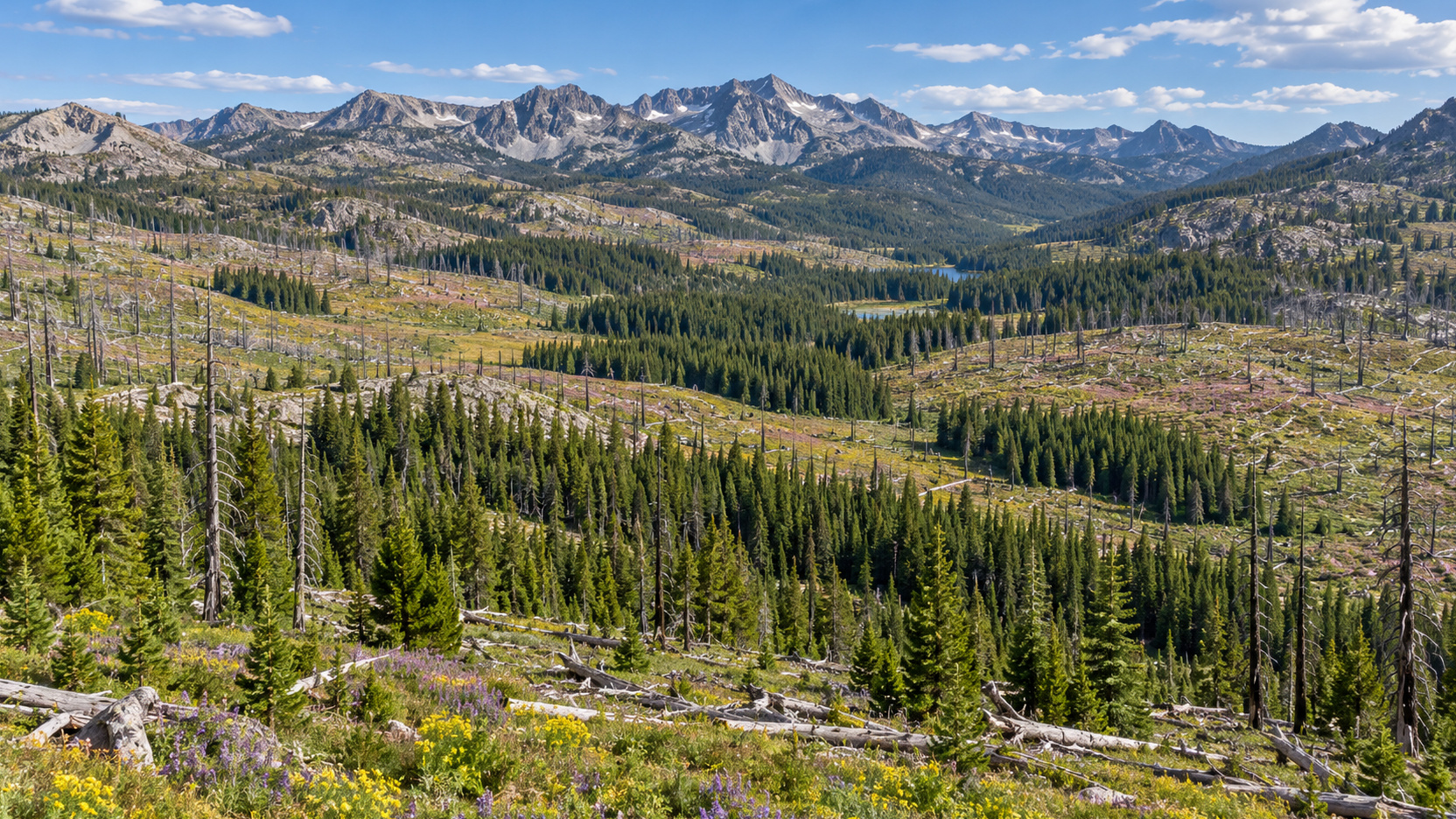
A fire perimeter usually contains a varied interior. Some patches lose most of their canopy, some retain mature vegetation, and others remain unburned. Fuel arrangement, moisture, terrain, and changing weather influence that pattern. The result can be a mosaic of conditions in which young cohorts develop beside older stands and open areas adjoin shaded ones. A landscape therefore carries several ecological ages at once, rather than resetting as a single unit. The National Park Service's Glacier fire-ecology brief describes this mixture of burned and unburned patches as an important part of understanding fire's consequences.
The arrangement matters as much as the list of patch types. Nearby survivors can provide seed sources or shelter, while a large uninterrupted patch can increase the distance a dispersing organism must cross. Edges expose different light and temperature conditions from interiors. A mosaic can offer many habitat opportunities, but its ecological value depends on scale, connectivity, and the requirements of the organisms involved. Small scattered remnants are not automatically equivalent to a substantial intact refuge. Nor is a patchwork guaranteed after every fire: exceptional weather can overwhelm some local differences and produce broad areas of similar effects.
Opening the canopy changes who can compete
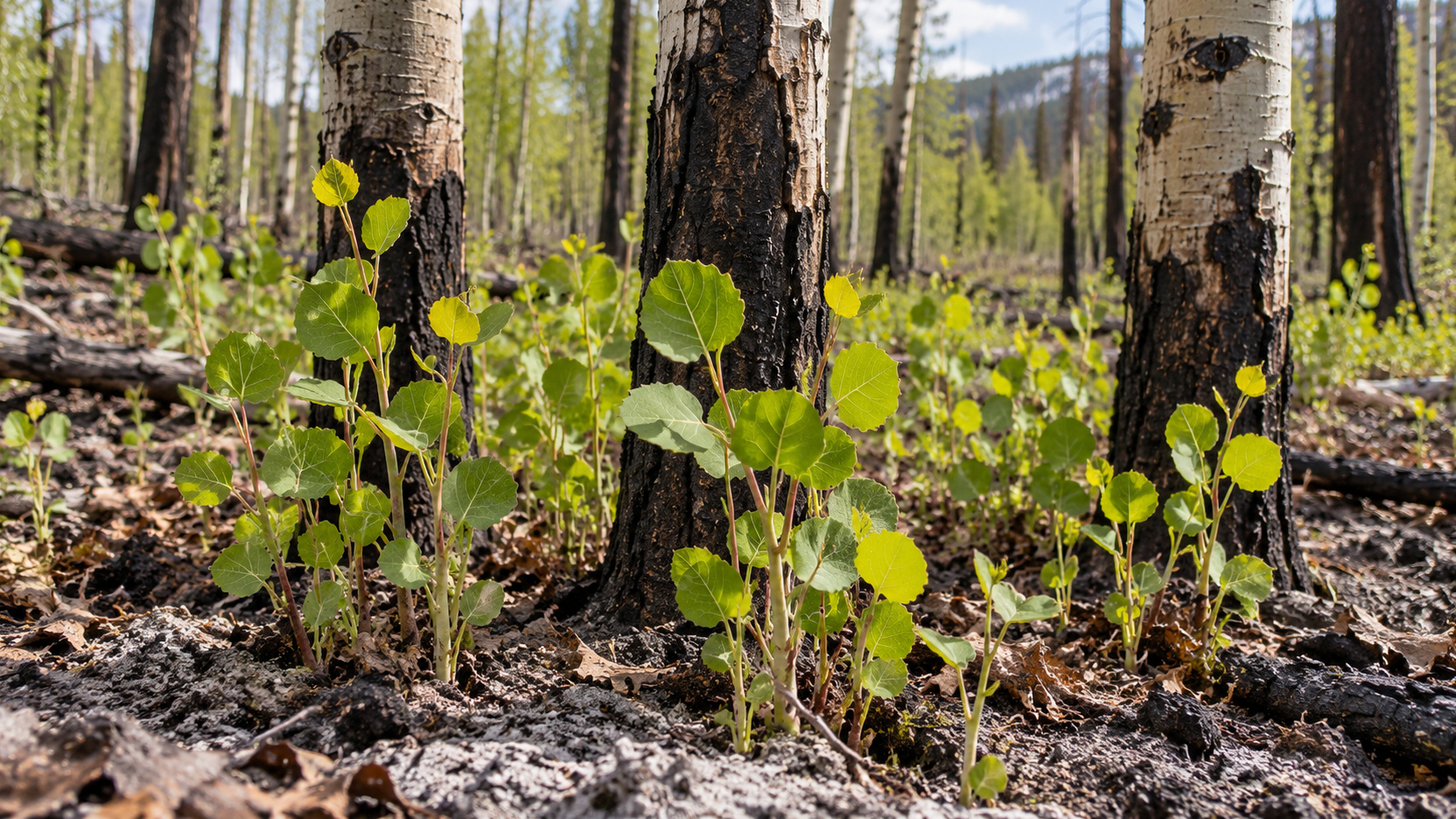
When canopy cover is reduced, more light reaches the ground and plants encounter a different competitive environment. Species that were suppressed under shade may grow more rapidly, while new recruits enter exposed sites. Surviving vegetation and seeds already present influence the response, but so do arriving seeds and the weather during establishment. The resulting community is not assembled from an empty starting point. Its composition reflects what the earlier community left behind and what the new conditions permit. This is one route through which fire changes succession, the development of community composition and structure over time. Early sun-loving plants may give way as taller vegetation grows and shade returns, although the direction and pace vary. Succession should not be imagined as a rigid ladder that every site must climb toward the same final forest. Repeated disturbance, soil conditions, climate, and the identities of the surviving species can sustain an open community or produce a different trajectory altogether. Fire changes the starting conditions of that process without prescribing its complete ending.
Combustion accelerates some nutrient transfers and removes others
Plant tissues and litter hold nutrients that would otherwise return gradually through decomposition. Burning can transform part of that material into ash and more readily available forms, changing the timing of nutrient supply. Some regrowth benefits from that pulse where roots survive and moisture permits uptake. The change is not equivalent to adding a balanced fertilizer. The quantities retained depend on the material burned, the conditions of combustion, and what happens to ash afterward. Rain and wind can transport it away, making a nutrient pulse at one point a movement of material through the landscape rather than a permanent gain for the burned site.
Other nutrients can be lost during heating or carried in smoke, and severe heating can reduce organic matter that supports soil function. Nitrogen loss is a particularly important qualification to the familiar claim that fire enriches soil. The Forest Service's nutrient-cycling work and the NPS Sky Island discussion both describe losses that can accompany burning. A site can consequently show increased availability of some nutrients while losing part of its overall store. Ecological interpretation must distinguish short-term accessibility from long-term retention. Whether plants benefit also depends on adequate water and on their capacity to capture the released material before it leaves the root zone.
The burned forest becomes a different kind of habitat
Standing dead trees, often called snags, can provide nesting or foraging structures long after their crowns disappear. Insects using dead or damaged wood create food opportunities for other organisms. Black-backed woodpeckers are a well-studied example of a species associated with recently burned forest habitat, although habitat use depends on the retained structures and surrounding landscape. A dead tree is therefore not ecologically empty. Its value changes as bark loosens, wood decays, and the trunk eventually falls. Removing it can alter habitat even when no living foliage remains.
Fallen wood performs other roles. It creates cover close to the ground, influences the movement of sediment and water, and gradually returns organic material through decomposition. In streams, retained wood can affect channel structure and aquatic habitat. These functions develop over time, so the consequences of a fire continue as damaged trees fall and are redistributed. Decisions about retaining or removing dead wood must also consider safety and particular management objectives. A tree threatening a road differs from one serving habitat functions in an undeveloped interior. Ecological importance does not erase a hazard, but a hazard assessment should not define every dead tree as useless material.
Habitat gains for some species can coincide with losses for others. Organisms requiring dense mature canopy may lose suitable conditions, while those using open vegetation or dead wood gain them. This turnover is why biodiversity cannot be inferred from the response of one conspicuous species. At the landscape scale, a mixture of habitat stages may support a broader range of organisms than a uniform condition, provided critical habitats remain sufficiently connected and extensive. Within a particular patch, however, the transition can be abrupt. Fire shapes nature partly by redistributing ecological opportunities rather than improving conditions equally for every species.
Recurrent fire can keep open communities open
In some meadows, grasslands, and oak-dominated open woodlands, repeated burning limits the establishment of woody plants that would otherwise change shading and competition. Fire can thus help maintain a community rather than simply initiate replacement of one by another. The effect depends on the susceptibility of young plants and the timing of disturbance, alongside grazing, soil moisture, and other influences. An absence of fire can allow vegetation structure to change where recurrent burning was an important process. Yet the reverse rule, that all open vegetation should receive frequent fire, is not justified. Some shrub communities recover slowly or rely on seed production before another event. A practice that maintains one open ecosystem can undermine another. The useful objective is to retain an appropriate range of conditions for the community being managed, not to maximize openness or minimize tree cover everywhere. This perspective turns fire from a universal cleaning tool into an ecosystem-specific influence on competition and structure.
Over generations, fire helps shape life histories
Evolution operates when heritable differences affect survival and reproduction across generations. Recurrent fire can contribute to that selection by favoring traits compatible with particular disturbance patterns. Protected regenerative tissues, seed-storage strategies, and timing of reproduction can influence which plants leave descendants. The process has no foresight: organisms do not acquire a feature because they decide they will need it. A trait becomes common through the consequences of inherited variation under the conditions encountered. Features useful during fire may also serve other functions, so finding a fire-tolerant trait does not establish that fire was its sole evolutionary cause.
Researchers combine phylogenetic analyses, anatomy, fossils, and ecological observations to investigate these histories. Studies of Cape plants and Australian eucalypts provide examples of reconstructing when fire-associated strategies arose. Their findings require careful interpretation because evidence of ancient fire and evidence of a particular adaptation are not identical. A charcoal deposit shows burning, while evolutionary claims require additional relationships among traits, lineages, and environments. Nor does an evolutionary history guarantee protection from modern change. A life history shaped by one range of fire intervals may be poorly matched to a new pattern that compresses recovery time or combines fire with unfamiliar drought conditions.
Cultural fire has long influenced supposedly untouched places
Some landscapes described as natural have also been shaped by generations of Indigenous stewardship. Cultural burning can support food resources, useful plants, access, habitat, and other responsibilities embedded in relationships with particular places. Its objectives, knowledge, and governance are not reducible to a generic fuel-reduction technique. The National Park Service documents collaborative work with Tribes to restore burning in locations including Yosemite and Apostle Islands. Recognizing that history changes the assumption that the only human influence on fire is recent destruction or suppression. People have also deliberately maintained ecological and cultural conditions through fire. Appropriate partnerships require the knowledge holders' authority and involvement rather than treating their practices as an interchangeable recipe. The relevant distinction is not simply human fire versus natural fire. It concerns how burning is timed, governed, and connected to local ecological relationships and community goals.
A new disturbance pattern can reorganize the whole system
Fire's organizing role can become destabilizing when the pattern changes beyond the capacity of organisms or soils to recover. A large severe patch can remove seed sources, repeated burning can interrupt reproduction, and unfavorable postfire weather can prevent establishment. These processes interact rather than producing a single standard outcome. A community may develop into different vegetation because the previous dominant plants cannot return under the new conditions. That transition can alter shade, water use, habitat, and future flammability, changing the setting in which the next fire occurs.
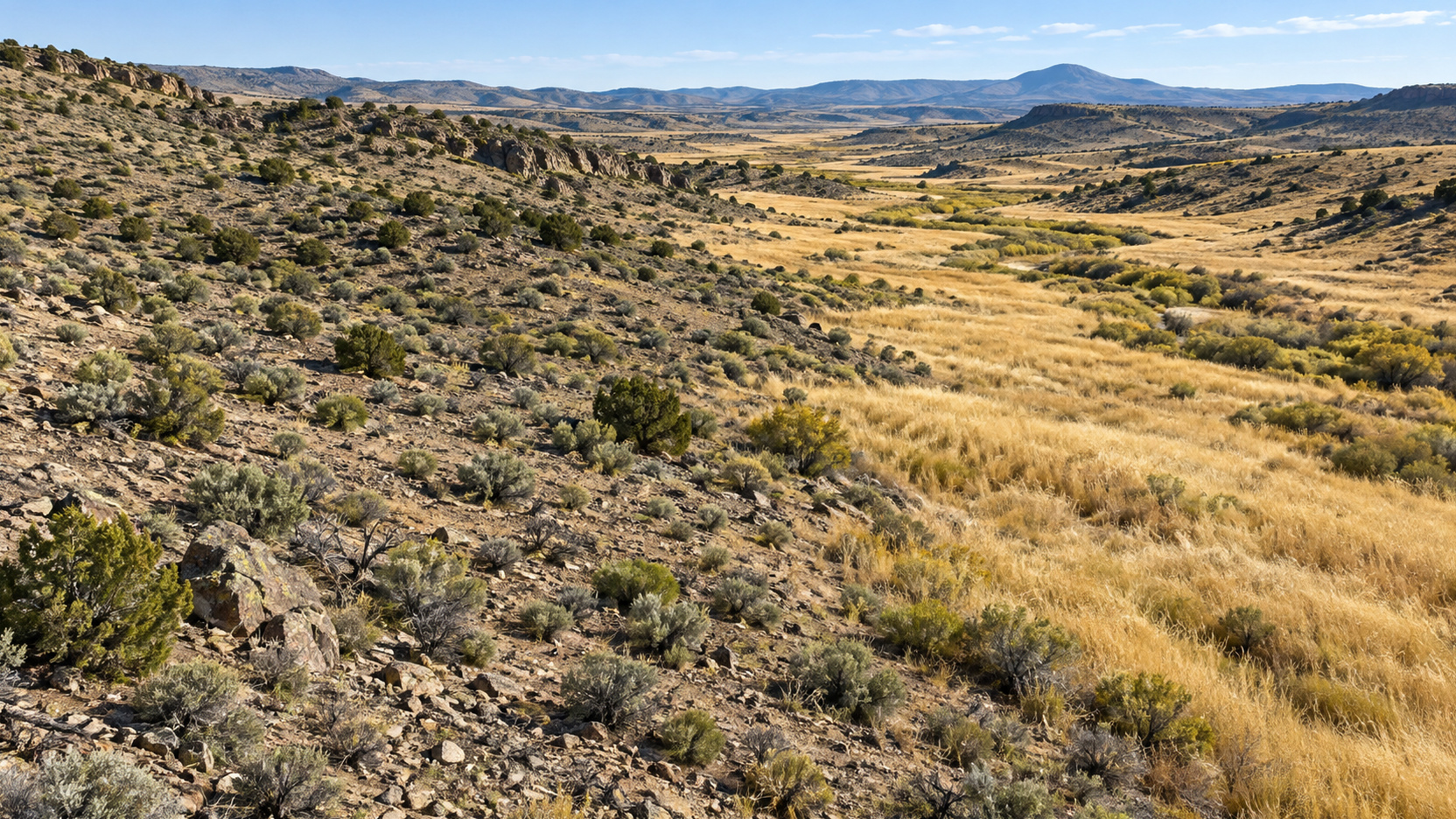
Invasive annual grasses illustrate a reinforcing pathway in some sagebrush systems. They can add connected fine fuels, promote more frequent burning, and benefit where native shrubs fail to recover. USGS research on the grass-fire cycle explains why this is not merely faster succession back to the old community. The feedback can favor a different state with different fire behavior and ecological value. Management aimed at native recovery must address both the invaders and the altered disturbance pattern, while considering climate and site conditions. Adding fire without examining that feedback can amplify the problem it was intended to solve.
The effects can extend beyond vegetation. Loss of ground cover and changes in soil properties can increase erosion under intense rainfall, sending material toward channels. Changes in canopy and organic layers can influence water movement and carbon storage. These consequences depend on burn characteristics, slope, soils, and later storms; they are not identical after every event. Fire is therefore part of a connected system in which a terrestrial disturbance can reshape downstream conditions. Evaluating nature after fire requires tracing those links rather than ending the explanation at the forest edge.
The enduring legacy is a pattern, not a promise
Fire shapes the natural world through the arrangement it leaves and the repeated conditions it creates. A mosaic of survivors and new growth, a pulse or loss of nutrients, retained dead wood, and altered competition all influence what can live in a place next. Over longer periods, those opportunities help shape life histories and feedbacks between vegetation and burning. None guarantees that more fire produces more diversity or that complete exclusion protects every ecosystem. The task is to understand the relevant regime, preserve critical recovery pathways, and recognize when warming, land use, invasions, or disrupted stewardship have changed the relationships. That view accommodates both renewal and lasting loss. It sees fire as an influential ecological process whose consequences must be judged in context, not as an automatic cure or a universal enemy of nature.