A burned ecosystem is changing, not simply empty
Blackened stems can make a recently burned landscape look lifeless, yet its future depends on much that remains out of sight. Living roots, protected buds, seeds, unburned patches, soil organisms, and nearby vegetation can all influence what happens next. Wildfire ecology studies those relationships rather than treating fire only as a destructive event. It asks how organisms cope with burning, how recurring fire affects a community, and why one landscape recovers while another changes into something different. For a beginner, the most important distinction is between adaptation to a particular pattern of fire and an unlimited ability to withstand burning. A plant may survive a surface fire but not prolonged heating, or regenerate after one event but fail when another arrives too soon. Weather after the fire matters as well. Learning the vocabulary of fire regimes, survival, regeneration, and recovery provides a clearer way to understand burned places without assuming that every fire is beneficial or every dead tree means ecological failure.
A: It examines relationships among fire, organisms, environmental conditions, and the patterns of recovery or change.
A: Adaptations work within particular exposure and timing conditions; they do not provide unlimited protection.
A: Resprouts emerge from surviving tissues of an existing plant, whereas seedlings establish from germinated seeds.
A: Only particular species or populations have delayed-release mechanisms associated with fire; many cones open without it.
A: Its connected root systems may survive and generate new shoots despite the death of visible stems.
A: An average summarizes a variable history and does not represent the appropriate timing for every individual patch.
A: A retained feature such as a surviving plant, root, seed bank, or dead wood that influences the ecosystem afterward.
A: It indicates plant growth, but composition, canopy structure, habitat, and other functions need separate assessment.
A: It may arrive before young plants reproduce or before survivors rebuild sufficient reserves.
A: Later drought, competition, delayed mortality, and recruitment reveal whether initial responses become durable recovery.
Start with the fire regime, not a good-or-bad verdict
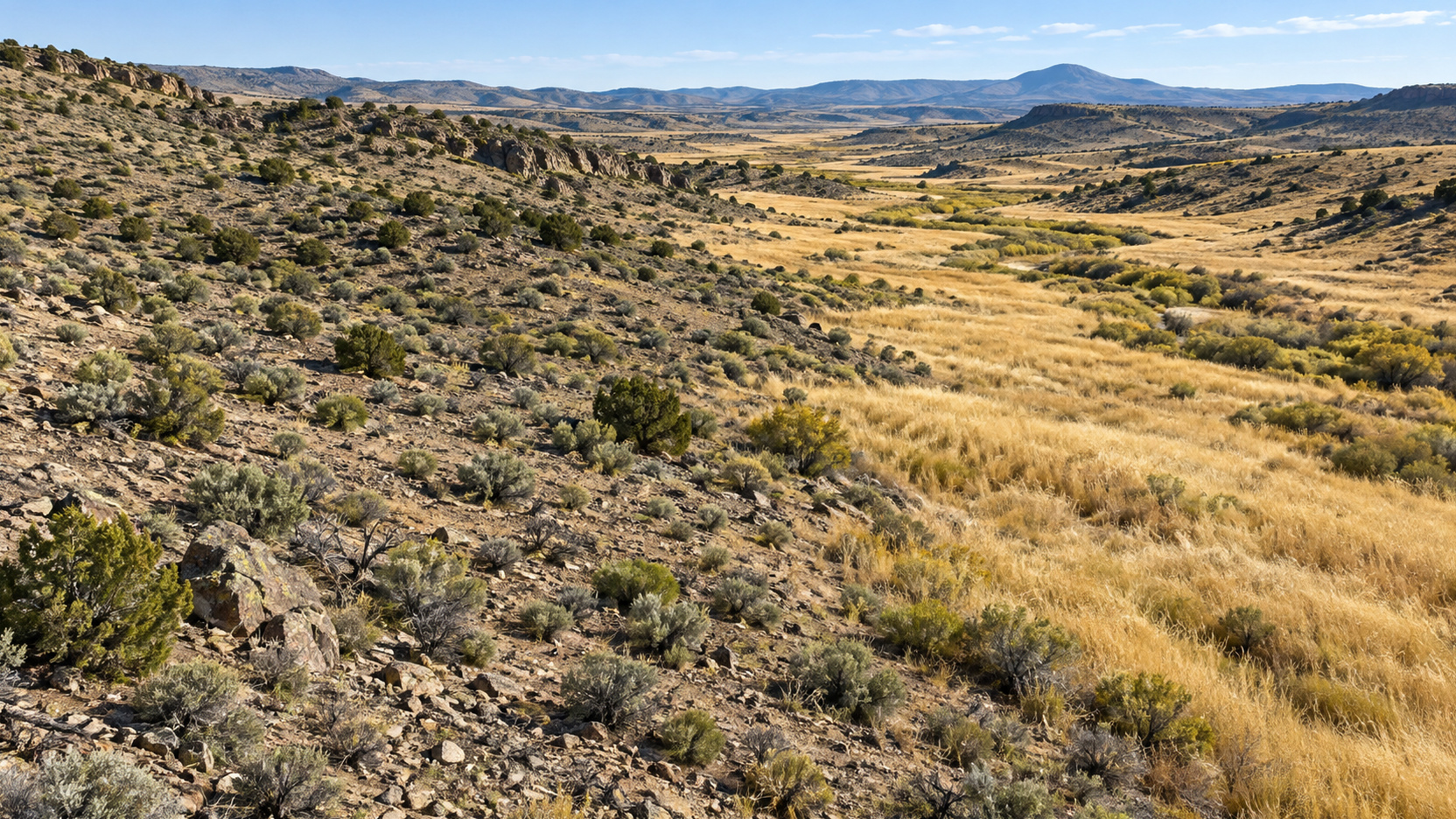
A fire regime is the characteristic pattern of fire in a landscape over time. Its description can include how often fires occur, the season in which they burn, their size, their intensity, and the ecological effects they leave. A single event is one part of that pattern, just as one rainy afternoon is part of a longer rainfall history. Regimes also vary across space within an ecosystem. A broad label such as forest can contain communities shaped by frequent surface burning alongside communities that experience much less frequent canopy replacement. Ecological interpretation needs that context before judging whether an event is unusual.
Frequency is particularly easy to misunderstand. A fire-return interval describes elapsed time between fires for a location or an estimated pattern, depending on the method. It is not a countdown telling every patch to burn on schedule. A regional average can hide both long gaps and repeated short intervals. Season also matters because plants differ in growth, reproduction, and stored resources through the year. The same burned area can have different consequences when fire interrupts active growth, arrives after seeds mature, or occurs under weather that changes heating duration. Ecology therefore treats fire as a multidimensional disturbance rather than just a date on a calendar.
Good and bad are insufficient scientific categories because the effects differ among organisms and objectives. A fire that creates opportunities for one plant may kill another, and a landscape-level benefit can coexist with immediate harm in a particular patch. Human safety is a separate essential consideration, not something ecological value cancels. Yosemite's fire-ecology program describes studying fire dependence, history, and regimes together. That combination supports a better beginner's question: what pattern does this community have experience with, and how does the recent event compare? It replaces a universal verdict with an explanation rooted in place and time.
Fire history is reconstructed from several kinds of evidence rather than inferred from the present vegetation alone. Scars in surviving trees can record past exposure, and the growth rings surrounding them help establish timing. Charcoal in sediments provides evidence of burning over longer periods, though its source and movement must be interpreted. Written records and repeated photographs add information for more recent events. Each archive samples the landscape differently: a fire that left no surviving scarred trees may be underrepresented in a tree-based record. Combining evidence makes the reconstructed regime more useful while preserving uncertainty about events that were incompletely recorded.
Some plants protect living tissue; others begin again
Thick bark can insulate the living tissues beneath it during limited heat exposure. Its protection depends on bark thickness, tree size, heating duration, and the behavior of the fire around the trunk. It does not make a tree fireproof. Mature longleaf pines provide a familiar example of a species associated with recurrent fire in southeastern ecosystems. Other plants protect buds below ground or within structures that are less exposed than their leaves and stems. When the aboveground portion dies but protected tissues remain alive, regrowth can emerge from those surviving parts. Ecologists call this resprouting, distinguishing it from the establishment of a new individual from seed.
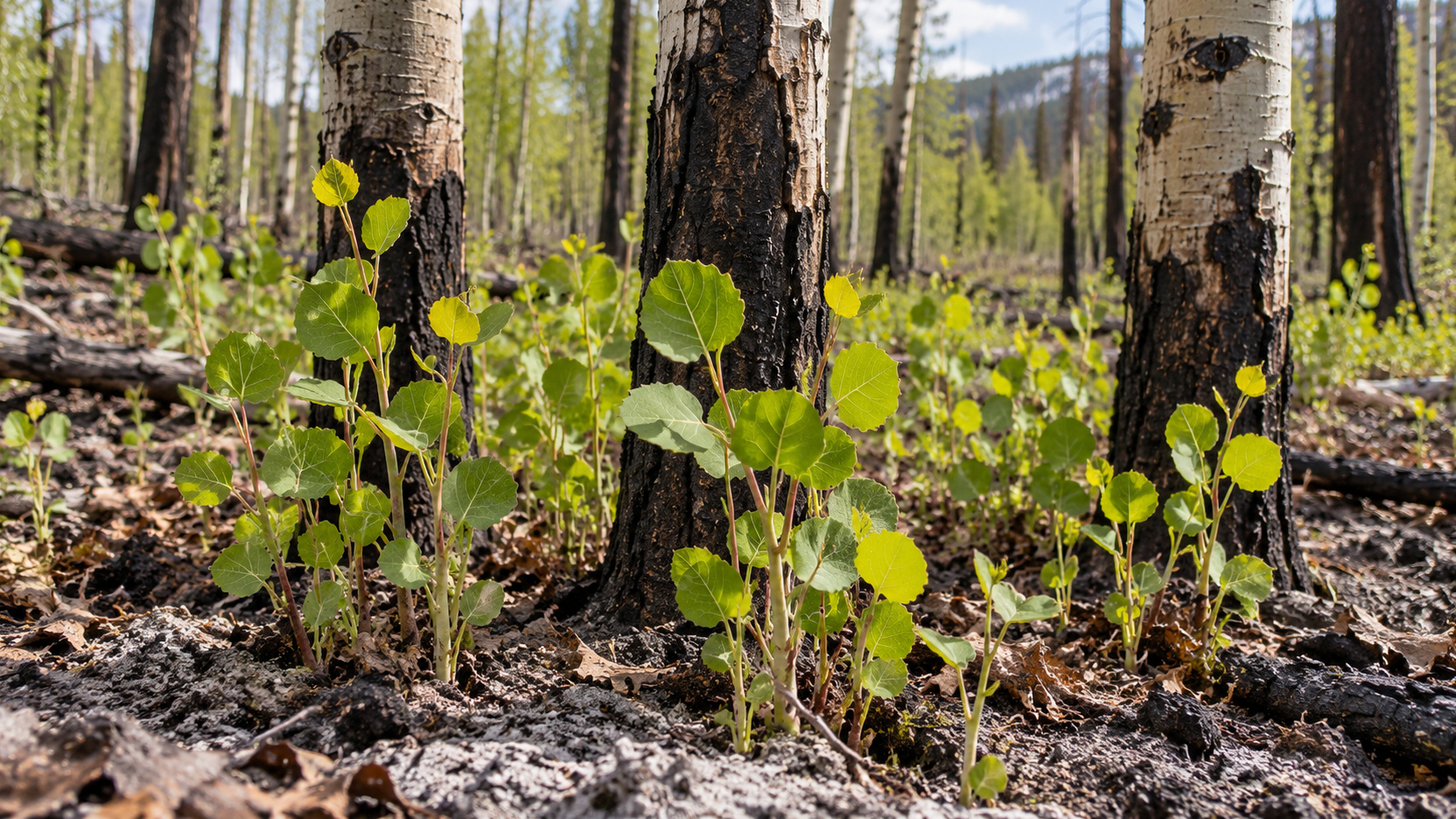
Aspen demonstrates why visible stem death can be an incomplete description of plant survival. Connected underground roots can remain alive and produce new shoots after fire kills aboveground stems. That response still depends on the survival of the root system and on later growing conditions. Severe heating, drought, or repeated disturbance can limit it. Resprouters invest resources in tissues and reserves that support rebuilding, whereas species relying primarily on postfire seedlings use a different route. Neither strategy is universally superior. Their success depends on the type of burning and on the interval available for growth and reproduction before the next disturbance.
Seeds can carry the next generation through disturbance
Some plants survive fire as a seed population even when the mature plants die. Seeds may be protected in the soil or retained above ground until conditions favor release. Certain lodgepole pines bear serotinous cones, in which a resin seal delays opening; heat can release the stored seeds into a newly opened environment. Not every cone or lodgepole population follows that pattern, so the adaptation should not be assigned indiscriminately to all pines. Other species respond to germination cues associated with heat or smoke, and still others benefit mainly from the light and reduced competition that burning creates. Seed release, germination, and establishment are distinct stages. A seed can reach a site yet fail to germinate, or germinate and die before becoming a persistent plant. The relevant conditions include viable seeds, appropriate exposure, soil moisture, and the timing of favorable weather. Fire does not create a guarantee of renewal; it can rearrange opportunities that particular life histories are equipped to use. A successful postfire flush is therefore evidence of one stage in recovery, not proof that every later stage will succeed.
Recovery draws on biological legacies
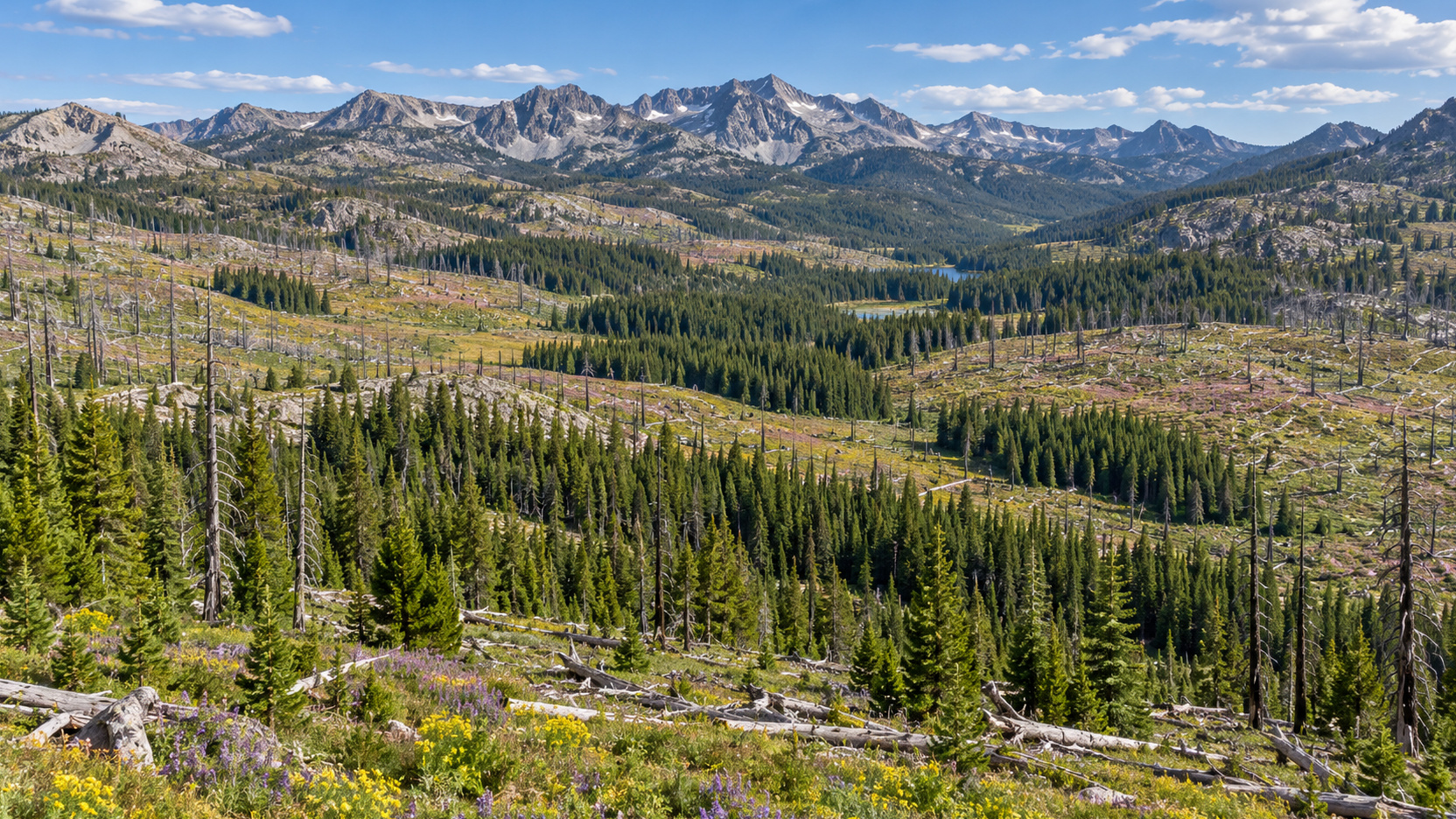
Biological legacies are the living or once-living features carried through a disturbance that influence the community afterward. Surviving trees supply seeds and shade, roots and seed banks provide routes for regeneration, and retained dead wood shapes habitat and soil conditions. Unburned islands can shelter organisms and serve as sources for recolonization. A burned perimeter contains this internal variation rather than a uniformly erased surface. The pattern matters: a regeneration site close to surviving seed trees has different opportunities from one deep within a large patch where few seeds arrive. A map that distinguishes survivors can therefore be more ecologically informative than a single outline.
Recovery also involves the nonliving environment. Remaining litter can protect soil, while exposed ground receives different sunlight and rainfall impact. Soil texture, slope, and moisture influence whether plants establish and whether material is lost to erosion. Fire can alter these conditions unevenly within a short distance. It is inaccurate to assume that all soils are sterilized, just as it is inaccurate to assume that soil organisms are unaffected. The depth and duration of heating determine which habitats are exposed, and later moisture affects the communities that remain or return. Observations must address the layer of interest rather than infer it solely from the blackness of the surface.
A field survey might consequently record green shoots, seedling species, surviving mature plants, standing dead wood, and ground cover separately. Those measurements answer different questions about rebuilding. Early green cover can reduce exposure of the soil without restoring the former canopy or species composition. Seedlings can signal tree recruitment without proving they will survive subsequent dry years. Long-term monitoring follows those stages rather than selecting one attractive image as a final verdict. This is one reason ecologists may describe a site as recovering while acknowledging that its eventual vegetation remains uncertain.
Scale changes that interpretation too. An individual plant can die while its species persists nearby, and a severely affected patch can sit within a landscape that retains substantial habitat. Conversely, scattered survivors may be insufficient for organisms that require a broad continuous environment. Ecologists therefore examine both local responses and the arrangement around them. A small plot can reveal which seedlings establish without answering whether their population will reconnect across a large burned area. Keeping those levels separate helps explain why apparently healthy regrowth at one accessible location cannot stand in for the recovery of an entire watershed.
Adaptation has boundaries that a changing regime can cross
A species adapted to occasional fire may need years of growth before it replenishes its seed supply. If another fire kills the young plants before they reproduce, the regeneration strategy can fail even though it worked after the first event. Excessively short intervals can also exhaust resprouting reserves or favor competitors that mature sooner. The Santa Monica Mountains fire-ecology program emphasizes that chaparral contains several regeneration strategies and should not be treated as needing frequent burning everywhere. The relevant issue is compatibility with the species and their timing, not whether fire occurred somewhere in their evolutionary history.
The climate following a burn can cross another boundary. A seedling emerging on exposed soil must survive its first growing seasons, and warming or drought can make that difficult even when a seed source remains. USGS-supported regeneration research in California explicitly considers climate and seed production because they influence different stages of rebuilding. Their interaction explains why preserving survivors is useful but may not be sufficient. Ecological resilience means retaining or regaining important functions and characteristics after disturbance; it does not mean an ecosystem is unchangeable. A community can resist one kind of fire and be vulnerable to a new combination of heat, repetition, and recovery conditions.
Observe a burned place as a sequence of ecological questions
The first question is what survived, not merely what turned black. Look for retained canopy, protected ground cover, or evidence of regrowth when visiting an area that authorities have reopened. A charred trunk can belong to a living tree, while a green crown immediately after fire can still experience delayed mortality. Standing dead trees can be hazardous, so ecological curiosity should never be a reason to enter closed or unstable terrain. Photographs taken repeatedly from the same accessible viewpoint can reveal change without requiring assumptions from a single visit.
The next question is how new vegetation arrived. Shoots connected to old roots indicate survival and resprouting; scattered seedlings may represent recruitment from stored seeds or nearby plants. A dense flush of annual flowers is not necessarily the future dominant community. Shade, competition, and moisture change as taller vegetation develops, altering which species persist. Tracking identity and growth is more informative than treating all green cover as interchangeable. Recovery is a process of interacting populations, not a uniform color returning to a map.
A third question concerns what the recovering community is becoming. Some sites regain a vegetation type resembling the earlier one, while others follow a different trajectory. That difference can reflect the fire itself, surviving legacies, subsequent weather, invasive plants, or additional disturbance. Research compares those possible explanations using measurements and appropriate reference sites. A changed landscape is not automatically degraded, but neither is every change desirable for biodiversity, water, carbon, or local cultural values. Naming the function or community being evaluated helps clarify the concern.
Finally, ask whether the next disturbance will arrive under compatible conditions. Plants may need time to rebuild reserves or produce seeds, while soils and habitat structures follow their own recovery schedules. Management can help restore appropriate fire where it has been excluded, protect regeneration where intervals have become too short, or reduce other pressures that impede recovery. Those decisions require ecosystem-specific evidence and trained planning, not a beginner's prescription to burn or suppress everything. Wildfire ecology offers a way to see the relationships behind those choices. Its central lesson is that life after fire depends on survivors, regeneration strategies, timing, and the environment that follows, all operating together across a varied landscape.