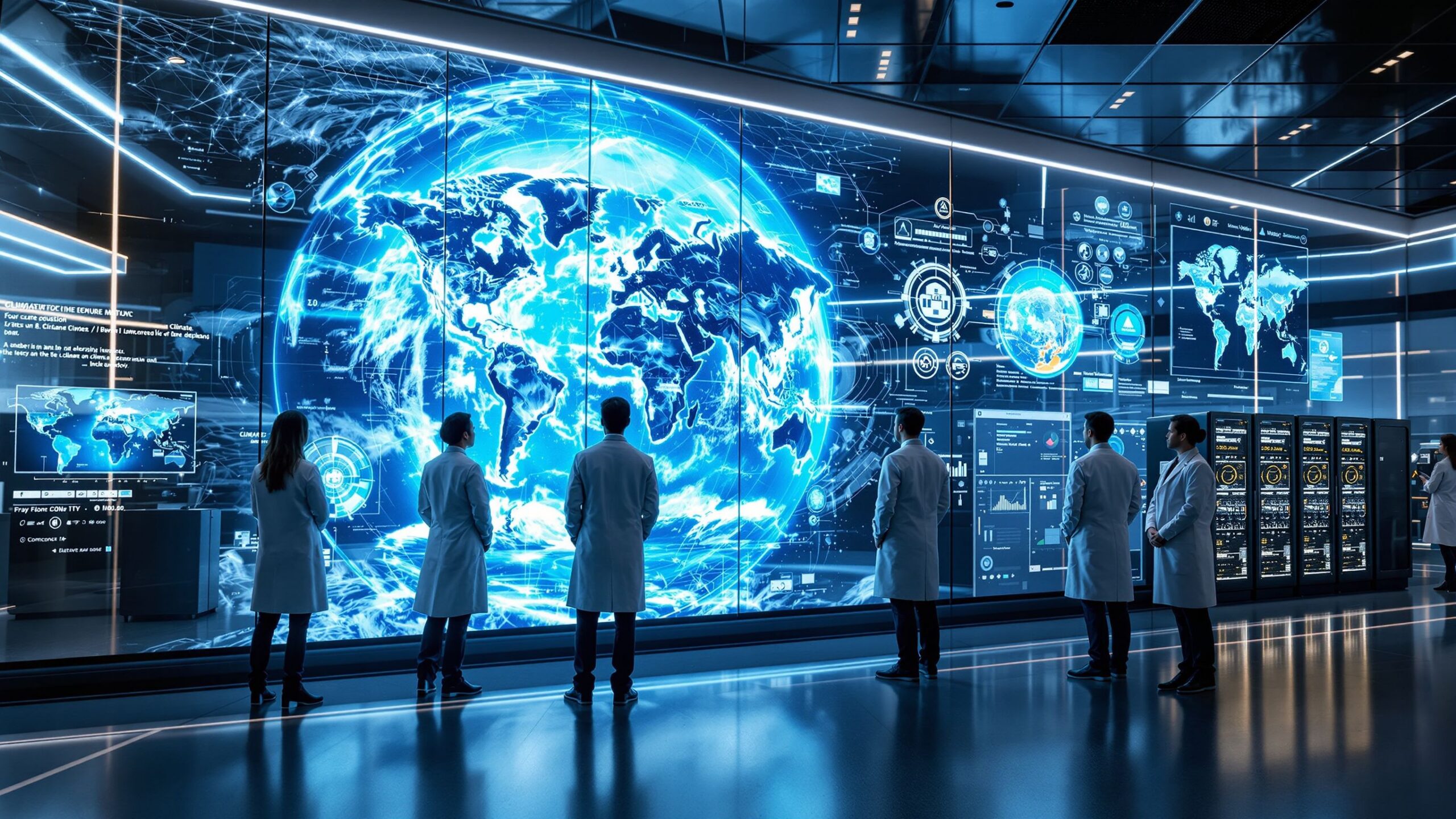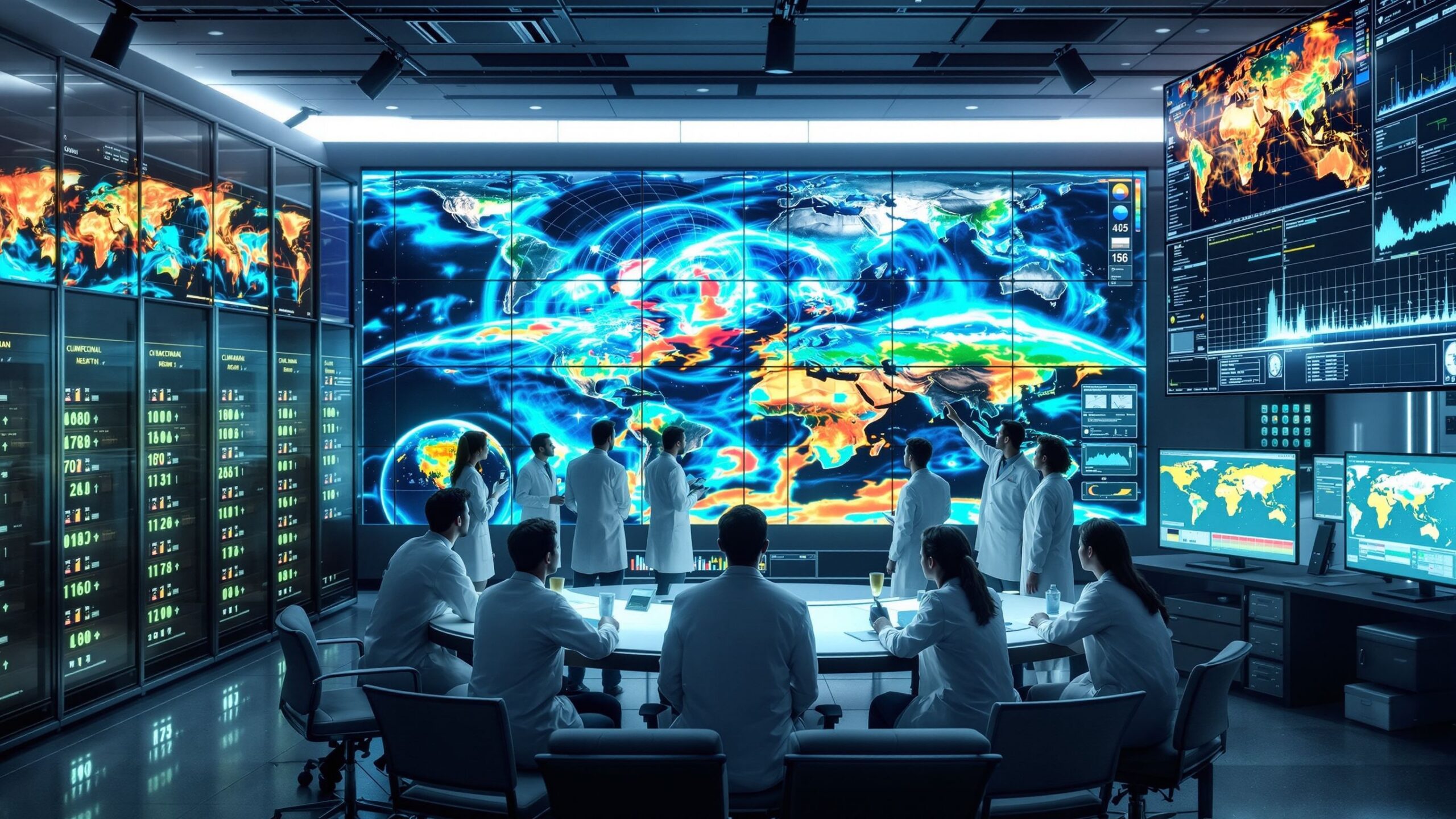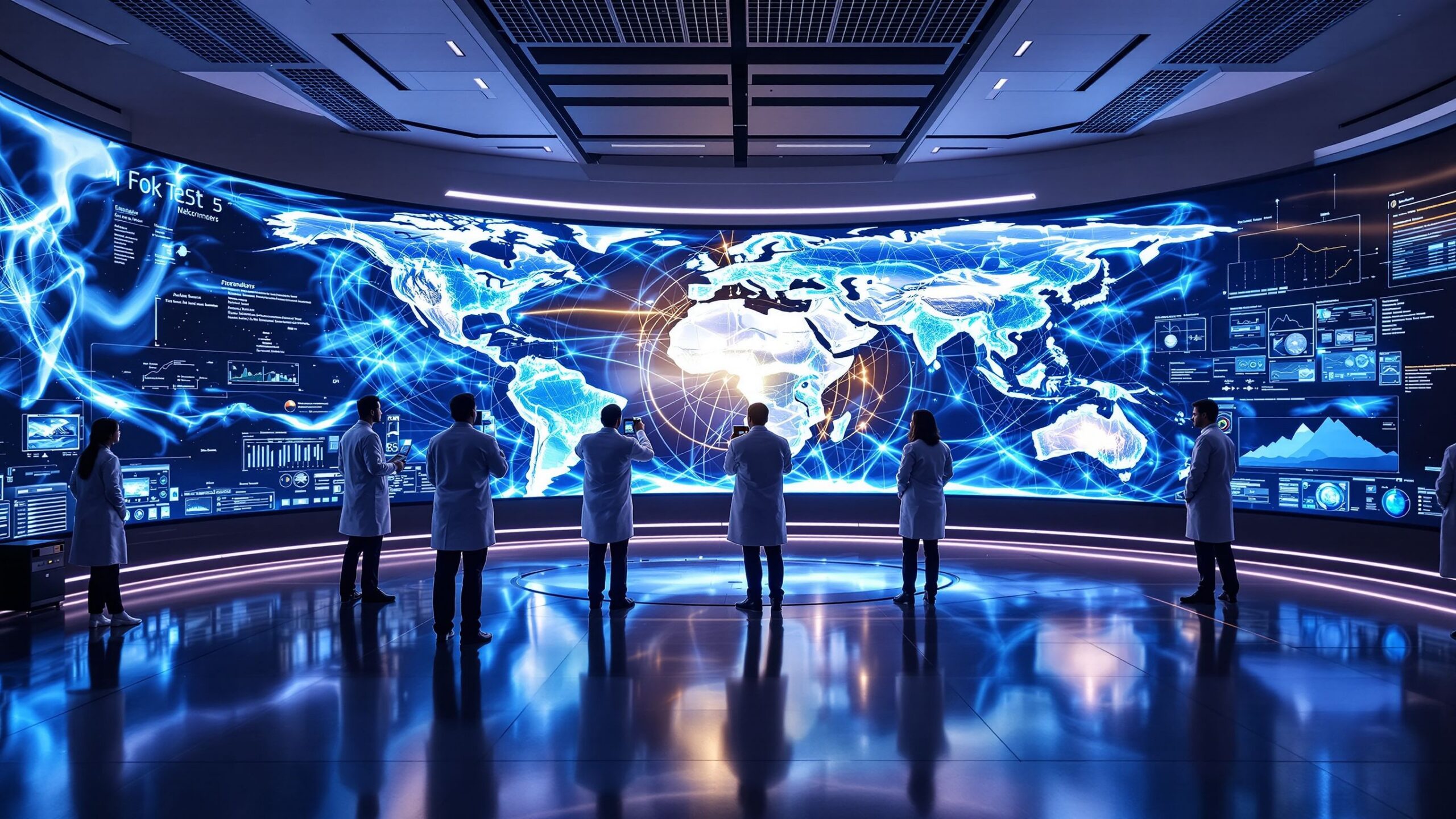
Climate forecasting is one of the most important scientific tools available for understanding the future of our planet. While weather forecasts tell us whether it may rain tomorrow or snow next week, climate forecasts help scientists predict broader environmental patterns that may develop over months, years, decades, or even centuries. These forecasts provide valuable insight into future temperatures, rainfall patterns, drought risks, sea-level changes, and many other aspects of Earth’s climate system. As concerns about climate change continue to grow around the world, climate forecasting has become increasingly important for governments, businesses, researchers, and communities. By understanding how climate forecasting works, people can better appreciate how scientists study the future and why these predictions play such a critical role in planning for environmental challenges and opportunities.
A: No. Weather forecasting predicts short-term conditions, while climate forecasting studies longer-term patterns and probabilities.
A: Not exactly. They usually show likely ranges, trends, and risks.
A: Because many factors influence the future, and probabilities show what outcomes are more or less likely.
A: It helps people prepare for heat, drought, flooding, storms, water shortages, and long-term planning needs.
A: No model is perfect, but models are tested against real-world data and improved over time.
A: They may use different data, assumptions, model designs, or future scenarios.
A: It is a possible future path based on emissions, population, energy use, and policy choices.
A: Oceans store heat and move energy around the planet, shaping rainfall, storms, and temperature patterns.
A: Yes. It can support planning for droughts, floods, extreme heat, wildfire risk, and coastal flooding.
A: Climate forecasts do not promise exact dates; they reveal likely patterns so people can plan smarter.
What Is Climate Forecasting?
Climate forecasting is the scientific process of predicting long-term climate conditions using historical observations, current environmental data, and advanced computer models. Unlike weather forecasting, which focuses on short-term atmospheric conditions, climate forecasting examines patterns that develop over extended periods. Scientists use climate forecasts to estimate how average temperatures, precipitation levels, storm frequency, ocean conditions, and other climate-related factors may change over time. Rather than predicting the exact weather on a specific day years from now, climate forecasts focus on trends, probabilities, and likely outcomes across large regions and long timeframes. These forecasts help answer questions about future climate conditions and provide information that supports decision-making in many areas of society.
Climate Forecasting Versus Weather Forecasting
Many people confuse climate forecasting with weather forecasting, but they serve different purposes. Weather forecasting focuses on short-term atmospheric conditions. Meteorologists use weather forecasts to predict daily temperatures, rainfall, wind speeds, and storm activity. These forecasts generally cover periods ranging from a few hours to several weeks. Climate forecasting, on the other hand, examines long-term patterns and averages. Instead of predicting whether it will rain on a particular day twenty years from now, climate forecasting estimates whether a region is likely to become wetter, drier, warmer, or cooler over time. A useful comparison is to think of weather as an individual event and climate as the overall pattern formed by many events. Climate forecasts provide a broader perspective that helps scientists understand how environmental conditions may evolve in the future.
Why Climate Forecasting Matters
Climate forecasting plays a vital role in helping society prepare for future conditions. Governments use climate forecasts when developing infrastructure projects, environmental policies, and disaster preparedness plans. Farmers rely on climate information to make decisions about crops, irrigation, and land management. Water resource managers use forecasts to anticipate changes in rainfall, snowpack, and water availability. Energy companies evaluate climate projections to estimate future heating and cooling demands. Insurance organizations assess climate-related risks when setting policies and premiums. Public health agencies study climate forecasts to understand potential impacts on disease patterns and heat-related illnesses. The ability to anticipate future climate conditions provides valuable information that supports long-term planning across numerous industries and sectors.
The Science Behind Climate Forecasting
Climate forecasting is based on scientific principles that govern Earth’s climate system. Scientists understand that climate is influenced by interactions between the atmosphere, oceans, land surfaces, ice sheets, vegetation, and solar energy. These interactions follow physical laws related to heat transfer, fluid motion, radiation, and energy balance. Researchers use mathematical equations to represent these processes within computer models. By combining observations with scientific understanding, climate forecasts simulate how environmental conditions may evolve under different circumstances. The goal is not to predict every detail perfectly but to identify likely trends and potential future outcomes based on current knowledge and available data.
The Data Used in Climate Forecasts
Climate forecasting depends on enormous amounts of environmental data. Scientists collect information from weather stations, satellites, ocean buoys, research vessels, aircraft, radar systems, and ground-based monitoring networks around the world. These observations include measurements of temperature, humidity, atmospheric pressure, wind patterns, rainfall, ocean temperatures, sea ice extent, and greenhouse gas concentrations. Historical climate records are particularly important because they allow researchers to identify long-term trends and natural climate variability. The more accurate and comprehensive the available data, the more reliable climate forecasts become. Advances in satellite technology and environmental monitoring continue to improve the quality and quantity of information available to climate scientists.
The Role of Climate Models
Climate models are at the heart of climate forecasting. These sophisticated computer programs simulate Earth’s climate system using mathematical representations of atmospheric, oceanic, and environmental processes. Climate models divide the planet into millions of grid cells and calculate how conditions within each cell interact with surrounding areas over time. Variables such as temperature, humidity, air pressure, ocean currents, and cloud formation are continuously updated throughout the simulation. By running these models under different conditions, scientists can explore how climate may respond to various factors such as greenhouse gas emissions, volcanic eruptions, changes in solar activity, and land-use changes. Climate models act as virtual laboratories where researchers can test hypotheses and examine potential future scenarios.
How Climate Forecasts Are Created
Creating a climate forecast involves several complex steps. Scientists begin by collecting and analyzing current environmental conditions. They then incorporate this information into climate models that simulate Earth’s climate system. Researchers select different scenarios based on assumptions about future greenhouse gas emissions, population growth, energy use, and technological development. The models are run repeatedly using these scenarios, producing a range of possible outcomes. Scientists analyze the results to identify patterns, trends, and probabilities. Rather than providing a single prediction, climate forecasts often present multiple potential futures based on different assumptions. This approach helps decision-makers understand the range of possibilities and the uncertainties associated with long-term forecasting.
Understanding Climate Scenarios
Climate forecasts frequently use scenarios to explore different future pathways. A scenario is not a prediction but rather a description of possible future conditions based on specific assumptions. Some scenarios assume substantial reductions in greenhouse gas emissions through renewable energy adoption, conservation efforts, and technological innovation. Other scenarios explore futures where emissions continue to rise. By comparing these pathways, scientists can estimate how different choices may influence future climate conditions. Scenarios help policymakers, businesses, and communities understand the potential consequences of various actions and identify strategies that may reduce climate-related risks.
Seasonal and Long-Term Climate Forecasts
Climate forecasting operates across multiple timescales. Seasonal climate forecasts examine conditions over the coming months and often focus on temperature, precipitation, and large-scale climate patterns. These forecasts help farmers, water managers, and emergency planners prepare for upcoming seasons. Long-term climate forecasts extend decades into the future and are commonly used to study climate change. These projections provide information about expected trends in temperature, sea levels, precipitation patterns, and extreme weather risks. Both seasonal and long-term forecasts serve important roles, although they address different questions and support different types of planning decisions.
Natural Climate Variability
One challenge in climate forecasting is accounting for natural climate variability. Earth’s climate naturally changes over time due to factors such as volcanic eruptions, solar fluctuations, ocean circulation patterns, and atmospheric oscillations. Events such as El Niño and La Niña can significantly influence weather and climate conditions around the world. Climate forecasts must consider these natural influences while also accounting for human-driven factors such as greenhouse gas emissions. Understanding the balance between natural variability and long-term climate trends is essential for producing accurate and meaningful forecasts.
Forecasting Climate Change
One of the most widely recognized applications of climate forecasting involves studying climate change. Scientists use climate models to estimate how rising greenhouse gas concentrations may influence global and regional climates. These forecasts examine future temperature increases, shifting rainfall patterns, melting glaciers, declining sea ice, and rising sea levels. Researchers also investigate how climate change may affect ecosystems, agriculture, water resources, and human health. Climate forecasts provide valuable information that helps governments and organizations develop adaptation and mitigation strategies aimed at reducing future risks.
Predicting Extreme Weather Risks
Climate forecasting is increasingly used to evaluate extreme weather risks. Although scientists cannot predict individual storms decades in advance, they can estimate how the frequency and intensity of certain events may change over time. Climate forecasts help researchers study heat waves, droughts, floods, hurricanes, wildfires, and severe storms. For example, forecasts may indicate that certain regions are likely to experience more frequent heat waves or heavier rainfall events in the future. This information supports infrastructure planning, emergency preparedness, and disaster risk reduction efforts that help communities become more resilient.
How Scientists Evaluate Forecast Accuracy
Climate scientists carefully test and evaluate their forecasting systems. One common approach involves comparing model results with historical observations. Researchers run climate models using past conditions and examine whether the simulations accurately reproduce known climate trends and events. This process helps identify strengths and weaknesses within the models. Scientists also compare results from multiple independent climate models developed by research institutions around the world. When different models produce similar findings, confidence in the forecasts increases. Continuous testing and refinement allow climate forecasting systems to become more accurate and reliable over time.
Challenges and Uncertainties in Climate Forecasting
Despite significant advances, climate forecasting remains challenging. Earth’s climate system is extraordinarily complex, involving countless interactions among atmospheric, oceanic, biological, and geological processes. Some phenomena occur on scales that are difficult to represent precisely within computer models. Future human behavior also introduces uncertainty. Scientists cannot know exactly how global populations, economies, technologies, and policies will evolve. As a result, climate forecasts typically include ranges of possible outcomes rather than single definitive predictions. These uncertainties do not mean climate forecasts are unreliable. Instead, they reflect the reality that forecasting future conditions involves probabilities and varying levels of confidence.
Advances in Climate Forecasting Technology
Technological innovation continues to improve climate forecasting capabilities. Modern supercomputers can perform vast numbers of calculations at extraordinary speeds, allowing scientists to create more detailed and realistic simulations. Satellite networks provide continuous observations of Earth’s atmosphere, oceans, ice sheets, and land surfaces. Artificial intelligence and machine learning are helping researchers analyze massive datasets and identify patterns that may improve forecast accuracy. New environmental monitoring technologies continue to expand the amount of information available to climate scientists. Together, these advances are making climate forecasts more precise and useful than ever before.
The Future of Climate Forecasting
The future of climate forecasting is filled with exciting possibilities. Scientists are developing next-generation climate models capable of representing Earth’s systems with unprecedented detail and realism. Improvements in computing power will allow simulations to capture smaller-scale processes that influence climate behavior. Enhanced observations from satellites, ocean sensors, and monitoring stations will provide more accurate data for model development and validation. Artificial intelligence will likely play an increasingly important role in analyzing climate information and improving forecast performance. As these technologies continue to evolve, climate forecasting will become an even more powerful tool for understanding and preparing for future environmental conditions.
Conclusion
Climate forecasting is one of the most valuable scientific tools for understanding the future of our planet. By combining environmental observations, historical climate records, scientific principles, and advanced computer models, researchers can estimate how climate conditions may change over time. These forecasts help governments, businesses, communities, and individuals prepare for potential challenges and opportunities associated with a changing climate. Although uncertainties remain, climate forecasting continues to improve through advances in technology, data collection, and scientific understanding. As the world faces increasingly complex environmental issues, climate forecasting will remain essential for informed decision-making and long-term planning. Understanding how climate forecasting works provides valuable insight into how scientists study Earth’s future and helps highlight the importance of preparing for the changes that may lie ahead.