Below a familiar surface, several conditions are changing together
The sea can look ordinary while the environment beneath it changes in ways that matter to almost every organism living there. Water is accumulating heat, added carbon dioxide is altering chemistry, and oxygen availability is shifting across many regions. Along the coast, rising water levels change where waves and tides reach. These pressures overlap with fishing, pollution, habitat damage, and natural climate variability, so the result is rarely explained by one cause alone. A fish may encounter warmer water and less oxygen at the same time; a shell-forming organism may face changing chemistry while its food supply moves. Understanding ocean climate change means following these interacting conditions across places and timescales. It also means separating global trends from local experiences, because a warming ocean does not change uniformly and a single unusual season does not describe every coastline.
A: No. Local variability can coexist with increasing global ocean heat.
A: It is NOAA's reported exposure to bleaching-level heat stress during January 2023–September 2025, rather than a finding that this proportion of corals died.
A: No. A declining pH is acidification even while seawater remains alkaline.
A: No. Added dissolved carbon dioxide changes the chemistry; warming is a related but distinct pressure.
A: Lower solubility, restricted ventilation, and biological consumption can contribute.
A: Depth may offer cooler conditions while lacking adequate oxygen, food, or habitat.
A: No. Different responses rearrange interactions among species.
A: Land motion and regional ocean conditions modify the global contribution.
A: Yes. It can reduce local nutrient-related stress even while broader changes continue.
A: They reveal exposure, help people respond, and limit the long-term drivers respectively.
The ocean stores most of the climate system's excess heat
Roughly 90 percent of the excess heat associated with global warming has entered the ocean, according to NOAA’s marine-heatwave explanation. That makes ocean warming a central part of climate change, rather than a small consequence beside rising air temperatures. Surface readings show only part of the accumulated energy. Mixing and currents carry heat below the surface and between regions, so a brief local cooling does not necessarily mean the wider ocean has stopped gaining heat. Heating also expands seawater: the same mass occupies more volume. This contributes to rising sea level separately from the water added by melting land ice.
For marine life, the location of that heat matters. A fish entering deeper water may encounter cooler temperatures but less oxygen or different prey. A coral attached to a reef cannot simply follow a cooler current elsewhere. Suitable habitat is the overlap of several conditions, and warming can change that overlap before a coastline looks visibly different. A map of sea-surface temperature is therefore a beginning: understanding exposure also means following depth, duration, and the places organisms need to complete their lives.
The 2023–2025 bleaching episode shows what extreme heat can do
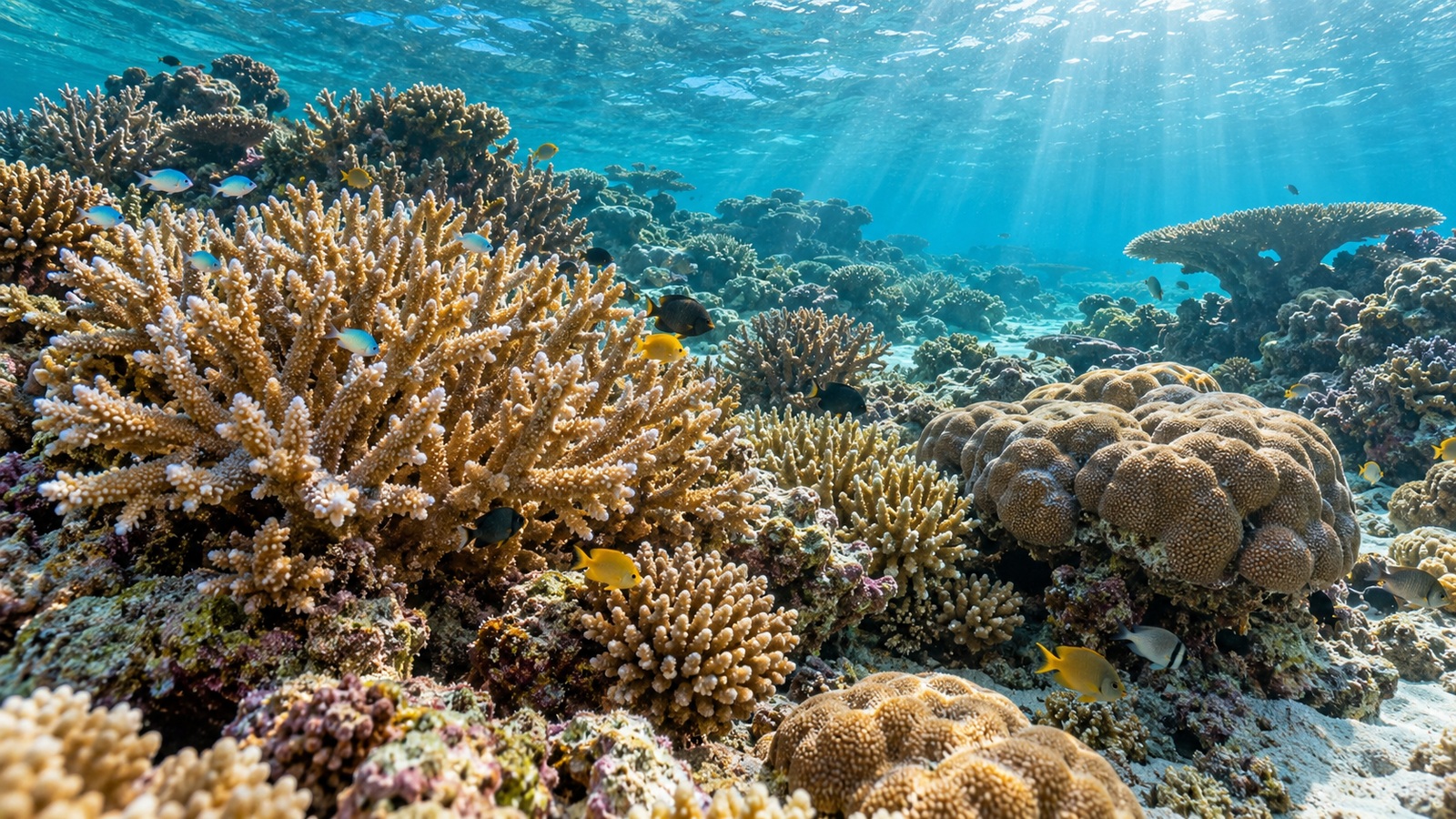
NOAA confirmed the fourth global coral bleaching event in April 2024. Its June 2026 update reported bleaching-level heat stress across approximately 84.4 percent of the world’s coral reef area between January 2023 and September 2025, with mass bleaching documented in at least 83 countries and territories. The update indicated that the global episode likely ended in 2025. Those waters exposed corals to conditions that can disrupt their partnership with symbiotic algae, leaving the coral pale and deprived of an important energy source. A bleached coral is still alive, and some recover if conditions improve. Prolonged or repeated stress can exhaust that opportunity and lead to death, changing both the living cover and the habitat available to other reef organisms.
Acidification changes the chemical setting for marine life
Additional carbon dioxide dissolving in seawater changes its chemistry. Reactions increase the concentration of hydrogen ions and lower pH, producing acidification even while the water remains alkaline. Hydrogen ions also react with carbonate ions to form bicarbonate, leaving less carbonate available for organisms building calcium-carbonate shells and skeletons. A young shellfish developing in that environment faces a different chemical task from one in water with more available carbonate. Its growth also depends on food, temperature, and the energy needed to maintain internal conditions. Species and life stages consequently experience different effects within the same broad chemical trend.
Warming and acidification share a major driver in human carbon dioxide emissions, but the pathways differ. The ocean gains heat as the climate system warms; dissolved carbon dioxide directly changes the chemical balance described in NOAA’s acidification overview. Coastal processes add further variation. Respiration supplies carbon dioxide where organic material decomposes, while upwelling can bring carbon-rich water toward the surface. A bay can therefore experience global change and a strong local seasonal cycle at once. Cutting carbon dioxide emissions limits the wider pressure, while changes to local nutrient and organic inputs affect only part of the coastal chemistry.
Chemical stress can affect more than the finished shell. Maintaining internal conditions uses energy that might otherwise support growth or reproduction, and an early life stage may have fewer resources to draw on. The food web also changes if a small producer or grazer becomes less abundant. Consumers then encounter a different prey supply even when their own chemistry is less affected. These indirect effects connect a change in seawater with growth, survival, and feeding relationships throughout the community.
Oxygen loss changes the space animals can use
Warmer water holds less dissolved oxygen under otherwise comparable conditions. Warming can also strengthen layering that restricts exchange between surface and deeper water, while organismal respiration consumes oxygen as organic material is processed. These influences contribute to oxygen changes, but their relative importance varies geographically. Coastal nutrient pollution can create an additional pathway: excess production followed by decomposition may consume oxygen faster than it is replenished. Climate conditions can interact with that local loading, so an oxygen problem may require both broader mitigation and watershed-level action.
Reduced oxygen can constrain feeding, growth, reproduction, and survival. Some animals leave affected water, but moving may place them in less favorable temperature or habitat conditions. Others cannot escape quickly enough. The combined effect can compress suitable habitat into a smaller volume, concentrating animals or changing their encounters with predators and fishing gear. A population’s distribution may consequently shift before a conspicuous mass-mortality event occurs. Oxygen measurements help reveal pressures that are difficult to infer from the sea surface alone.
Stronger layering can separate sunlight from nutrients
Surface waters receive sunlight, while deeper waters often contain nutrients returned through decomposition. Mixing and upwelling help connect those resources. When density differences strengthen the separation between layers, the supply of nutrients to some sunlit regions can change, influencing plankton growth and community composition. The outcome is not a uniform decline in production everywhere: winds, circulation, seasonal conditions, and regional nutrient sources complicate the pattern. What matters to a food web is also which organisms grow, when they grow, and whether consumers can use them. A shift in the timing of production can create mismatches even where the annual total changes little. Ocean ecology therefore responds to the organization of production as well as its quantity.
Species shift their ranges, but communities do not move as units
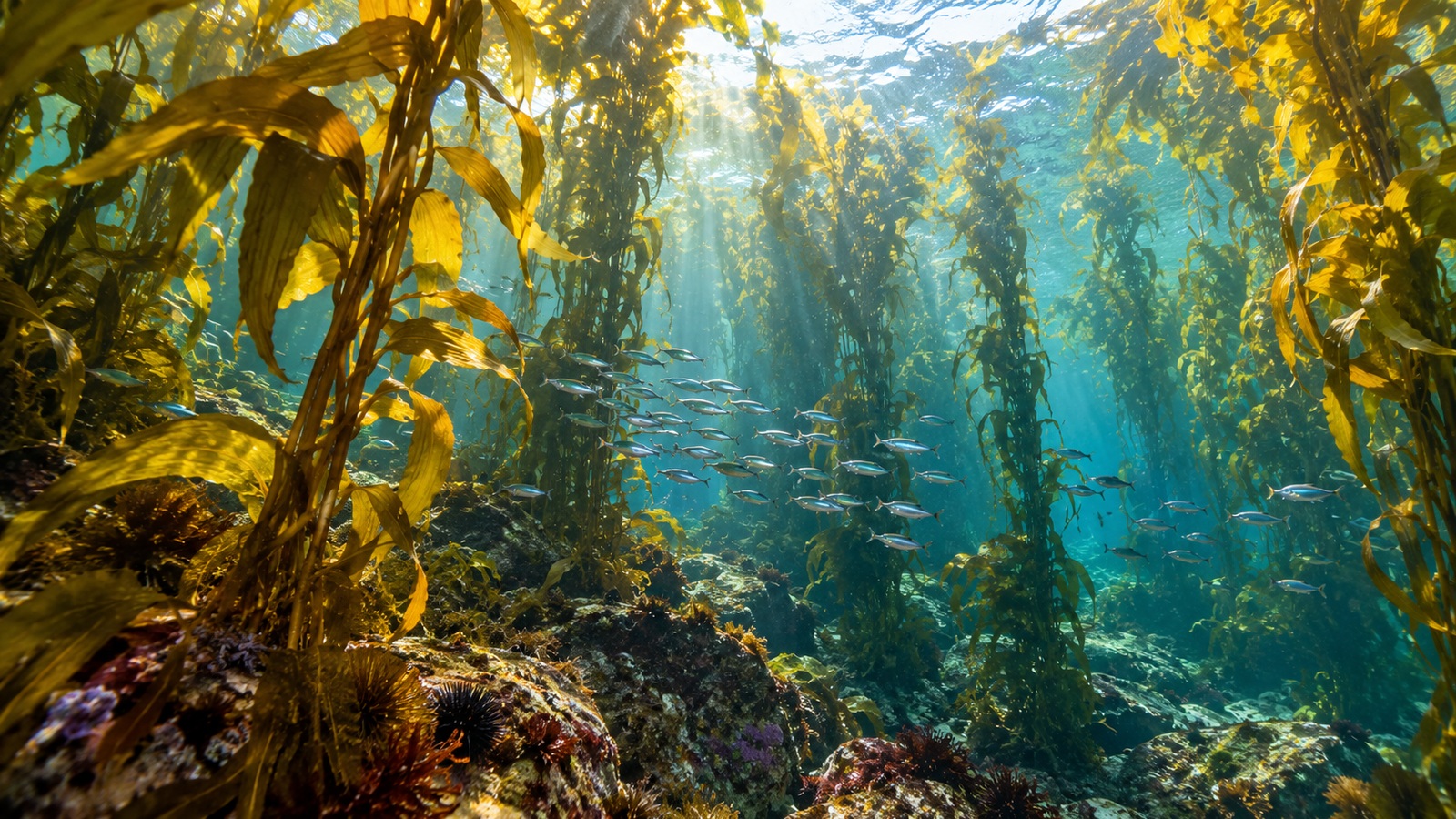
Many marine species change their distributions as environmental conditions shift, sometimes toward higher latitudes or different depths. These movements reflect more than a simple preference for cooler water. Prey, competitors, predators, breeding conditions, and physical habitat all influence where a population can establish. Some species expand into new areas while declining elsewhere; others encounter barriers or lose suitable habitat. A map showing a range shift does not by itself establish whether the total population is thriving.
Ecological relationships can be rearranged because species respond at different rates. A predator may arrive in a place before its usual prey becomes abundant, or a seasonal consumer may encounter a food pulse at the wrong time. New competitors or grazers can alter habitat-forming vegetation. These changes affect ecosystems and also the people whose fishing practices and management boundaries were built around earlier distributions. Existing rules may need adaptation when a stock crosses jurisdictional lines or becomes available to different fleets.
Climate-driven movement also interacts with fishing and habitat change. A stock may encounter suitable temperatures farther from its former range, yet face strong harvest pressure or a shortage of nursery habitat there. A decrease in one port’s catch can reflect that changed distribution as well as the condition of the wider population. Fleet access, landing facilities, and management agreements then shape whether people can follow the changing resource. Keeping connected breeding and feeding habitats in good condition supports the population while cross-border coordination addresses the places it now occupies.
Rising seas change coastal habitats as well as flood levels
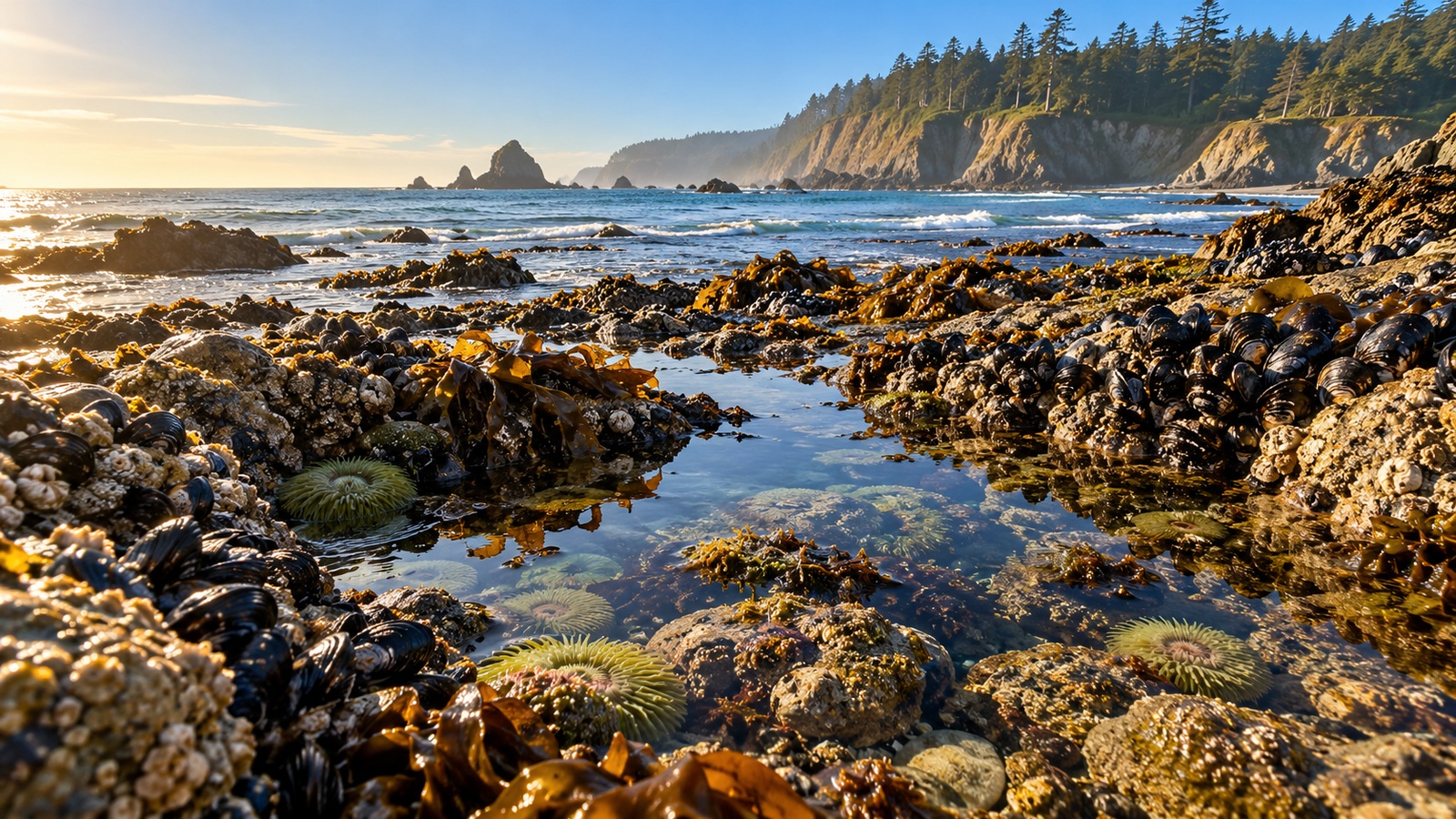
Sea level rises as warming water expands and land-based ice adds water to the ocean. Local relative sea level also depends on land movement and regional ocean conditions, so one coastline’s experience may differ from the global average. Tides and storms then operate on that changing baseline. Coastal habitats encounter shifts in inundation, salinity, erosion, and sediment movement. Wetlands may persist by building elevation or moving inland where conditions allow, but fixed development can block migration. Coral and other coastal systems face their own combinations of exposure and growth constraints. Planning must therefore consider the space and processes habitats need over time, rather than assume the present shoreline remains a permanent ecological boundary.
Recovery depends on what remains after the heat passes
A cooled reef does not instantly become a recovered reef. Surviving colonies need conditions that support renewed growth, and damaged areas need sources of young corals and suitable surfaces for settlement. The loss of living cover can also change shelter and feeding opportunities for reef animals. When another heat episode arrives before recovery proceeds, the community starts that event from a different condition. A temperature returning toward its seasonal range marks the end of one pressure, not the completion of ecological rebuilding.
Local management can improve some of those conditions. Reducing nutrient and sediment inputs addresses pressures distinct from greenhouse-driven warming. Protecting appropriate habitat connections can support movement and replenishment. These actions are useful because organisms experience the combined environment: a coral or fish does not divide its difficulties into separate policy categories. The attainable benefit still depends on how severe the remaining thermal and chemical pressures become.
People face similarly connected changes. A familiar fishing ground can become less reliable when a stock moves, while a shellfish operation may need to monitor the chemistry of incoming water. Switching sites involves landing access, costs, skills, and rights as well as the organism’s location. An early warning can support a short operational response; planning for a port or future habitat space involves much longer decisions. Working with affected communities helps distinguish those needs. Adaptation then becomes a set of concrete choices about sustaining food, work, and coastal relationships, alongside the emissions reductions that limit the scale of future change.
Observation and emissions cuts address different parts of the challenge
Satellites, profiling floats, ships, moorings, coastal stations, and biological surveys reveal complementary parts of ocean change. Some observe broad surface patterns; others measure conditions at depth or resolve a particular habitat. Long records help separate trends from seasonal cycles and natural variability. They also expose gaps: a well-observed surface region may still have limited information about oxygen or biology below it. A single indicator cannot stand in for the full system, and useful monitoring connects physical, chemical, biological, and social conditions.
Reducing greenhouse-gas emissions limits the long-term drivers of warming and acidification, while local stewardship can reduce additional damage and improve the possibilities for recovery. Neither task replaces the other. The ocean’s large heat store and slow processes mean that some changes persist beyond an immediate reduction in emissions, making adaptation necessary as mitigation proceeds. A practical response combines those timescales: protect vulnerable relationships now, prepare for continuing change, and reduce the emissions that determine how far the changes ultimately go. The result is a clearer view of both the urgency and the options available.