Seasonal rain changes the opportunities across a savanna
When rain returns to a dry savanna, the landscape’s activity can change quickly. Grasses produce new leaves, temporary water becomes available, and animals respond to the changing distribution of food. Trees remain part of the scene, but their relationship with the grassy layer depends on more than the presence of rainfall. Fire, herbivory, soils, and the sequence of wet and dry periods influence which plants establish and persist. Predators, scavengers, insects, and microbes participate in the movement of resources through the community. These interactions make a savanna a dynamic ecosystem rather than a stage occupied only by large wildlife. Understanding the so-called circle of life means following real transfers, constraints, and losses, without assuming that every event restores a perfect balance. It also requires recognizing the people whose livelihoods and stewardship have long been connected to these landscapes.
A: Many have persistent tree-grass relationships of their own.
A: They occur on several continents under varying definitions.
A: They use different vegetation resources and feeding strategies.
A: Movement ranges and seasonal strategies vary among species.
A: Their effects interact with food, disease, climate, and other pressures.
A: They help move material through resource-processing pathways.
A: Energy moves through and dissipates; material follows recycling and transport pathways.
A: It can also alter concentrations, movement, and ecological pressures.
A: Changes in grazing can alter grass fuel and fire, influencing the conditions in which young trees survive.
A: Their rights, livelihoods, knowledge, and decisions shape long-term outcomes.
Serengeti wildlife uses a mosaic rather than one uniform plain
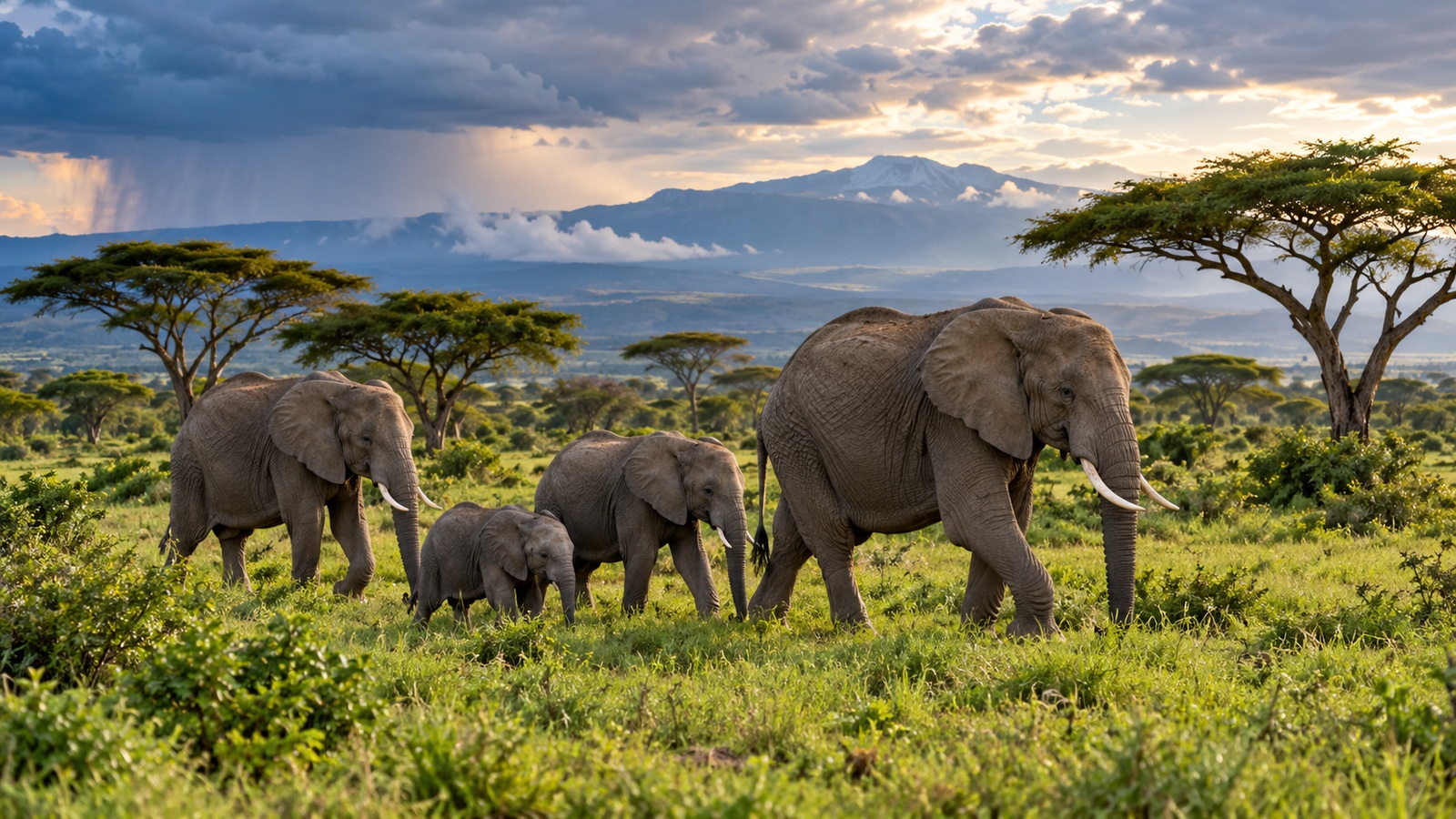
The Serengeti makes the savanna’s variety visible through named animals and habitats. Tanzania National Parks describes wildebeest, zebras, and gazelles moving through an ecosystem that includes grassland, woodland, riverine forest, swamps, and rocky kopjes. Lions, elephants, buffaloes, and other residents use different parts of that setting. The open view from one plain is therefore only a portion of the resources available. Water, shelter, food, and the ways between them influence where animals can live through the year.
Trees and grasses create different opportunities within that mosaic. An open grassy patch offers a grazer a different feeding environment from woody vegetation used by a browsing animal. Shade and litter change conditions beneath a tree, while grass growth supplies both food and potential dry-season fuel. Rainfall helps set those resources in motion, but herbivory and fire also influence which plants establish. A savanna is not necessarily an unfinished forest. Its recognizable structure can persist through the interactions between its vegetation layers, the animals using them, and the sequence of wet and dry seasons.
Wet and dry periods organize the resource calendar
In many tropical savannas, a pronounced seasonal cycle changes water availability and plant growth. New grass can offer different nutritional qualities from mature dry material, while surface water may become concentrated in fewer places during dry periods. Trees and grasses do not all respond on the same schedule, and soil conditions create local variation. Animals encounter a moving pattern of resources rather than a uniform seasonal switch across the entire landscape.
Rain arriving late can delay grass growth and the feeding opportunities that follow it. A dry interval during the wet season can interrupt young plants before their roots establish, while an intense storm may send much water away as runoff. Animals can change where they feed or move, but their options depend on available habitat, energy, and the needs of young. Two years with a similar rainfall total can consequently provide very different sequences of food and water. The living calendar is shaped by when usable resources arrive and how long they remain.
Dry seasons are not periods when the ecosystem stops working. Decomposition, feeding, competition, and survival continue under changed constraints. Some organisms reduce activity or rely on stored resources, while others use habitats or food that remain available. The dry period can influence mortality and selectivity, shaping what happens when rain returns. Its role belongs in the explanation alongside the more visible burst of green growth that follows a storm.
Grazers and browsers use different parts of the vegetation
Grazers primarily feed on grasses and other low vegetation, while browsers use more woody foliage and shoots, though diets can vary and some animals combine strategies. Body size, mouth structure, digestion, and behavior influence which resources an herbivore can use. Large herds visible in a landscape do not all perform the same ecological role. Their feeding can change plant height, competitive relationships, and the distribution of organic material. Browsers can affect tree recruitment, while grazers alter grass structure and sometimes the amount of fuel available to burn. These effects depend on density, movement, season, and the plant community. Herbivory is therefore a set of specific relationships, not a uniform process that always improves vegetation or always damages it.
Movement follows resources while connecting distant places
Some savanna animals make extensive seasonal movements, while others use smaller ranges or remain relatively resident. Migration can allow populations to exploit resources that are not available year-round in one location. The route may connect wet-season feeding areas, dry-season refuges, water sources, and breeding opportunities. Preserving one protected destination does not ensure that animals can travel between all the places they need. Barriers and incompatible land use can remove a connection even when both endpoints still look suitable.
Movement also redistributes grazing pressure and nutrients. A concentration that is temporary within a broad landscape can have different effects from the same number of animals confined to a small area continuously. This distinction matters when interpreting both wildlife and livestock use. It also means that conservation needs cooperation beyond a single reserve boundary. The ability of people and animals to share a changing landscape depends on access arrangements, land rights, and realistic attention to costs experienced by neighboring communities.
Predation shapes behavior as well as population numbers
Predators influence savanna prey through both feeding and the risk of being hunted. An animal may avoid an exposed feeding place, remain with a group, or change the time it approaches water. Those responses redistribute herbivory and encounters with other species across the landscape. Prey numbers also respond to food supply, disease, drought, reproduction, and human activity. Predation is one part of that changing system rather than a mechanism keeping every population at a permanently ideal size. A herd can decline during a difficult dry period while predators also struggle to obtain food. The result develops through several pressures acting on organisms with different energy needs, movement options, and life histories.
Scavengers and decomposers turn remains into new pathways
Carcasses support scavenging animals and invertebrates, while microbes process material into forms that reenter biological and chemical cycles. Dung similarly becomes a resource for insects, fungi, and other organisms. These pathways move nutrients and energy beyond the animal that originally consumed the vegetation. Their timing depends on moisture, temperature, access, and the organisms present. Dry conditions can slow some processes, with renewed activity when suitable conditions return.
Nutrients in eaten grass can pass into an herbivore, reach the ground in waste or remains, and become available through decomposition and later plant growth. Energy follows a different path: organisms use it to maintain themselves and do work, with heat dissipated along the way. Wind, water, and animals also move material beyond a particular patch. A savanna’s circle of life is therefore a set of recycling and transport pathways within an open system. The resources reaching the next plant or consumer depend on which organisms process them and where the material travels.
Insects, fungi, and microbes keep those transfers moving between the more conspicuous events. Their activity changes the form and location of nutrients, helping connect a dead plant or animal with later growth. Dry conditions can slow some processing, while rain creates new opportunities for activity. A carcass can feed large scavengers and still leave resources for smaller organisms. These successive uses support the broader food web, linking the soil, grasses, herbivores, and predators through pathways that continue even when no large herd is visible.
A Serengeti study connects wildebeest grazing with fire and trees
A 2009 study by Ricardo Holdo and colleagues examined a long Serengeti record after rinderpest disease was removed. Wildebeest numbers increased, grazing reduced the grass available as fuel, and fire became less extensive, allowing tree recovery. Their analysis supported a chain linking disease, herbivores, fire, and vegetation. The striking feature is the indirect connection: a grass-eating animal could influence trees without needing to eat the trees itself.
The Serengeti sequence links several processes that can otherwise appear separate. Grass eaten by wildebeest is no longer standing in the same place as dry fuel. Less connected fuel can change the fire that reaches young woody plants, allowing more to survive under suitable conditions. Rain, browsing, and land use still affect those trees and the surrounding grass. Disease control consequently altered a wider food-and-disturbance network through its effect on the herbivores. The landscape response arose from that particular combination of animals, vegetation, and history, with each step changing conditions for the next.
Water and soils create variation within the same savanna
Soil depth, texture, fertility, drainage, and topography influence plant growth and the availability of water. River margins, rocky ridges, and seasonally wet depressions can support contrasting communities within the same broad landscape. Animals use those differences as conditions change. A water point can concentrate activity while also changing local pressure and disease or predation encounters. Adding artificial water is therefore an intervention with ecological consequences, not automatically a benefit to every species. Its effect depends on which organisms gain access, how their movements change, and whether the surrounding habitat can support the resulting concentration through time.
Human livelihoods belong within a workable conservation strategy
Savannas support pastoralism, agriculture, tourism, cultural practices, and other livelihoods alongside wildlife. Historical stewardship and present governance influence their condition. Conservation can fail socially when it restricts access or imposes costs without meaningful participation and fair arrangements. Conversely, well-designed partnerships can support ecological objectives while recognizing community priorities. The landscape is inhabited and governed, rather than an untouched wildlife theater from which human relationships can be removed without consequence.
Conversion and fences can remove routes between seasonal resources, while changed fire and grazing patterns alter the vegetation within remaining habitat. Invasive plants can change food or fuel, and climate change can shift the reliability of familiar rains. People using the same landscape experience effects on livestock, crops, water access, and income. Conservation arrangements therefore influence daily livelihoods as well as wildlife movement. Maintaining workable routes and varied habitats involves cooperation across those uses, with community rights and resources affecting which forms of stewardship can continue.
Follow the year to see how the living system holds together
For a wildebeest, suitable grass during the rains is one part of an annual requirement. The animal also needs access to water and later feeding areas when those resources change. A zebra or gazelle in the same broad landscape has its own feeding opportunities and constraints. Watching the animals together can therefore reveal both a shared response to seasonality and differences in the way each uses vegetation. Preserving a spectacular gathering alone leaves out the routes and places that make the rest of the year possible.
The plant side has a history too. A young woody plant must survive competition, water stress, browsing, and whatever fire occurs before it becomes a tree visible above the grass. Grass consumed by a herbivore enters a food web; grass left to dry can become fuel; material that decays enters decomposer pathways. These are different destinations with consequences for the following season. The Serengeti disease-and-fire example shows how a change in one pathway can reshape the setting for another.
This is the practical meaning of a savanna’s circle of life. Food and nutrients move through real organisms, while energy use, mortality, and disturbance prevent the landscape from being a perfectly closed or permanently balanced loop. People also use and manage that changing landscape. Conservation works through its specific connections: room to move, varied habitats, appropriate disturbance, and stewardship that communities can sustain. Following those relationships gives the wildlife story both its complexity and its continuity.