Five endangered animals depend on very different paths to recovery
A vaquita needs waters where fishing nets will not entangle it. A Javan rhinoceros needs protection within the one area still holding its species, while an orangutan needs connected forest that can support a long life and slow reproduction. Hawksbill turtles move between nesting and feeding habitats, and kākāpō depend on protected places where a recovering population can grow. These animals share severe vulnerability, but their biology and surroundings create different obstacles. A calf or chick begins another generation only if it survives the stages ahead, and an adult needs more than a place on a protected-area map. Recovery develops through food, shelter, breeding, safe movement, and reduced direct losses. For each species, maintaining those conditions makes the difference between a brief gain and a population with better prospects over the years that follow.
A: No. It describes the distinct individuals most likely observed during that study, while vaquitas can move beyond the surveyed area.
A: Preventing further deaths remains essential to recovery prospects.
A: A local disruption can affect the entire remaining population.
A: Actual threat reduction and verified outcomes are necessary.
A: Population persistence still needs viable habitat and reduced losses.
A: Its reproductive life history does not support rapid replacement.
A: Later survival and conditions across habitats still matter.
A: The animal uses several environments through its life cycle.
A: They are meaningful progress that can still require sustained management.
A: The new animals must survive, find suitable habitat, and eventually contribute to later generations while the causes of loss remain controlled.
Vaquita: a few observed animals still need a net-free habitat
The vaquita lives only in the northern Gulf of California. The 2025 survey executive summary reported a 67 percent probability that seven to ten distinct individuals were observed, with evidence of calves. Animals move into and out of the study area, so the observations represent encounters during the survey rather than a complete count of the species. Gillnet entanglement remains the central direct danger identified by NOAA’s conservation work. Nets targeting other animals can drown a porpoise. Preventing further deaths therefore depends on the fishing conditions animals encounter as well as protection against deliberate harm. Calves show that reproduction continues. Research has challenged the assumption that genetic problems make recovery inevitably impossible, leaving survival of the remaining breeders and young central to the future. Workable fishing methods that avoid the same entanglement pathway connect vaquita protection with the people using its habitat.
Javan rhinoceros: one remaining population concentrates the risk
The International Rhino Foundation’s 2025 reporting estimated approximately fifty Javan rhinoceroses. The only remaining population lives in Indonesia’s Ujung Kulon National Park, where poaching losses and habitat conditions affect the whole species. Each animal is part of a small breeding future within that shared refuge. Protecting adults preserves both their present lives and the opportunity for calves they might produce over the years ahead.
Concentration changes the conservation problem. Poaching, disease, a damaging environmental event, or deterioration of habitat can affect a large share of the entire species when every remaining animal depends on one area. A protected refuge is essential, but its designation does not physically prevent every loss. Continuing protection and reliable monitoring have to maintain the conditions in which animals can survive and breed. That is why a calf’s arrival is encouraging without making the species secure. The relevant goal extends from keeping an individual alive to sustaining a population through future generations.
Sumatran orangutan: a slow life depends on connected forest
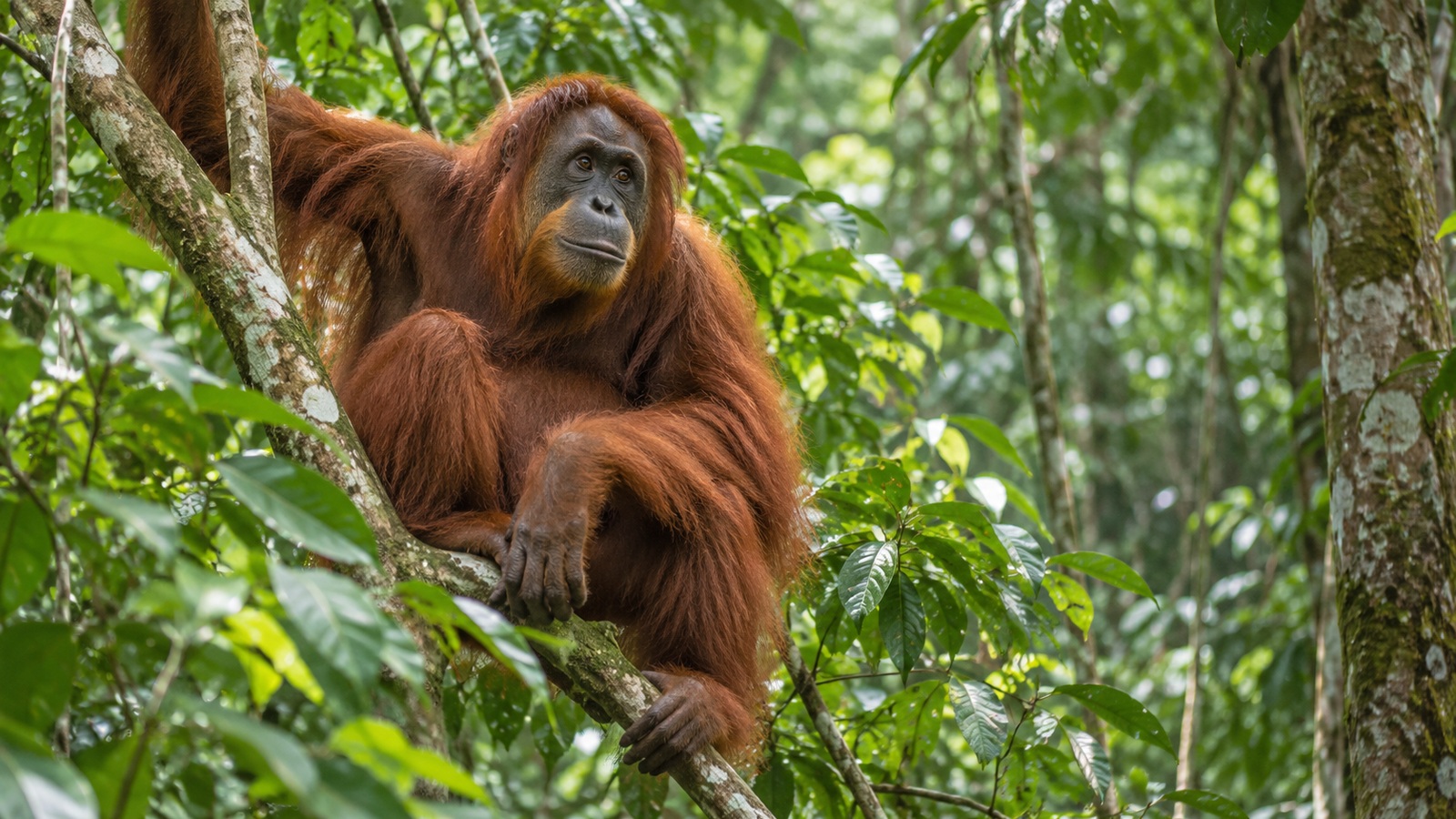
The Sumatran orangutan, Pongo abelii, is Critically Endangered. Forest conversion, fragmentation, and conflict associated with changing land use are central concerns described by the Sumatran Orangutan Conservation Programme. These animals use a forest containing food trees and routes between them, rather than a collection of isolated trunks. Their largely fruit-based diet connects survival with resources distributed across the canopy and through time.
Their pace of reproduction makes further adult losses especially consequential. A long-term study of wild Sumatran orangutans estimated first reproduction at about fifteen years in its study population. Raising the next generation is therefore a long process, and a loss cannot be replaced simply by expecting many young the following year. Young animals also spend substantial time developing the skills needed for forest life. Protecting adults and their habitat preserves that continuing biological investment.
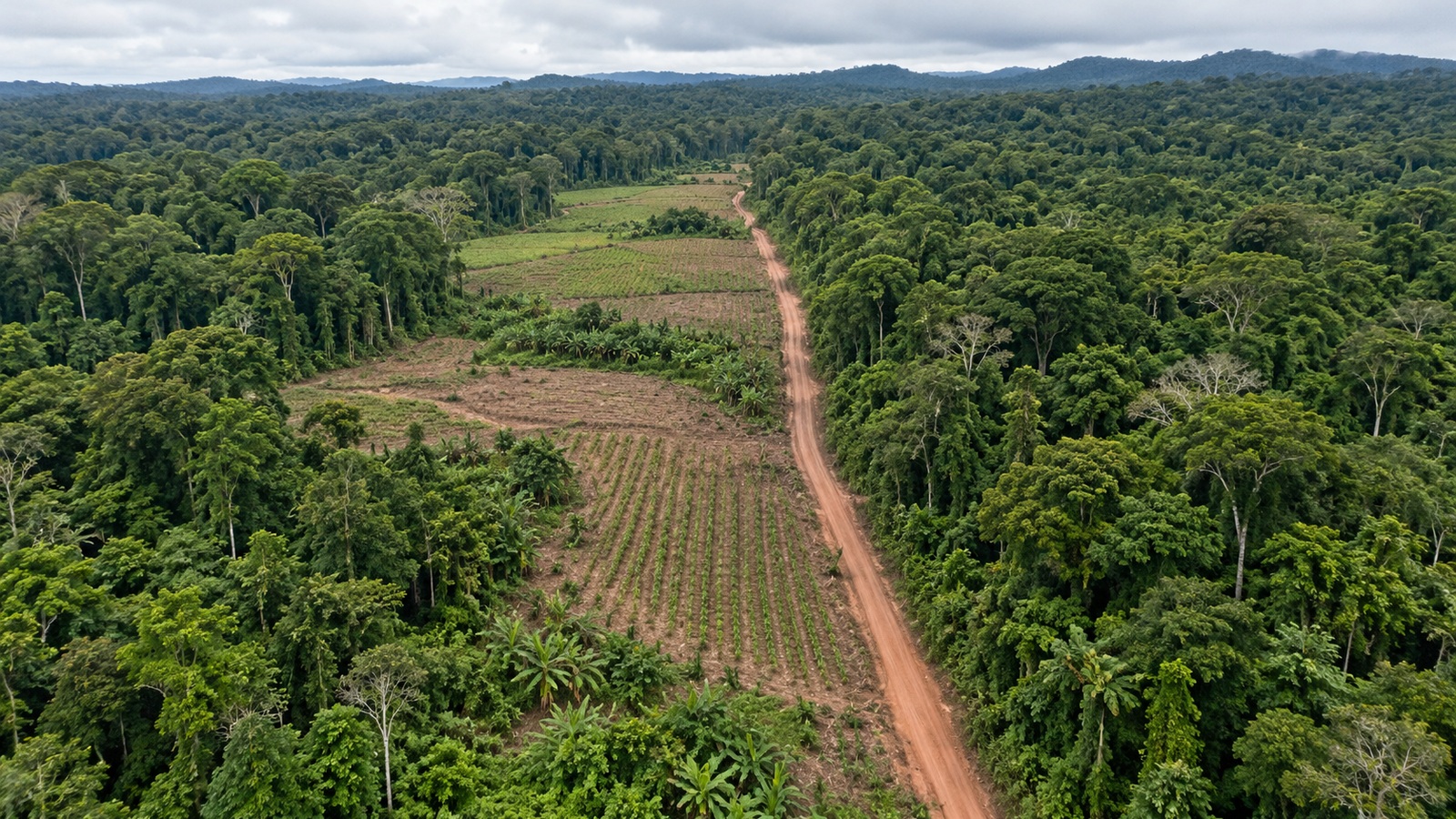
Rescue, rehabilitation, and reintroduction can help particular animals, but their prospects still depend on the forest available afterward. A released individual needs feeding opportunities and room to live without repeatedly encountering the same cause of danger. Retaining connected habitat and reducing conflict address the conditions affecting the population beyond a single rescue. This makes the conservation task concrete: keep the living places and relationships through which slow-growing animals can survive long enough to reproduce.
Hawksbill turtle: nesting beaches and reef feeding grounds belong to one life
A hawksbill’s narrow, pointed beak helps it obtain food from reef crevices, and sponges are an important part of its diet in many settings. NOAA Fisheries’ species account connects its life history with threats including exploitation, incidental capture, and habitat damage. An adult female must also reach a nesting beach, where eggs develop before hatchlings enter the sea. Protecting the reef feeding habitat and protecting the nesting place therefore address different stages of the same animal’s life. A successful nesting season cannot prevent a later death in fishing gear; safer water offshore cannot secure a beach that has become unsuitable. The turtle’s movements join places that people may manage under separate boundaries and responsibilities.
Long life and delayed maturity mean that recovery unfolds through more than one count of nesting females. Eggs must produce hatchlings, young turtles must survive their subsequent habitats, and enough animals must reach breeding age. Direct protection at a beach can be valuable precisely because those early losses matter, while efforts at sea protect another part of the sequence. Different populations encounter different conditions, so one beach’s improvement is not a complete global trend. The practical goal is continuity across the life cycle: reduce exploitation and incidental deaths, retain suitable nesting and feeding areas, and follow survival and reproduction over the time needed for the next generation to join the adults.
Kākāpō gains bring more birds into a continuing recovery
On 1 September 2026, New Zealand’s Department of Conservation reported 325 kākāpō after ninety chicks from that breeding season reached the programme’s milestone for entering the tally. Protected sites, breeding support, health care, and monitoring have helped those birds survive within the recovery work of DOC and Ngāi Tahu. The expanding group now needs suitable places for its continuing growth, with more predator-free habitat part of the challenge. Low genetic diversity also remains relevant to the population’s future. Each successful cohort adds living birds, but those chicks must grow and eventually contribute to later generations. The gain is built through sustained care rather than one breeding event alone, and continued work aims to support a population less vulnerable to the pressures that brought it close to disappearance.
A new generation has to survive beyond its first season
A calf, hatchling, or chick starts life with different needs from an adult. Its food, shelter, and exposure to predators or other dangers can change as it grows. An encouraging birth therefore begins a sequence rather than completing recovery. A hawksbill hatchling must enter the sea and survive later habitats before it can join the breeding population. A kākāpō chick grows within a closely managed recovery setting, then becomes part of the challenge of providing suitable sites for more birds.
The adults’ life histories change how quickly losses can be replaced. A slow-breeding orangutan cannot offset repeated adult deaths by producing a large group of young in the following year. Years of maternal investment and developing forest skills are part of each surviving offspring. Keeping adults alive therefore protects future reproduction as well as current numbers. Where a direct cause of death continues, even a productive season can leave the population struggling to gain ground.
Distribution adds another constraint. Javan rhinoceroses concentrated in one area share exposure to events affecting that refuge. A damaging outbreak or environmental disruption can reach a large fraction of the species without traveling across several regions. A hawksbill encounters a different pattern, using connected places across its life. Security in a nesting area and security in feeding habitat protect different portions of its future, requiring the route between them to remain usable too.
The ability to breed depends on that combination of surviving individuals and working habitat. Losing food trees, safe water, or protected ground can reduce the value of gains made elsewhere. Recovery becomes more durable when successive cohorts can develop without repeatedly facing the same avoidable losses. The small remaining population then has more opportunity to rebuild through its own biology, while support addresses the constraints that still prevent that process.
Different lives create different survival bottlenecks
For vaquitas, an encounter with dangerous fishing gear can end a life in otherwise occupied habitat. For orangutans, the loss of usable forest can remove feeding and movement opportunities across a much longer period. Kākāpō recovery depends on maintaining suitable protected sites and successful development of new birds. These pressures act on different time scales, but each can become a bottleneck through which a population’s future must pass. Gains made in one stage cannot fully compensate for persistent failure at another.
The possible responses follow those lives. Safer fishing arrangements reduce a direct risk in marine water; forest protection maintains food and space for a slow-growing primate; predator-free sites provide a different kind of shelter for a flightless bird. Each also affects people working in or managing the same places. Continuing support connects biological needs with the practical conditions under which protection can be maintained.
Protection lasts through people and the places they maintain
A protected park or recovery site needs people carrying out its daily work. Patrols, care of animals, habitat management, and the repair of equipment all depend on resources and institutions that continue after an initial campaign. At sea, a restriction on harmful gear has to change the fishing conditions the animal actually encounters. In forest, a protected boundary has to preserve usable habitat within it. The practical difference is made through those activities rather than the designation alone.
The work also changes as a population responds. More surviving young can increase the need for habitat, while a failed breeding season can leave the group dependent on adults that remain. Disease, food supply, and movement between sites add other demands. Following known individuals or surveying elusive animals helps recovery teams understand those developments. The information supports care and protection aimed at the life stages currently limiting growth, with uncertainty remaining greater where animals are difficult to observe.
Communities sharing the landscape or fishing grounds experience the costs and benefits of protection. A change in permitted gear can affect income, while wildlife conflict can damage crops or create other risks. Feasible alternatives, participation, and continued cooperation help make protection workable through time. Where those arrangements fail, direct threats can return despite the value of the animal’s habitat. Long-term recovery therefore depends on human relationships as well as on the food, shelter, and breeding opportunities the species needs.
Recovery grows when gains outlast the causes of loss
The vaquita, Javan rhinoceros, Sumatran orangutan, hawksbill, and kākāpō survive through different combinations of habitat and support. Their futures improve when enough individuals pass through the necessary stages of life and the causes of continued loss become less severe. A rescue or a successful nesting season can contribute to that process, while lasting habitat and safer conditions allow the gain to continue. Recovery is built across years through those connected opportunities. Even at very low numbers, reducing avoidable deaths can give the remaining animals and their descendants more room to persist.