The event that reveals failure may not be its only cause
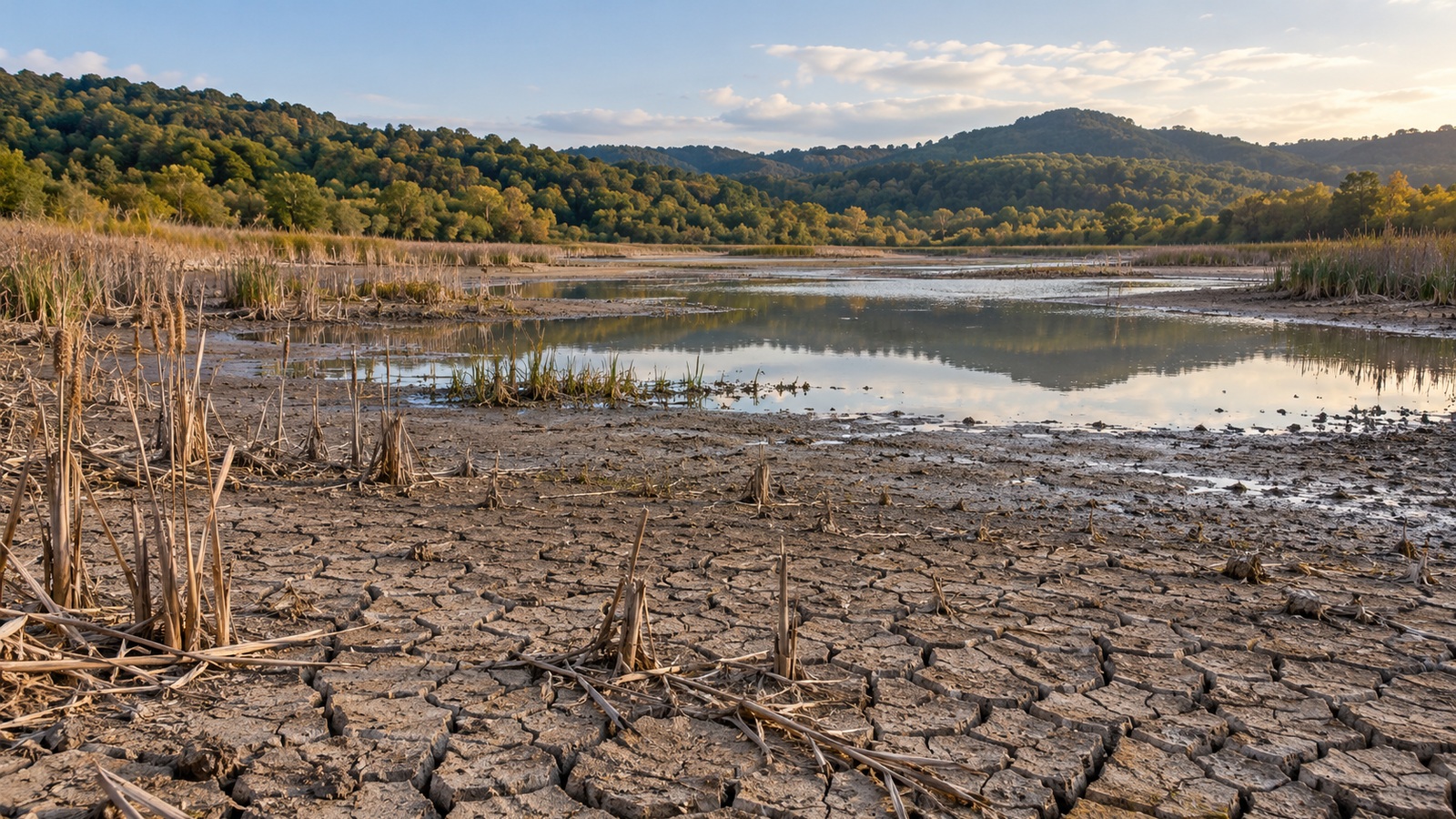
A wetland dries, a forest loses its canopy, or a coastal habitat changes after an intense period of stress. The most visible event often becomes the whole explanation. Yet the ecosystem may have been losing the conditions needed for persistence long before that final disturbance arrived. Repeated pressures can reduce regeneration, isolate surviving populations, or alter the physical processes that formerly supported recovery. A later drought or heatwave then acts on a system with fewer options than its appearance suggested. Explaining collapse requires following that longer chain of causes. It means distinguishing the pressure that created vulnerability, the event that triggered a transition, and the feedbacks that may keep the changed ecosystem in place. Those distinctions help identify useful intervention points and explain why managing the final symptom alone may fail to protect what remains.
A: The historical account also involves fishing pressure and disease, which changed the biological relationships affecting the response and recovery.
A: Direct removal can eliminate defining ecosystem features at the converted location.
A: It can restrict movements and exchanges needed for native populations to persist.
A: No; new generations may be failing even while adults remain.
A: Yes; timing, duration, and connections matter as well as quantity.
A: A new disturbance can arrive before organisms and structures have rebuilt.
A: Reduced feeding pressure can allow competing organisms to occupy space needed by returning habitat builders.
A: Later feedbacks or missing components may now prevent recovery.
A: It can retain recovery capacity even though global climate pressures remain.
A: A surviving refuge can retain breeders and supply recruits where suitable habitat and movement connections remain.
Underlying pressure, a trigger, and the barrier to return
Underlying pressure, a trigger, and a maintaining process can shape the same transition. Extraction can reduce organisms that help a community recover; a storm can then cause rapid visible damage; a changed food web can restrict later regeneration. These roles can overlap, with continued pressure reinforcing the aftermath of an event. A well-regenerating habitat and a depleted one can therefore respond differently to the same storm. Their starting conditions influence which living sources and recovery pathways remain afterward.
The IUCN ecosystem framework defines collapse through the loss of defining features and a change in identity. Those features depend on habitat-forming organisms, suitable physical conditions, and the arrival and survival of new generations. Interruption of any one relationship can change what the ecosystem supports. Removal of grazers, for example, can allow competitors to occupy newly opened space, while changes in water timing can prevent characteristic plants from reproducing. Vulnerability accumulates as these supports weaken. A later shock can then affect a community with fewer surviving sources and fewer opportunities for renewal.
Habitat removal can eliminate the system directly
Some changes do not require a subtle tipping point. Converting native habitat to a fundamentally different land use can remove the organisms and conditions defining it. At the scale of the converted patch, the former ecosystem may simply cease to occur. The wider consequences depend on how much distribution remains, its condition, and the connections among surviving places. Direct conversion should not be confused with every temporary disturbance that removes visible vegetation. A natural disturbance can leave regeneration sources and physical processes intact, whereas a lasting change in land use can prevent that recovery pathway from operating. The distinction is whether the conditions needed for the native ecosystem remain available, not merely whether the scene initially appears bare.
Fragmentation can weaken what the surviving area can support
Remaining habitat can become divided into smaller, isolated patches. That separation can restrict movement, reduce access to seasonal resources, or make local populations less likely to be replenished after a loss. Edge conditions may also change the environment inside a patch. A map showing native habitat in several places does not establish that those places still operate as an effectively connected ecosystem.
The effects differ with movement ability and life history. A gap easily crossed by a flying animal can separate populations of a less mobile organism. Seeds can depend on particular dispersers, and aquatic animals may need a connected route during a short breeding period. A corridor contributes only when the organism can use it and reach suitable conditions beyond it. Successful movement then gives a depleted site access to recruits and allows populations to exchange individuals rather than remain isolated after local losses.
Disrupted water and sediment processes can change the foundation
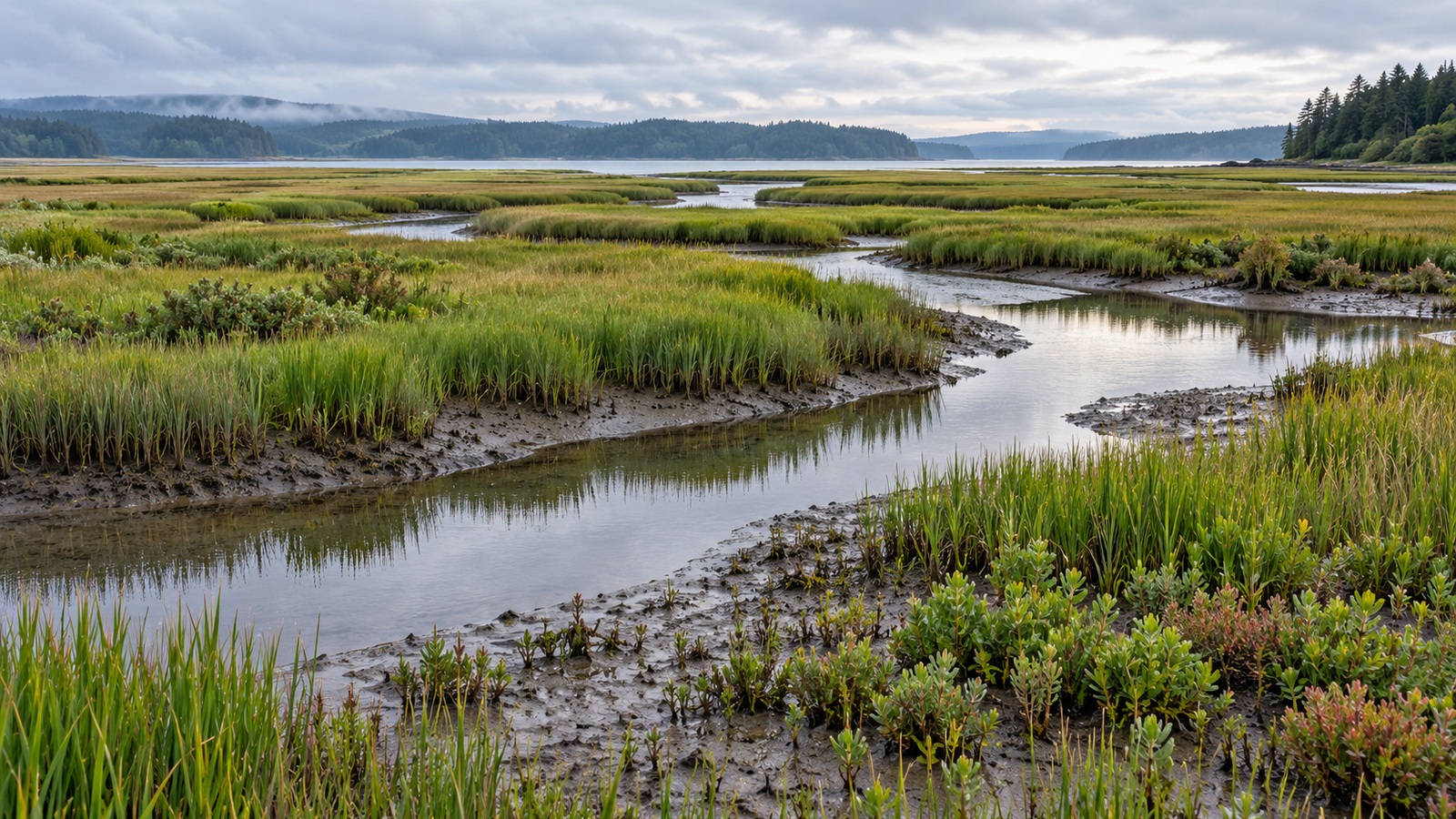
Water quantity alone rarely describes everything a wetland, river, or floodplain needs. Seasonal timing, flow variation, duration of inundation, and connections with surrounding areas can influence the native community. Altering those patterns can change recruitment opportunities and the physical environment. A site may retain water while losing the particular regime that sustained its characteristic organisms.
Sediment and soil processes can also influence persistence. Erosion, accumulation, compaction, or altered chemistry may change the conditions encountered by roots, burrowing organisms, or aquatic habitat builders. The significance depends on the site and the ecological requirements involved. A visible symptom, such as sparse vegetation, can therefore originate in a physical process that planting alone cannot correct.
Water and sediment move across boundaries, carrying effects from one part of a landscape to another. Upstream changes can alter the timing of downstream flows, while surrounding land use can change what reaches a remnant. A protected patch therefore continues experiencing processes controlled outside it. Vegetation can lose suitable establishment conditions even when no clearing occurs inside the boundary. Coordinated protection of the connected system can preserve the physical relationships that the remaining habitat needs.
Pollution can alter resources and physiological conditions
Pollutants alter resources and physiological conditions through different mechanisms. Excess nutrients can promote algal growth, while decomposition consumes dissolved oxygen, as the Environmental Protection Agency explains. Low oxygen reduces usable habitat for aquatic organisms and can cause mortality where escape is impossible. Other contaminants can affect survival or reproduction without producing the same pathway. Repeated exposure can remove young, reduce breeding success, or interrupt recovery between events. The consequences accumulate when affected populations cannot replace losses during the intervals that remain suitable.
Jamaican reefs show how extraction and later disturbances can combine
Terence Hughes’s 1994 study of Jamaican reefs described a shift from coral toward fleshy macroalgae after overfishing, hurricane damage, and disease combined. Coral cover in the historical comparison fell from more than 50 percent in the late 1970s to less than 5 percent by the study period. Fishing had reduced an important part of the grazing community before later disturbances. Physical damage opened reef space under conditions in which algae faced fewer consumers, changing the opportunities available to new coral colonies.
Grazing links the pressures biologically. Removing herbivorous fishes reduces one route by which algae are consumed. Loss of grazing urchins removes another, while physical damage opens space on the reef. The resulting competition for that space affects opportunities for young corals. A disturbance can therefore operate on a food web already less able to keep algal growth in check. The causal chain concerns the work performed by the remaining organisms, not simply whether a fish or coral species is still present somewhere in the area.
Introductions and disease can create new routes to ecological loss
Introduced organisms may change competition, predation, disease pressure, or habitat conditions. Some affect many native species indirectly by changing a physical or biological process. Others exert concentrated pressure on a crucial habitat builder or vulnerable population. Whether those changes threaten ecosystem identity depends on the relationships involved, not simply on the invader’s abundance or unfamiliar appearance.
Disease can remove organisms already under environmental stress, or affect a functional group that previously helped the community withstand disturbance. Loss of a habitat builder changes shelter directly. Loss of a consumer can instead release another organism from feeding pressure, altering competition or resources. The community’s response depends on which relationship is affected and what alternatives remain. Other organisms can sometimes partly maintain a function, while a highly specialized relationship has fewer substitutes after its partner disappears.
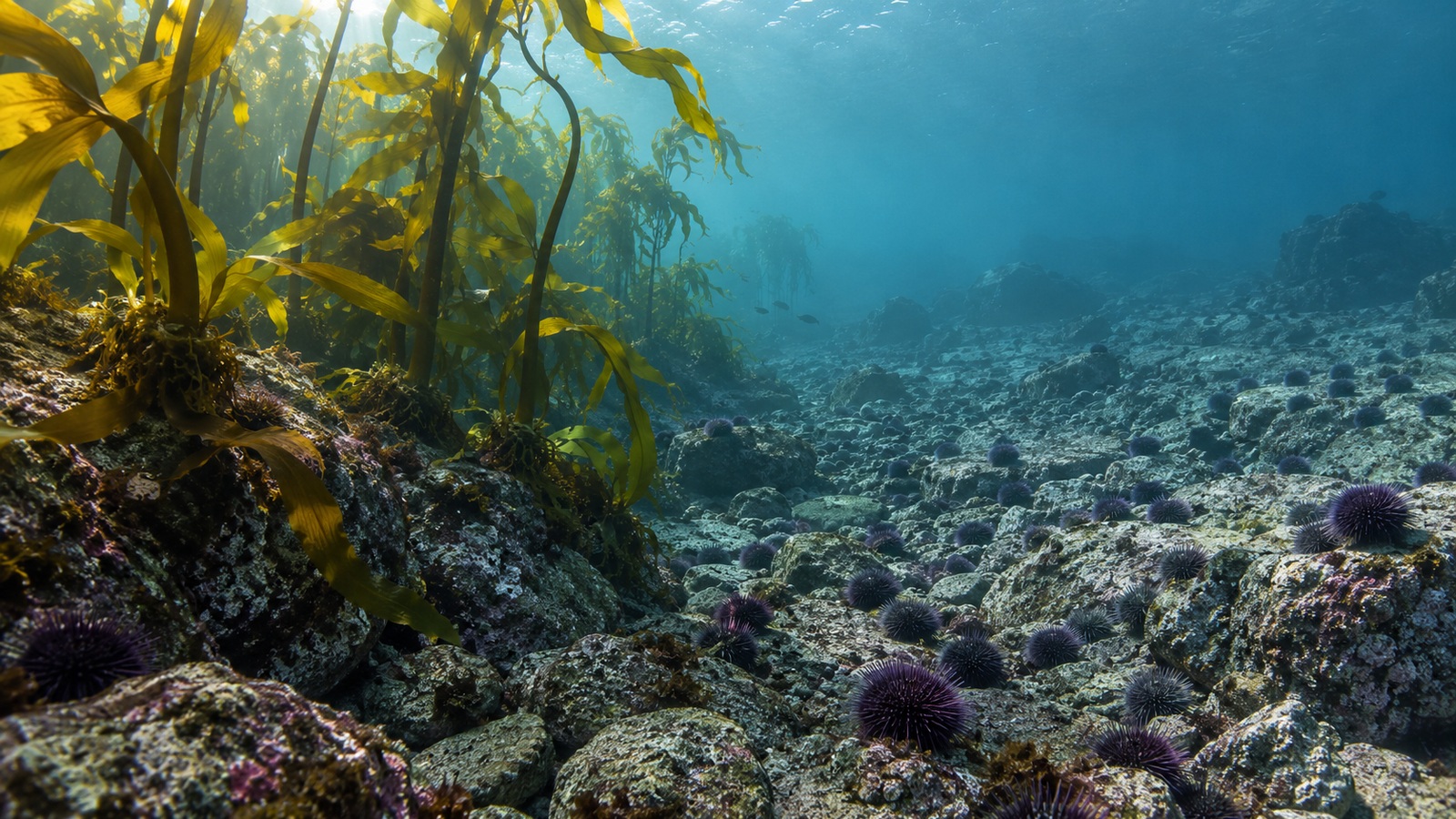
The NOAA account of northern California kelp decline describes warm conditions and changed grazing relationships acting together. Heat stressed the habitat-forming kelp while the loss of a major urchin predator changed the food web around it. Urchins could continue consuming new growth after the initial warm episode. The remaining seabed still supported animals, but rebuilding the canopy required kelp to establish under grazing conditions different from those before the decline.
Climate change can increase stress and shorten recovery intervals
Changing temperatures, water availability, and extreme conditions can affect the suitability of habitat and the frequency of damaging events. A disturbance that once occurred after ample recovery time may recur before populations or structures have rebuilt. The resulting pressure is partly about timing. Recovery capacity can decline even if no individual event seems wholly unprecedented.
Climate stress also acts on local constraints. Fragmentation can prevent movement toward suitable habitat, while an altered water regime can intensify a dry period. Removing local pressure cannot eliminate the wider warming influence, but it can preserve sources and processes that help organisms survive it. A connected refuge can retain individuals and supply later recruits. Reduced direct mortality can leave more breeders alive when a favorable period returns, preserving recovery capacity under continuing environmental change.
Slow loss of resilience can make a sudden change look surprising
Resilience depends on living sources, varied responses, refuges, and physical conditions that remain suitable. Those supports can decline gradually while the dominant adults still appear abundant. Missing seedlings, reduced breeding success, or isolation then weaken the next generation without immediately removing the present one. A later disturbance exposes the accumulated vulnerability by killing organisms that have too few replacements. The apparent suddenness reflects the timing of visible loss rather than the beginning of every cause. A system retaining varied populations and usable connections has more routes to renewal than one reduced to a few isolated remnants.
A changed community can create a different barrier to returning
After a trigger ends, recovery may still be constrained by the state it left behind. Extensive algae and reduced grazing can affect space available to corals. A 2007 Caribbean reef modelling study examined how coral cover and grazing influence the possibility of alternative stable states. Such work explains why returning the original environmental condition may not automatically retrace the decline. The current community and its interactions become part of the recovery problem.
A feedback can maintain a changed community without making return impossible under every circumstance. Reduced grazing, persistent competitors, and missing coral recruits create different barriers from the storm that initially opened space. New colonies need to arrive, establish, and survive long enough to rebuild habitat. Continued external stress can still interrupt those stages. Recovery becomes possible where the combination of conditions allows characteristic organisms to pass through those vulnerable periods and begin contributing to later generations.
Preserving the conditions for the next generation
A reef retains its character through living coral, the structure colonies build, and renewal by younger colonies. A wetland depends on the timing of water and the plants and soil processes those conditions support. Retaining those relationships protects more than the organisms currently visible. It preserves the way the community replaces losses and maintains suitable habitat for other life. A missing functional group or interrupted physical process can weaken that ability long before the whole scene changes.
Earlier extraction, a later disturbance, and the resulting community can form a continuing sequence. Each stage changes what the next encounters. A habitat with fewer breeders receives less regeneration after damage, while a new dominant competitor can use space before former residents return. Repeated stress can then arrive before young establish. Interrupting a continuing loss or restoring a missing source changes the opportunities for that next generation, even when the original event has already ended.
Ecosystems collapse when changes overwhelm the conditions and renewing processes sustaining their identity. The final visible event can be one part of a longer history. Remaining refuges, habitat-forming organisms, appropriate flows, and sufficient reproduction preserve alternatives to a lasting transformation. Protection of those components can help a damaged community renew itself when conditions permit. Where several constraints remain, coordinated action can give returning organisms an opening that a single change would not create.