Collapse changes an ecosystem’s defining community and relationships
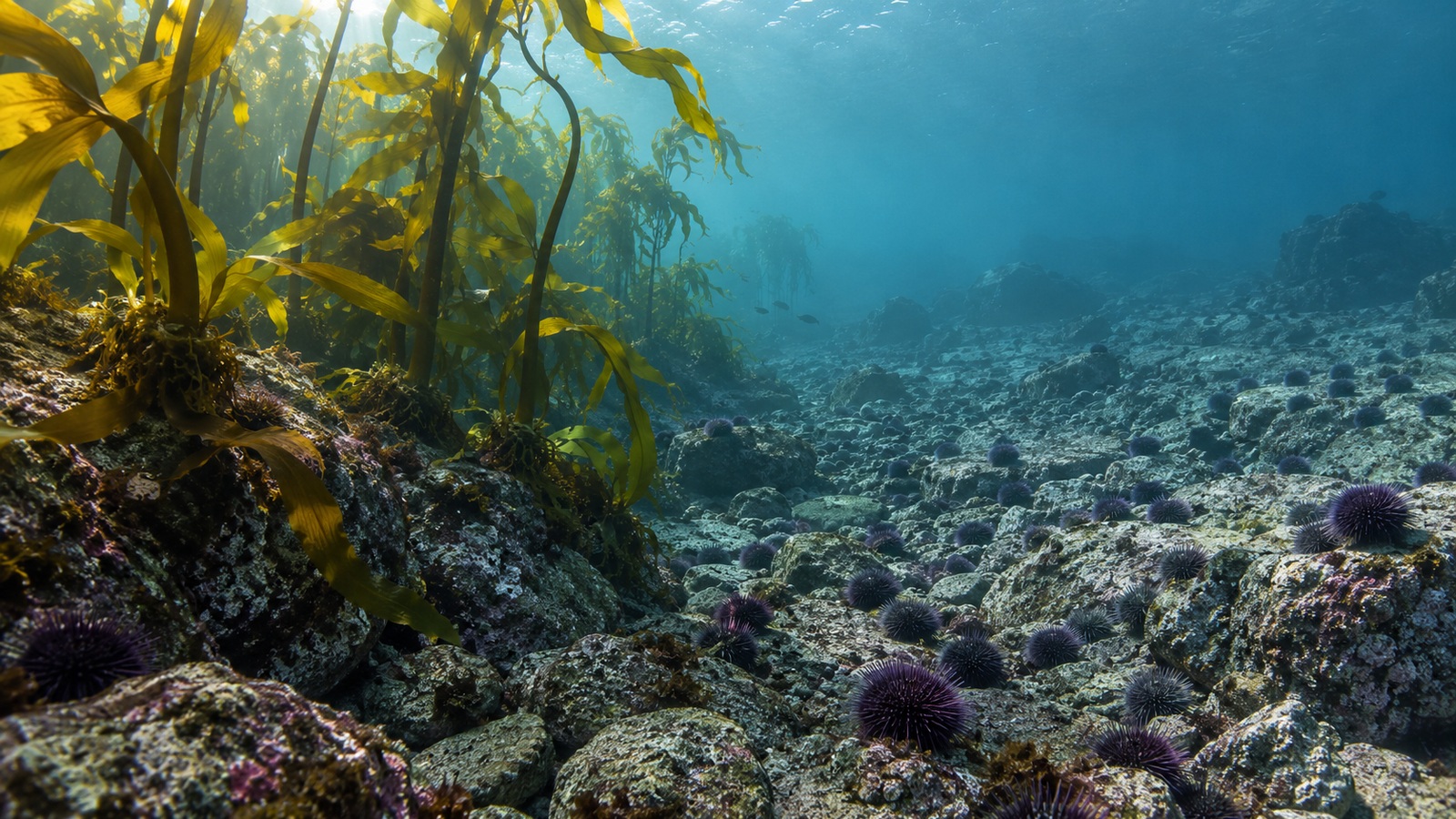
Imagine returning to a coastal site where a tall kelp canopy once sheltered a varied community. The water and rocks remain, and sea urchins may be plentiful, but the structure defining the former habitat has largely disappeared. Ecosystem collapse describes such a fundamental loss of characteristic features and relationships that the original system gives way to a different identity. It need not leave the place lifeless. Organisms can remain abundant and decomposition can continue while the former community no longer sustains itself. Northern California’s bull-kelp decline provides a striking example: extensive canopy was replaced by a more exposed, urchin-dominated environment. The transformation affected both the habitat-forming organism and the conditions supporting its return. Grazing, reproduction, water conditions, and connections to surviving populations can determine whether the earlier community rebuilds or a different state persists.
A: No. Northern California's kelp transition illustrates loss of a defining canopy while other organisms, including urchins, remain.
A: The outcome depends on the ecosystem, disturbance, and capacity to retain or recover defining features.
A: No; relevant boundaries depend on the ecosystem and assessment method.
A: Abundance of some organisms does not demonstrate persistence of the former relationships.
A: A threatened category indicates collapse risk within the assessment framework.
A: It may maintain altered conditions after the original pressure is reduced.
A: Yes; local transformation and loss across an entire distribution have different scales.
A: No; outcomes depend on extent, duration, ecological relationships, and subsequent conditions.
A: Recovery may be possible, depending on remaining components and reversible constraints.
A: Trees and other habitat-forming organisms need time to establish, grow, and develop the structures used by other species.
Ecological identity comes from relationships as well as residents
An ecosystem includes organisms, their physical environment, and the processes connecting them. Its identity can depend on dominant vegetation, water conditions, disturbance, food-web relationships, and organisms that create habitat for others. The IUCN Red List of Ecosystems glossary defines collapse through the loss of defining features and a transformation of identity. A kelp forest’s canopy changes the space available to marine life. When that habitat-forming organism no longer persists, the remaining animals inhabit a physically different environment with different feeding and shelter opportunities.
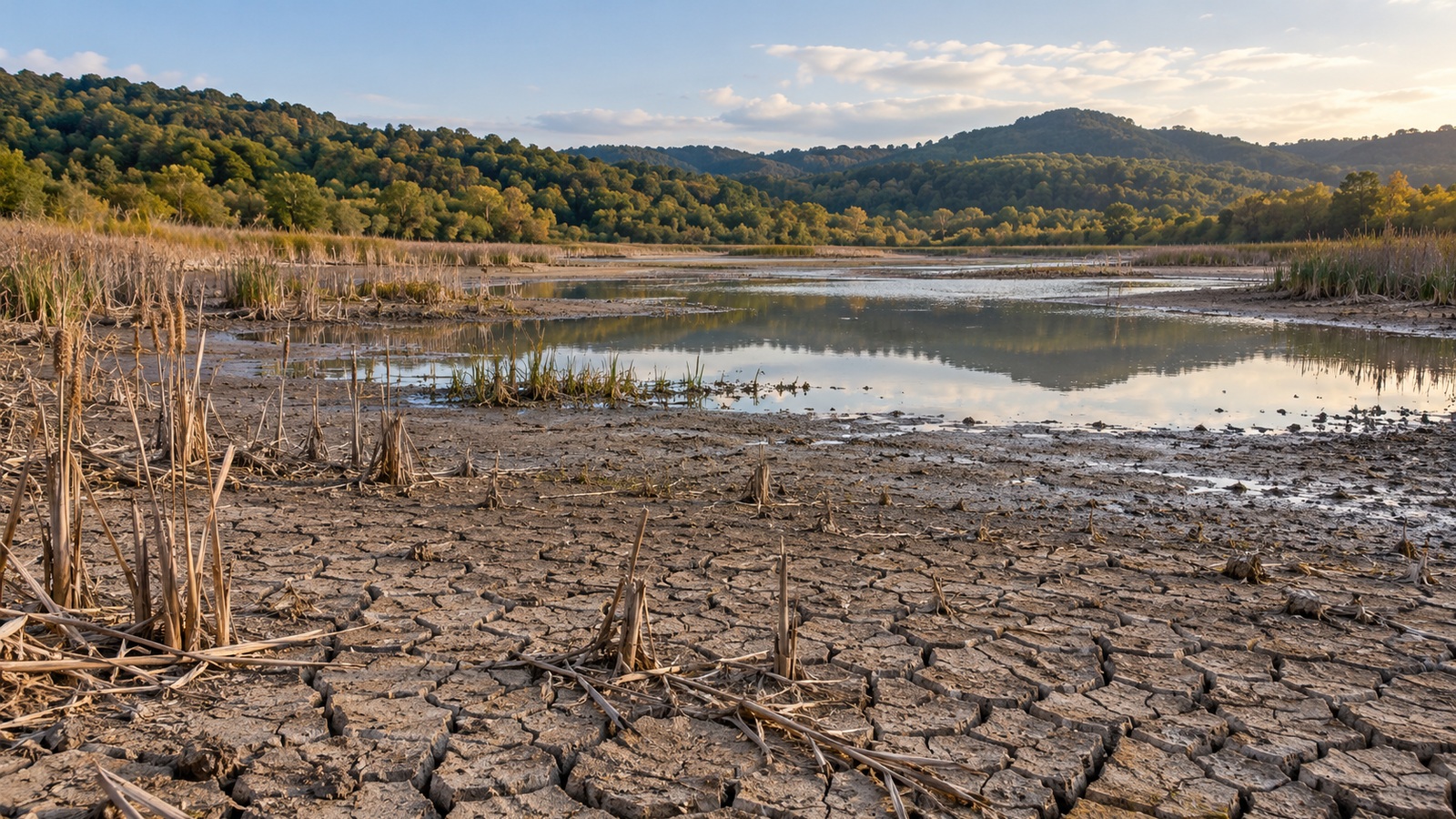
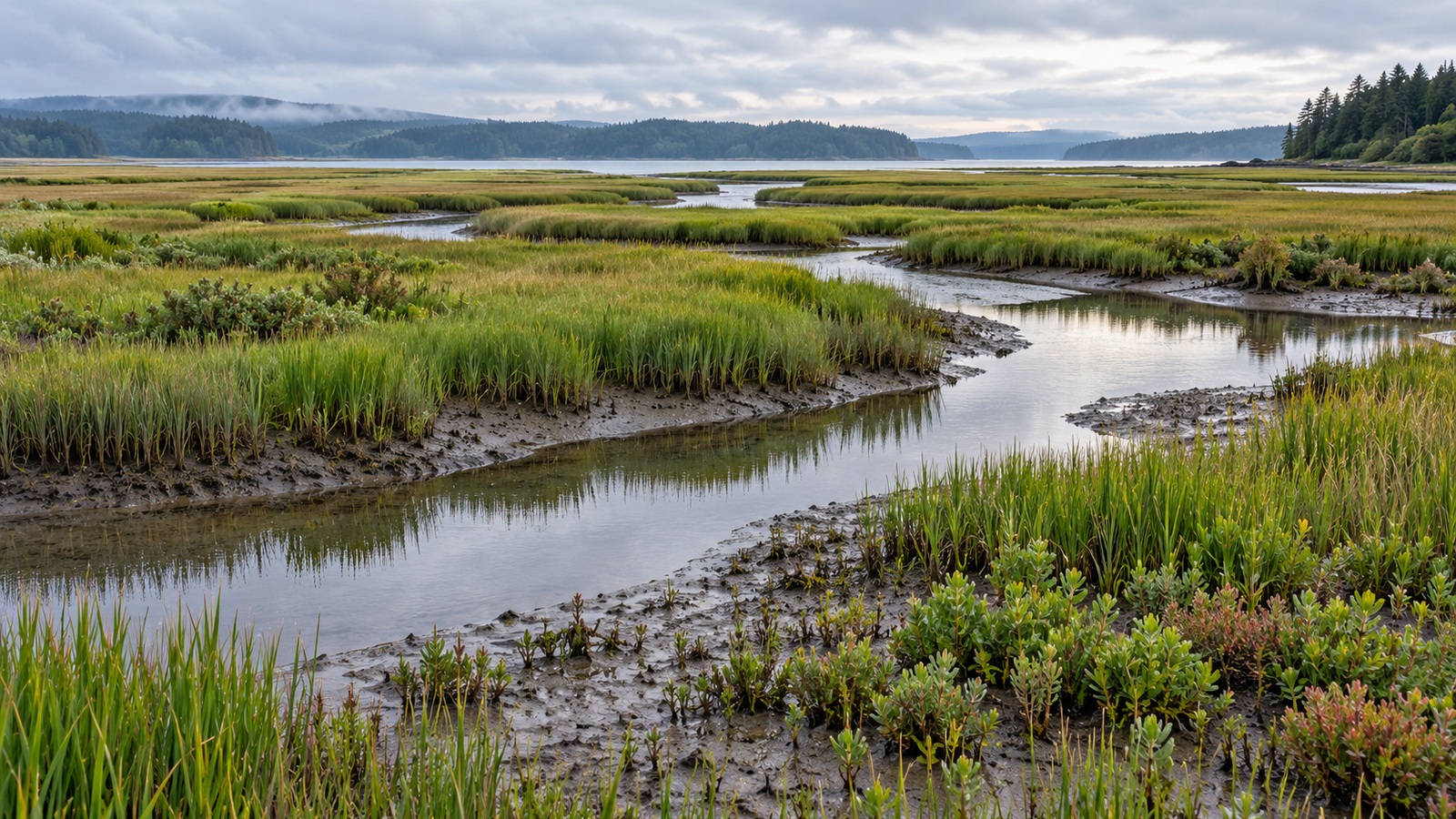
A wetland likewise depends on more than its plants. Water timing and depth influence soils, reproduction, and the organisms able to live there. Draining the site can alter those conditions even before every wetland plant disappears. A forest’s structure develops through growth and regeneration, supplying resources that scattered surviving trees cannot fully maintain. Large trees may remain for years after recruitment fails, leaving a visible remnant without the younger generations needed to sustain the former canopy.
Degradation and collapse describe different degrees of change
A degraded ecosystem has lost condition, extent, or function while retaining enough of its defining relationships to persist or recover as the same type. Collapse involves the loss of those features and transformation into a different identity. The boundary differs among ecosystems because their sustaining processes differ. A storm can remove much of a canopy while leaving regeneration and habitat conditions intact. Repeated stress can instead prevent new habitat-forming organisms from establishing. Where the conditions needed for replacement disappear, surviving adults may be the last substantial part of the former community rather than the beginning of recovery.
Processes can continue while the former community loses its footing
A transformed ecosystem can remain productive and contain large numbers of organisms. An exposed seabed with many grazing urchins still supports feeding and reproduction. It nevertheless provides different shelter and food from a tall kelp canopy. The loss changes the relationships available to other species, including those that used the former structure at vulnerable life stages. Biological activity continues within a community that has become different in composition and function.
Green vegetation can also persist after characteristic native plants decline. A dense replacement stand may produce substantial biomass while supplying different food, nesting sites, or seasonal resources. Species relying on the former plants then face a changed habitat despite the continued green cover. Reproduction can fail before all adults disappear, gradually shifting the community toward organisms able to use the new conditions. Increased abundance in one group can therefore accompany declining opportunities for another.
A replacement organism may occupy space without recreating the previous structure. Low vegetation does not supply the cavities of old trees, and exposed rocks do not offer the same shelter as a kelp canopy. Those differences affect which animals can feed, avoid predators, or reproduce there. Returning habitat-forming organisms can rebuild some of the missing relationships, but they need to grow through vulnerable stages first. Recovery of cover can precede recovery of the habitat’s more complex functions.
Thresholds and the loss of replacement
A threshold is a point or range beyond which change produces a qualitatively different outcome. In ecosystems, a boundary can involve water conditions, habitat-forming organisms, or recruitment. A plant population can withstand some losses while sufficient adults and young remain, then fail to replace itself when a necessary resource becomes too restricted. Some transitions develop quickly; others accumulate over many generations. Their pace follows the organisms and physical processes involved rather than one timetable shared by every landscape.
Water availability shows how a boundary can become consequential. A modest change in a water regime may leave wetland plants within their tolerances, while a longer dry period can prevent establishment or alter soil conditions. Continued drying then favors a different community. The exact boundary varies with the plants, soils, and seasonal pattern. Long-lived residents can delay the visible transition even after the conditions required for their offspring have changed, separating the onset of failure from its most conspicuous consequences.
Northern California's bull-kelp decline gives the transformation a measured scale
A 2021 study led by Meredith McPherson used a thirty-four-year record to examine northern California bull kelp. Canopy declined by more than 95 percent during 2014–2015, with losses persisting through the following years in the analysis. Marine heatwaves, loss of a major urchin predator during sea-star disease, and increased purple-urchin grazing contributed to the changed system. Exposed habitat still contained animals but lacked the former canopy’s structure. Urchins could continue consuming new growth, restricting the opportunity for kelp to rebuild after the initial heat stress. The regional transformation combined the loss of a habitat-forming organism with continuing pressure on its return, leaving other marine life in a different physical and ecological setting.
Feedbacks can keep a changed state in place
A feedback occurs when an ecological change influences processes that subsequently reinforce or counteract it. Sustained grazing can prevent a plant or alga from reestablishing, keeping the habitat in the more open condition used by the grazers. Altered water or soil conditions can likewise favor the replacement community. Several processes can operate together: a habitat-forming organism becomes scarce, its young face heavy losses, and the remaining population supplies fewer recruits. Persistence of the changed state can then outlast the event that first caused the decline.
When reinforcing feedbacks are strong, removing the original pressure may be insufficient to restore the previous system. Conditions needed for recovery can differ from those under which the decline began. Ecologists call this kind of path dependence hysteresis when the return trajectory differs from the trajectory of change. The practical implication is straightforward: recovery may require rebuilding missing relationships or changing several constraints together, rather than merely reversing one recent action.
Nutrient enrichment can reduce usable aquatic habitat
Excess nutrients can stimulate algal growth, while decomposition of organic material consumes dissolved oxygen. The Environmental Protection Agency explains these pathways and their effects on aquatic life. Animals unable to move away can face unsuitable conditions where they live or reproduce. Low oxygen can reduce usable bottom habitat even while surface water appears busy with life. The duration and extent of the affected water influence whether organisms survive the episode and return afterward.
Repeated episodes can shorten recovery opportunities. Mobile fish may leave an affected area, while bottom-dwelling animals have fewer ways to escape. Mortality can change the resources available to survivors and remove organisms that process material in the sediment. New growth or returning animals can rebuild populations between events, but renewed oxygen depletion may interrupt that process. A short favorable interval may be insufficient for young organisms to mature and contribute to later reproduction.
Conditions also vary with depth and season. A surface layer can remain suitable while deeper water loses oxygen, separating a fish from part of its former feeding habitat. Eggs or young occupying a particular depth may be exposed at a different time from adults elsewhere in the water. The overlap between unsuitable conditions and a vulnerable life stage shapes the population consequences. Reducing nutrient inputs can relieve a continuing source of pressure, although physical conditions and biological recovery may change at different rates.
Local transformation and wider ecosystem risk
A local patch can lose a habitat’s defining features while examples of that ecosystem persist elsewhere. Surviving sites can retain organisms and reproductive material that support future recolonization where connections remain. Wider loss reduces those sources and exposes more of the ecosystem to shared pressures. The IUCN ecosystem assessment framework considers distribution, environmental degradation, disrupted biological processes, and collapse risk. A threatened category describes risk rather than a completed transformation everywhere. Restricted ecosystems can be especially exposed when a single disturbance reaches a large fraction of their remaining distribution.
People experience the loss through changing ecological benefits
Ecosystems influence food, water, coastal protection, livelihoods, cultural practices, and opportunities to encounter wildlife. When defining ecological relationships disappear, those benefits can change in amount, reliability, or distribution. The losses may fall especially heavily on people who depend directly on local conditions and have few substitutes. An economic total can help describe some consequences, but it does not capture every cultural relationship or ecological value affected.
Land and water decisions also change the conditions supporting persistence. Draining a wetland alters its water regime; removing vegetation can disrupt soil protection and regeneration; continued warming can increase stress on habitat-forming organisms. Reducing those pressures protects the biological processes through which ecosystems maintain themselves. Nearby communities and institutions influence access, management, and the continuity of protection, connecting ecological recovery with decisions made beyond a single damaged patch.
Recovery depends on what remains and what can return
Recovery depends on surviving organisms, reproductive sources, physical conditions, and connections to healthier sites. A nearby population can supply seeds or mobile recruits, while an isolated site may lack that route. Altered soils, water regimes, or continued grazing can prevent establishment even after the initial disturbance ends. Restoring several missing components together may create opportunities unavailable through a single intervention. Continuing environmental change can also shift the conditions under which the former ecosystem developed. Different parts of recovery proceed at different rates: water quality can improve before vegetation matures, and mobile animals can arrive before complex shelter returns. Newly planted trees need years to supply substantial structure and longer to develop some mature features. Successful recruitment across later seasons gradually makes the returning community less dependent on the first intervention.
Protecting the relationships that sustain an ecosystem
Protection retains both the organisms already present and the conditions supporting their replacements. Connected habitat allows movement from surviving populations, suitable water regimes permit reproduction, and relief from sustained mortality gives young a chance to mature. Multiple functioning sites also provide separation from a local catastrophe. Where habitat-forming organisms remain, their continued growth preserves structure that would take much longer to rebuild after loss. These living sources can keep recovery possible across a wider landscape.
Restoration builds on what survives while addressing the processes preventing return. A recovering canopy changes shelter and food availability, native recruits gradually occupy suitable space, and repeated successful generations reinforce persistence. Some sites retain constraints that require continuing management, especially where external pressures remain. The lasting gain is a community able to sustain its characteristic relationships through time, with the habitat-forming organisms, physical conditions, and reproductive pathways needed for the next generation.