An expanding boundary tells only part of an invasion’s story
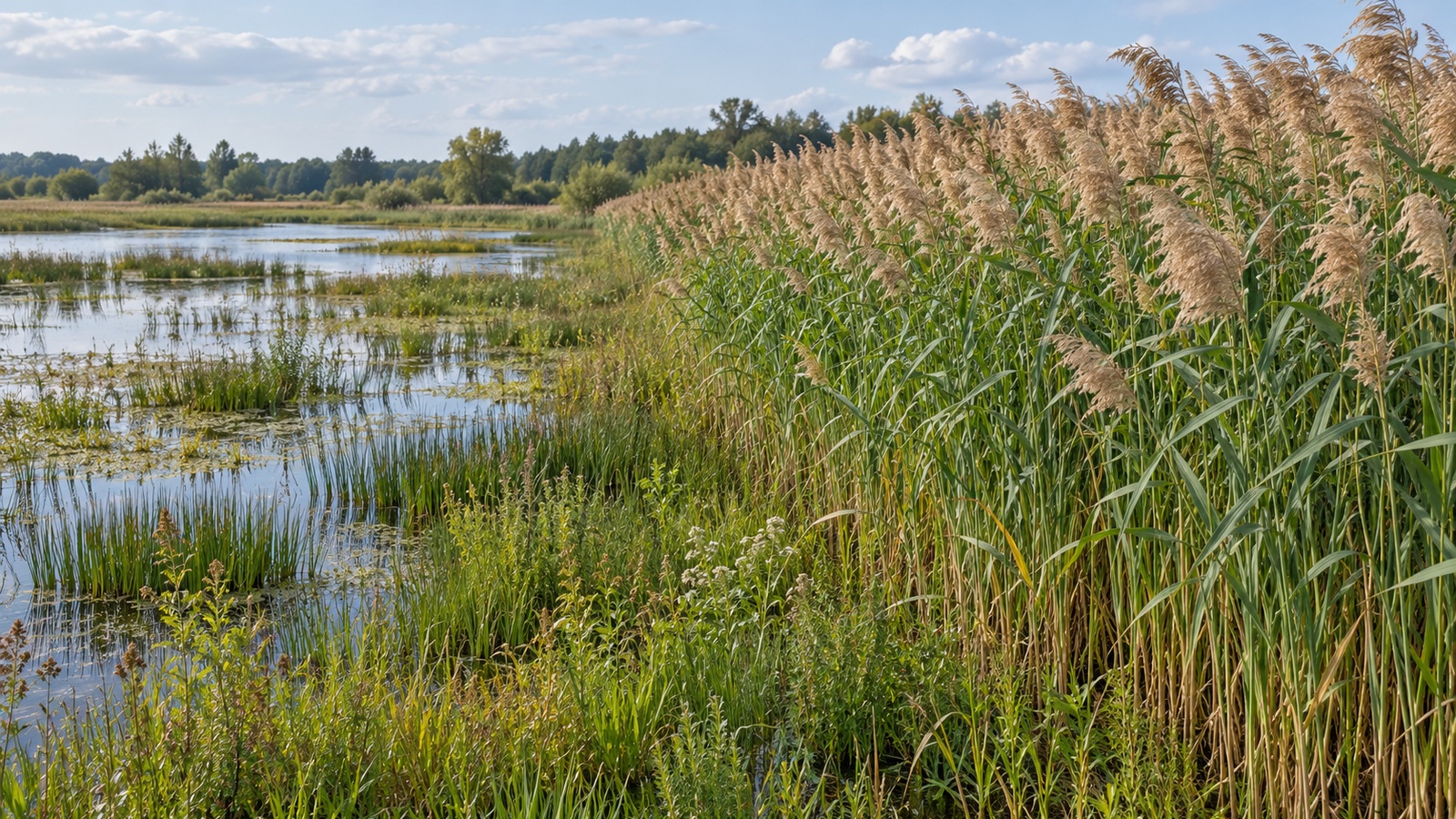
At the edge of a marsh, a dense wall of reeds can appear to advance as one continuous front. The visible stems conceal much of the process: underground growth, seed movement, changes in available space, and the history of how the plant arrived. Other invasions spread in jumps, with new patches appearing far ahead of an older population after organisms travel with people or equipment. Neither pattern requires an invader to possess a universal advantage over every native species. Expansion emerges from the interaction between an organism’s biology, opportunities for movement, and conditions in the receiving ecosystem. Understanding those interactions explains why some introductions remain small, why others accelerate after a quiet interval, and why stopping a transport pathway can be as consequential as treating the largest visible patch. The process also reveals where intervention can work before ecological change becomes difficult to reverse.
A: No. Transported soil containing viable plant material can create a separate patch, as Japanese knotweed illustrates.
A: They provide more organisms or opportunities to encounter favorable conditions.
A: No; some introductions establish in relatively intact communities.
A: No; small populations, delayed effects, or changing conditions can conceal future risk.
A: It supports vegetative growth that produces shoots beyond the original patch.
A: A separate outlying population that may become another source of spread.
A: No; enemy release explains some cases but is not universal.
A: Seed sources, site conditions, or continued pressures may still limit establishment.
A: Yes. Competition or habitat changes can prevent seedlings and young animals from replacing surviving adults.
A: It can become a new source beside previously unexposed habitat and additional transport routes.
Japanese knotweed can travel with the soil around it
An invasion can move before its visible edge advances. In England, government guidance on Japanese knotweed explains that underground rhizomes can remain dormant and regrow when soil is disturbed or relocated. Rhizomes are underground stems, carrying the potential for new shoots as well as stored resources. Their importance is easy to miss when a site is judged only by the stems standing above ground. Moving material from an occupied site can therefore create a distant patch without the plant gradually growing across all the intervening land. The relevant transport unit is part of the living underground plant, not necessarily a seed.
A new stand can therefore appear beside a work site far from the original plant. Underground material arrives within soil, then produces visible growth when conditions permit. Other organisms travel with vessels, equipment, living plants, or intentional releases. Each arrival places a new population beside another set of resources and potential dispersal routes. Several separate patches can eventually expand toward one another, creating a broad distribution from movements that began as isolated jumps.
Establishment requires a population that can replace itself
A newly arrived individual is not the same thing as an established population. Survival through an initial season may be followed by reproductive failure, unsuitable winter conditions, or loss of young before they mature. A self-sustaining population must produce enough surviving recruits to persist without continual replacement from outside. The exact requirements vary: some organisms need compatible mates or partners, while others can reproduce from a single individual or vegetative fragment. Chance also matters when numbers are small. A run of unfavorable conditions can end an introduction that might have persisted under a different sequence of events. Recognizing these filters helps explain why numerous transported organisms never create a spreading invasion, even when the receiving habitat initially appears suitable.
Repeated arrivals can change the odds of persistence
The number of organisms arriving and the frequency of arrivals influence opportunities for establishment. Ecologists often describe these components together as propagule pressure. Repeated transport can place organisms in the environment across different seasons or weather conditions, creating more chances for a successful match. Larger introductions may reduce problems associated with very small populations, including difficulty finding a mate. Different arriving individuals can also carry variation that affects their performance under local conditions. None of these advantages overrides a completely unsuitable environment, but they can increase the probability that at least some arrivals persist and reproduce.
Repeated arrivals can overcome the failure of an earlier introduction. A later movement may bring more individuals, a compatible mate, or a life stage that survives local conditions better. Arrival during a favorable season can provide time to grow before the next difficult period. Repeated transport can also replenish a population that would otherwise disappear. Nearby sites may still differ in moisture, temperature, resident competitors, or access to food, so establishment can remain uneven across the receiving landscape.
Resource opportunities depend on timing as well as quantity
Plants and animals need access to resources at the stages when those resources support survival and reproduction. A disturbance may open space, change light conditions, or create a temporary pulse of available nutrients. An introduced organism able to use that opportunity can gain a foothold. Research syntheses such as the USGS assessment of invasive annual grasses and vegetation treatments examine how invasion risk interacts with disturbance and land-use history.
An intact community can also be invaded when an arriving organism finds usable resources or a vulnerable host. Disturbance merely changes some of the opportunities and constraints. A canopy gap can increase light at ground level, but a seed still needs suitable moisture and soil conditions to become a plant. Resident organisms can quickly occupy the opening. In another setting, a pathogen can spread among mature hosts without waiting for bare ground or a dramatic physical change.
Timing can also create priority effects. An organism that establishes early may occupy space or consume resources before later arrivals can use them. The outcome depends on the species and setting, rather than following an automatic rule that the first arrival always wins. This is one reason restoration planning considers both the conditions left after removal and the availability of desirable native recruits. Empty space alone does not specify which community will develop next.
Enemies and partners can make a new environment different
Transport can leave some predators, parasites, or pathogens behind while carrying the organism itself into suitable habitat. Reduced losses to those enemies can allow more individuals to survive and reproduce. The new community may contain other consumers, but their feeding may be too limited or seasonal to restrain growth. Arrivals also fail when they encounter effective enemies or lack necessary partners. A plant without suitable pollination or soil relationships may survive briefly without establishing a self-sustaining population. These biological connections operate alongside temperature, moisture, and resources, making a receiving environment different from the organism’s former home in several ways at once.
Reproduction and local growth build the first strongholds
Once established, a population can expand through offspring or vegetative growth when conditions allow. For plants, belowground structures can connect new shoots to an existing stand, making the visible patch only part of the organism’s occupied space. The USGS profile of introduced common reed describes the role of rhizomes in dense stands. Correct identification matters because native and introduced lineages of common reed occur in North America.
Local growth can gradually change access to light, water, food, or physical space. Native seedlings may fail beneath dense introduced vegetation while older native plants remain visible above it. As those adults age and die, fewer replacements occupy the gaps. The community can therefore appear mixed during an early phase while its next generation is already changing. Continued growth of the invader enlarges its local source of seeds or living fragments, adding to the material available for further spread.
Didymo illustrates a jump between separate waterways
Didymo, an aquatic diatom often called rock snot, was first detected in New Zealand’s South Island in 2004. The country’s Department of Conservation identifies cleaning and drying equipment as important to preventing its spread and that of other freshwater pests. A person moving between rivers can join waters that are not naturally connected by flow.
The pathway explains why the largest visible patch is not the only concern. Wet gear can provide a transport opportunity away from an affected reach, while local growth increases the material available there. A separate arrival can become a satellite population, placing the organism beside more suitable habitat and more opportunities to move again. The visible pattern combines growth after arrival with the events that carry it elsewhere.
A separate foothold can become another source of transport. People or equipment reaching that population can carry material onward, while local growth occupies adjoining suitable habitat. The pattern becomes a network of connected opportunities rather than a single advancing edge. Cleaning and drying equipment according to local guidance interrupts a link between waters. Responding to a limited outlying population addresses another link by reducing a source that could otherwise supply future arrivals.
A quiet interval can hide the buildup toward rapid expansion
A delay between introduction and conspicuous expansion can develop in several ways. A small breeding population adds individuals slowly at first, with larger numerical gains following as the number of breeders increases. An organism can also remain confined until it reaches more suitable habitat or gains a new transport opportunity. Environmental conditions may change after arrival, improving survival or reproduction. Hidden roots, scattered individuals, and submerged populations can go unnoticed while already expanding. A population that becomes obvious suddenly may therefore have a much longer local history. Growth, movement, and the point at which people detect it can all contribute to the apparent acceleration.
Feedbacks can help an altered community persist
An invader can change conditions in ways that help it remain dominant. Dense vegetation shades later seedlings, accumulated litter changes the ground surface, and altered nutrient cycling changes available resources. In some grass invasions, greater continuity of flammable vegetation helps fire move between patches; repeated fire can then favor grasses over plants less able to recover on that schedule. Such feedbacks depend on the species, vegetation, climate, and disturbance regime. Where they occur, the changed process becomes an additional source of persistence beyond the original arrival.
Removing the dominant organism may leave some of those conditions behind. Native seed sources can be distant, the soil surface altered, or repeated disturbance still favorable to the invader. New native recruits need both a route into the site and conditions in which they can survive. Restoring habitat structure, water conditions, or suitable vegetation can help address those constraints. Continued arrival pressure can also restart growth, connecting recovery at one patch with transport and management beyond its boundary.
Spread changes which native organisms become exposed
As an invader occupies new sites, more native organisms encounter its feeding, competition, or habitat changes. The effects need not be equal across every patch. Dense growth in a breeding marsh can remove a resource that a sparse population elsewhere barely affects. Native adults may persist while their offspring fail, delaying visible population loss. Spread can also place the invader beside a newly susceptible host or an isolated population with few alternatives. The ecological consequences follow both geographical exposure and the particular interaction at each location.
Interrupting movement and rebuilding native habitat
Knotweed-bearing soil, wet freshwater equipment, and an expanding reed stand connect different stages of invasion. Preventing transport reduces new introductions; treating a small outlying patch can remove a future source; suppressing a dense stand can improve conditions for native recruits. A new population needs living material and suitable habitat to establish. Interrupting either opportunity can reduce the number of footholds from which later growth and movement begin.
Native recovery develops where reduced invasive pressure leaves enough resources and suitable conditions for replacement. Young plants establish, surviving adults reproduce, and habitat structure can gradually return. Incoming organisms and persistent underground material can interrupt that process, making follow-up and regional coordination useful parts of continued protection. The apparent takeover is built from arrivals, survival, reproduction, and movement. Reducing those opportunities while rebuilding native habitat changes the process that sustains the invasion.