A freshwater source is one stop on a longer journey
A spring seems to create water where it emerges from the ground, and a mountain stream seems to begin where snow melts. Both are visible stages of a much larger circulation. Water moves between the atmosphere, land, underground stores, ice, and the ocean, changing form and taking routes that range from a quick storm runoff to a long underground journey. What people call a water source is usually the place they collect it, rather than the place its entire history begins. Understanding that distinction explains why some supplies respond quickly to rain while others recover slowly, why nearby communities can face different shortages, and why a large reserve is not necessarily a sustainable annual supply. Freshwater availability depends on how much arrives, where it is stored, how quickly it moves, and whether its condition allows people and ecosystems to use it.
A: It is a continuing circulation among connected stores.
A: Evaporation leaves most dissolved salts behind.
A: Some remains near roots or returns to the air.
A: Water commonly occupies pores and fractures instead.
A: Yes. Added flow can accompany depletion of the ice reserve.
A: Stored sources such as groundwater may sustain it.
A: It stores and redistributes water that arrives from elsewhere.
A: Clarity does not establish freedom from harmful contaminants.
A: It can keep drawing stored water while withdrawals exceed replenishment, lowering the surrounding water level over time.
A: A reserve is stored water; supply depends on accessible flows and use conditions.
The water cycle has pathways rather than one starting point
Solar energy helps move water into the atmosphere through evaporation, while plants return water vapor through transpiration. Water also changes directly between ice and vapor under suitable conditions. Atmospheric transport carries moisture, and condensation and precipitation return it to the surface as rain or snow. Gravity then helps move liquid water across and beneath the land. The USGS water-cycle resources describe connected stores and transfers rather than a single sequence followed by every drop.
Evaporation from seawater leaves most dissolved salts behind, making the atmospheric route central to the renewal of freshwater on land. Moisture also comes from lakes, soils, vegetation, and other land surfaces, so rainfall over a continent is not supplied only by a direct trip from the nearest ocean. Winds and weather systems shape where it falls. The cycle is global, but access is local: a wet region can receive frequent replenishment while an arid basin depends on infrequent storms or water stored during earlier conditions. A planet with abundant water can therefore contain places where usable freshwater is persistently scarce.
Precipitation divides among several destinations
Rain reaching the land can be intercepted by vegetation, enter soil, flow over the surface, or return to the air. The division depends on rainfall intensity and duration, soil conditions, slope, vegetation, existing wetness, and surface cover. A heavy burst on compacted or paved ground can generate rapid runoff, while a different event may allow more infiltration. Water entering the soil is not automatically groundwater recharge. Some remains in the root zone and is later used by plants or evaporated. Only a portion may move deeply enough to replenish a saturated underground store. These distinctions explain why total rainfall is an incomplete measure of water supply and why two storms delivering similar amounts can have different consequences for streams, soil moisture, and aquifers.
Snow stores precipitation until conditions release it
Seasonal snowpack delays part of a region’s water supply. Snow accumulates when conditions favor storage, then releases water as melting proceeds. The timing affects downstream flow, reservoir operations, soil moisture, and habitats. A basin receiving the same annual precipitation can experience a different seasonal supply if more arrives as rain rather than snow, or if melting occurs earlier. Water managers and ecosystems respond to that timing, not simply to the yearly total.
Glaciers store ice accumulated over many years. Melting releases some of it into downstream flow, while new snowfall replenishes the glacier where conditions allow. When losses exceed additions, the glacier shrinks even as its meltwater supports a stream. A period of increased melting can therefore supply more water now and leave less ice for later years. Seasonal snow follows a shorter storage cycle, usually accumulating and melting over the course of the seasons. Downstream habitats and water systems receive a mixture of these contributions, with the timing shaped by temperature, snowfall, and the amount of frozen material remaining.
Frozen water is also unevenly accessible. Much of Earth’s freshwater is held in places far from routine human use, while mountain snowpack can be comparatively close to populated downstream basins. Storage volume alone does not establish practical availability. Geography, infrastructure, seasonality, ecological needs, and the costs of collection all affect whether a reserve can serve a particular community. The existence of freshwater somewhere on the planet cannot solve a local shortage without a feasible and responsible pathway for using it.
Aquifers store water in pores and fractures
Groundwater occupies saturated spaces within sediments or rocks. In many aquifers it is distributed through pores or fractures, rather than flowing in a large open underground lake. The material’s ability to store and transmit water determines how an aquifer behaves. Sand and gravel can differ sharply from tightly packed clay or fractured bedrock. The water table marks the top of an unconfined saturated zone, while confined aquifers have different pressure conditions. Those physical differences influence how wells respond to pumping and how quickly water can move toward them.
Recharge replenishes an aquifer when water reaches its saturated pores or fractures. Some shallow stores receive water relatively quickly, while deeper groundwater can travel slowly and include water from much earlier conditions. Pumping changes local pressure and levels as water moves toward a well. If extraction continually exceeds replenishment, the saturated reserve declines even when the well still delivers water at the surface. The consequences unfold through time: pumping lifts can increase, connected discharges can change, and eventually less water-bearing material may remain available. Underground storage thus operates on a different clock from a storm moving across the surface.
Springs reveal where underground flow meets the surface
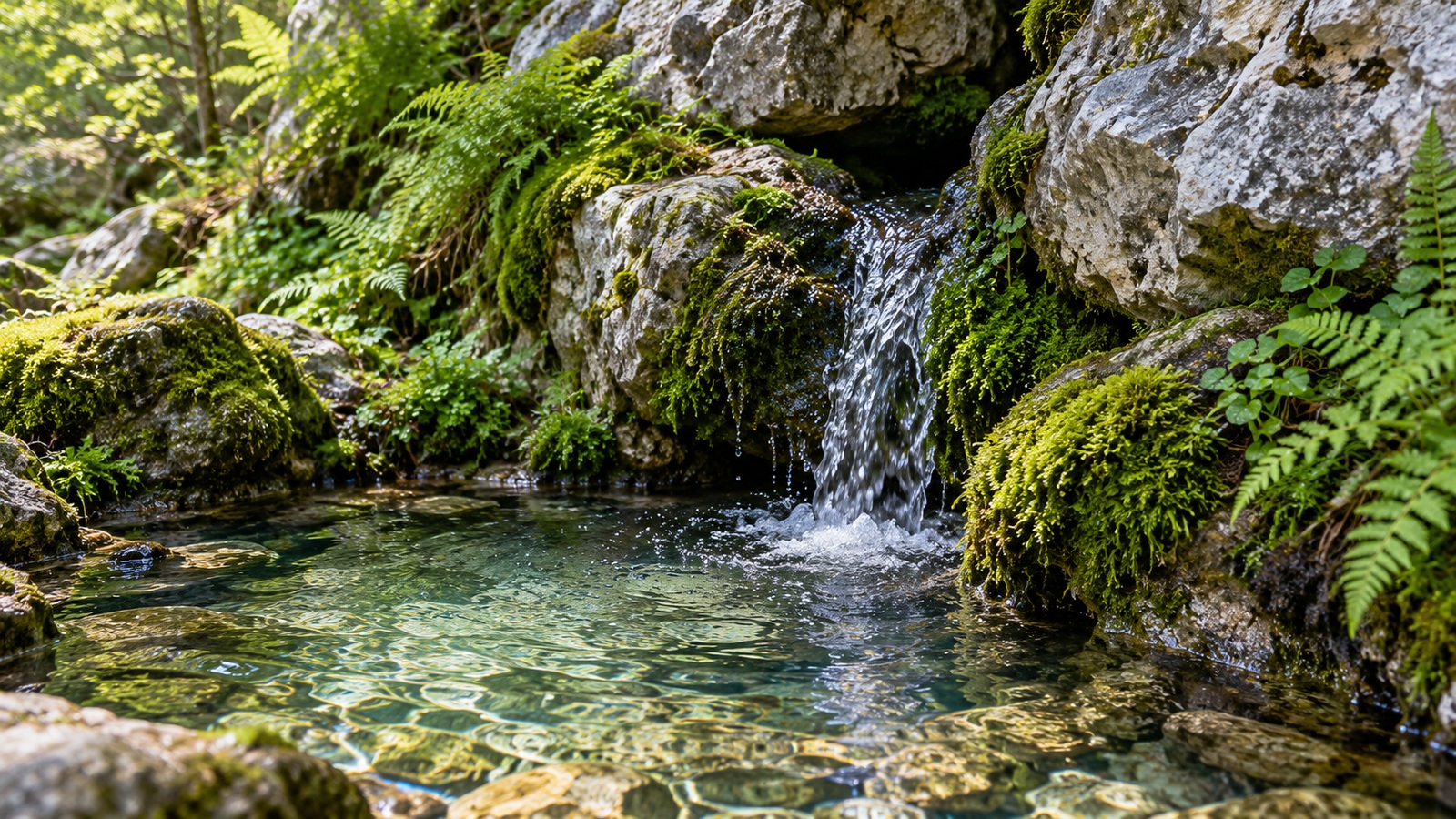
A spring forms where groundwater discharges naturally at the land surface. Geology, topography, pressure, and the position of the water table influence where that happens. Some springs have relatively steady flow, while others respond strongly to seasons or storms. Their apparent clarity does not establish that the water is safe to drink. Contaminants can enter recharge areas and travel along underground pathways, sometimes reaching an outlet far from the original source. Protecting a spring consequently involves understanding its contributing area and flow routes, not merely keeping the visible pool tidy. Changes in pumping or recharge can also alter discharge, connecting a quiet spring to land and water decisions beyond the place where people first see it.
Streams combine recent runoff with stored water
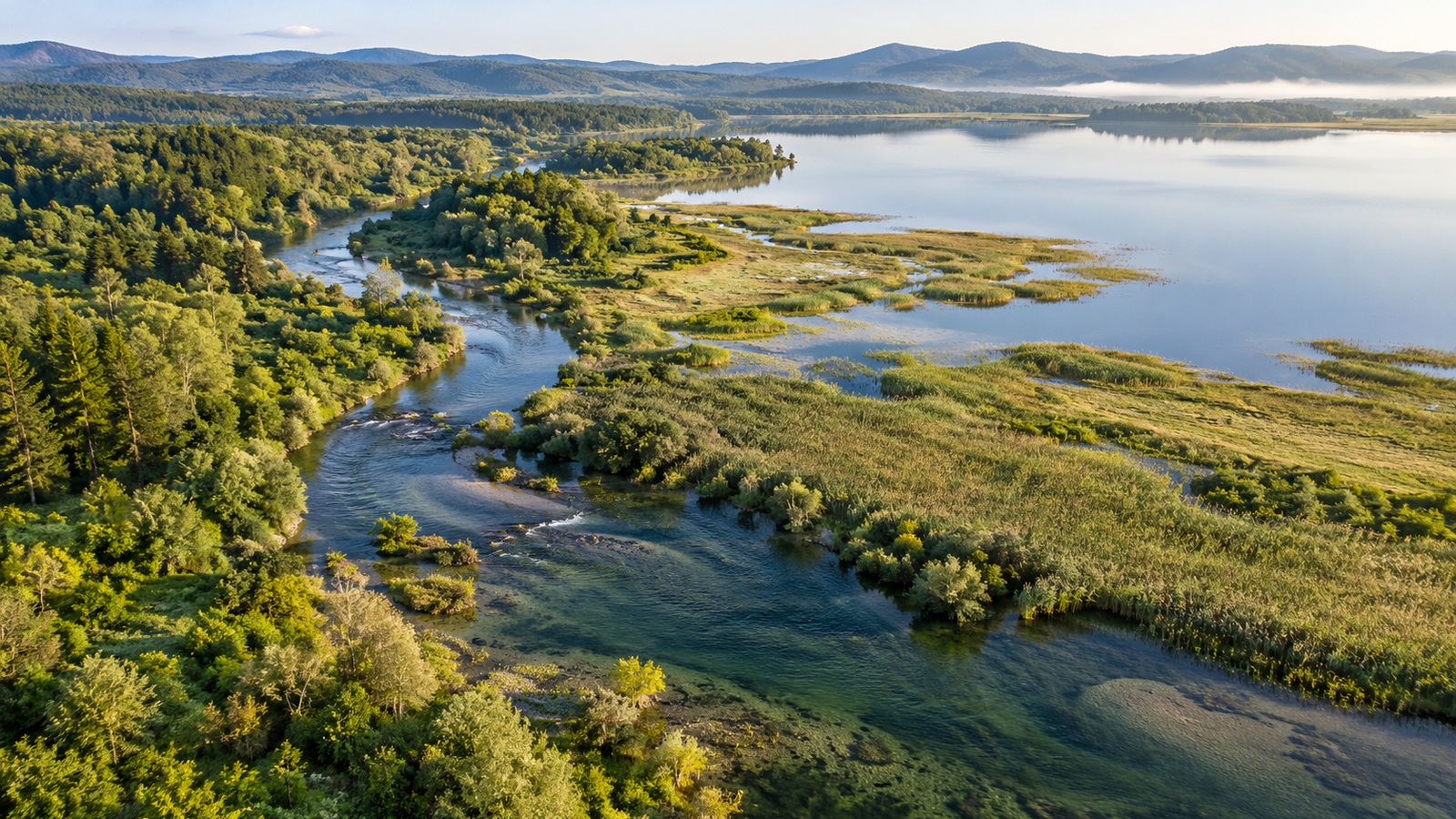
A flowing stream may contain water that arrived through several pathways. Direct runoff can rise rapidly during a storm, while groundwater discharge can sustain flow between events. Snowmelt and lake releases may contribute at other times. The mixture changes through the year and along the channel. A river’s visible continuity can therefore conceal a changing balance of sources, and a dry spell can expose how much the system depends on stored water rather than immediate rainfall.
Surface water and groundwater can also exchange in both directions. A gaining reach receives groundwater, while a losing reach sends water into the ground; conditions can shift as levels change. Pumping near a stream may affect that balance and eventually reduce surface flow. This is why separate labels for surface-water rights and groundwater rights do not necessarily describe separate physical supplies. Managing one without considering the other can create expectations that the connected system cannot meet.
Storage infrastructure changes access without creating the original water
Reservoirs capture and hold water, allowing some flows to be shifted between wet and dry periods. Their usefulness depends on inflow, operating rules, capacity, evaporation, sediment accumulation, and the needs served downstream. A reservoir may buffer variability, but it cannot guarantee deliveries if persistent demand exceeds what the basin can supply. The size of a dam is not a substitute for the water budget of its catchment. Its operations also affect ecosystems and people accustomed to earlier flow patterns.
Rainwater collection and managed aquifer recharge provide other ways to capture water where conditions and regulations allow. Their effectiveness depends on the quality and quantity of the available water and on the characteristics of the receiving system. Storing stormwater does not automatically make it suitable for every use. Treatment, monitoring, and protection of other water users remain relevant. These approaches can improve how a supply is used, while still depending on the underlying precipitation and hydrologic pathways.
Desalination makes saline water usable by separating dissolved salts, leaving a more concentrated stream that also needs management. It requires energy and a treatment system suited to the source and intended product. Water reuse follows another route, treating water after an earlier use so it can serve a specified next purpose. Both approaches can expand local options where the infrastructure and resources are available. They also connect supply to power, operation, treatment materials, and waste handling. A continuing water service therefore depends on those systems working alongside the basin’s natural flows and the demands placed on them.
Usable supply depends on quality and competing needs
Freshwater describes relatively low salinity, not universal purity. Water can contain pathogens, dissolved chemicals, sediment, or other substances that require treatment or make a particular use unsuitable. A source may remain physically present while its usable portion declines because of contamination. Conversely, improved treatment can make some water usable while leaving questions about cost and environmental impact. Availability is therefore a combination of amount, condition, location, timing, and access.
Water remaining in rivers, lakes, and wetlands supports organisms that need particular flows, depths, and seasons. Withdrawing water changes the conditions downstream as well as the quantity at the intake. A lowered stream can lose connections to side channels, expose habitat, or receive less groundwater support as nearby pumping changes levels. People sharing the basin depend on those connections for uses ranging from fisheries to later withdrawals. The physical supply is therefore shared through moving water, while allocation decisions determine how its benefits and shortages are distributed. Pipes can move water to one user, but they cannot remove the relationships connecting that withdrawal with the rest of the system.
The High Plains aquifer separates a reserve from its replenishment
The High Plains aquifer beneath the central United States is a concrete example of groundwater stored in geological material. It includes the widely known Ogallala Formation, although the aquifer system is not simply one uniform layer everywhere. Rainfall can supply recharge, while wells withdraw water from storage and affect local levels. USGS’s account of the aquifer explains that sustained withdrawals exceeding recharge reduce water levels and saturated thickness. The important contrast is between water accumulated underground and the rate at which new water reaches that store.
A working High Plains well can keep lifting water while the surrounding groundwater level falls. Water is still moving toward the pump, but withdrawal is drawing down part of the stored reserve. As saturated thickness decreases, the aquifer’s local capacity to supply a well can change. Recharge, the permeability of the geological material, and other withdrawals influence how quickly that happens. These conditions vary across the extensive system, so neighboring areas need not experience the same decline at the same time. A continuing stream from a pipe shows current delivery; the changing water level beneath it reveals the state of the source supporting that delivery.
Freshwater arrives through these different storage and movement pathways. Snow releases precipitation as it melts, reservoirs hold incoming flow for later use, and aquifers retain water that can move much more slowly. A spring is an outlet from part of that underground journey, while a river combines changing contributions along its length. The water available on a dry day can therefore be the result of rain or snow that fell at another place and time. Keeping the source dependable involves both the store and the processes replenishing it. Human communities and freshwater habitats share that continuing circulation, with its uneven timing, varying water quality, and limits on what can be withdrawn.