Freshwater supports life both within and beyond the channel
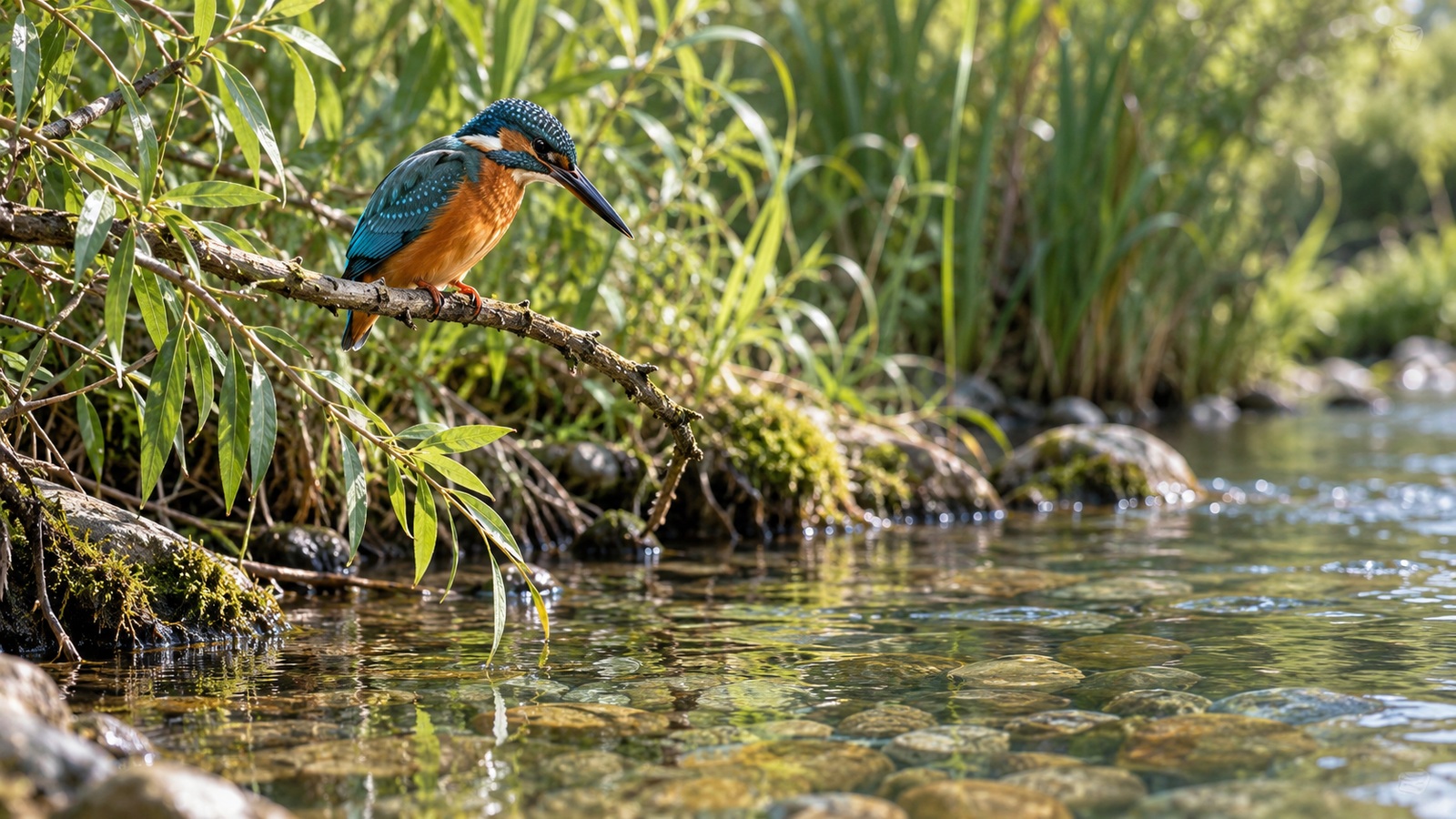
A bird hunting above a stream depends on more than the water it might drink. Its prey developed in a habitat shaped by flow, temperature, oxygen, and shelter; the bank supports plants and nesting places; and the surrounding landscape helps determine what enters the water. Similar connections reach crops, forests, insects, and human communities. Water is fundamental to biological processes, while freshwater environments provide conditions that many organisms cannot replace with seawater or a different habitat. The importance of freshwater therefore extends beyond the amount removed through wells and intakes. Understanding its role in living systems reveals why quality, timing, and ecological condition matter alongside quantity. It also explains why water left in a river is performing useful work, even when it is not being collected for a direct human use.
A: Emerging aquatic insects become terrestrial prey, and animals such as bears can move salmon-derived material onto land.
A: Salinity creates physiological constraints for freshwater-adapted species.
A: Oxygen, temperature, food, and structure also matter.
A: Earlier changes in vegetation or reproduction can persist.
A: It maintains ecological processes and downstream relationships.
A: Total use and the fate of return flows determine actual savings.
A: It complements appropriate treatment and monitoring rather than replacing them.
A: Organisms need water during particular life-cycle stages.
A: Some relevant substances and organisms are invisible without testing.
A: Functioning watersheds help sustain conditions supporting future supplies.
Water provides the setting for biological chemistry
Within living cells, water is a medium for chemical reactions and the movement of dissolved substances. Its properties help organisms transport resources, maintain internal conditions, and carry out metabolism. Water also participates in reactions rather than serving only as a passive container. The practical result is that a living system must manage access to water and its internal distribution. Organisms differ in the strategies they use, but no familiar ecosystem operates independently of water’s physical and chemical roles.
For a freshwater fish, living in water still requires controlling water and salts inside its body. Differences between body fluids and the surroundings drive water movement across permeable surfaces, while gills and kidneys help maintain the internal balance. Seawater presents a different challenge, so a freshwater habitat cannot simply be replaced with equally wet saltwater. Salmon make the distinction especially visible because their life cycle includes transitions between the two. USGS’s fish-physiology overview identifies these transitions as important physiological demands. A migratory salmon has to adjust how its body manages the changing surroundings, as well as find a route between habitats. Freshwater thus supplies a particular chemical environment, not just enough liquid to cover an animal. When salinity changes, the physiological requirements change with it, potentially altering which species can survive and reproduce.
Plants turn water access into growth and habitat
Plants use water in photosynthesis, move it through tissues, and lose it through transpiration as leaves exchange gases with the air. Water pressure also helps maintain the form of living tissues. When availability declines, plants can restrict gas exchange, reduce growth, shed leaves, or experience more severe damage, depending on species and conditions. Their responses influence the organisms relying on them for food and shelter. A dry period can consequently propagate through a terrestrial community without removing every plant. Changes in flowering, seed production, foliage, or shade can affect consumers and habitat conditions in ways that remain visible long after the immediate shortage has eased. Freshwater’s role in vegetation is therefore also a role in organizing the structure and seasonal opportunities of life on land.
An aquatic habitat needs more than a wet surface
Freshwater animals need suitable temperature, dissolved oxygen, food, and places to feed or shelter. Their requirements differ with species and life stage. A cold-water fish can lose usable habitat as a stream warms, while larvae in a temporary pond need enough time in water to complete development before drying. A deep pool may shelter fish during low flow, whereas shallow margins support different prey and cover. Water creates a living environment through those combinations, so simply keeping a surface wet does not preserve every function the habitat once provided.
Dissolved oxygen illustrates the distinction between water quantity and habitat quality. Fish and many invertebrates obtain oxygen from water, and the amount available depends on exchanges, temperature, biological production, and consumption. A waterbody can remain full while conditions become unsuitable for some residents. Excess organic material or algal production can contribute to oxygen depletion during decomposition, especially where replenishment is limited. Looking only at the water level would miss an important reason for ecological decline.
Gravel spaces, submerged vegetation, wood, shallow margins, and deep pools provide different opportunities within freshwater habitats. An animal may feed in one place and move to another to breed or survive a difficult season. The water between them supplies passage as well as habitat of its own. A blocked route can separate an adult from otherwise suitable spawning ground, while loss of a refuge can leave a population exposed during low flow. Completing the life cycle depends on successive places being available when they are needed.
Freshwater shortages can disrupt seasonal relationships
Many organisms use predictable seasonal changes as opportunities for growth, reproduction, or movement. A flood pulse can open access to feeding habitat, snowmelt can sustain a period of flow, and a temporary pond can remain wet long enough for larvae to develop. If timing shifts or the wet period becomes too short, the relationship can fail even when the annual water total appears adequate. A breeding event and the water needed to support young must occur in a workable sequence. This is one reason ecological water needs cannot be described solely by an annual volume. The pattern of availability is part of the resource, and preserving that pattern can matter as much as preserving a large average quantity.
Food systems depend on water at several stages
Rainfall and stored soil moisture support crops and pasture, while irrigation can supplement water where supplies and management make it feasible. Livestock also depend on water and on the vegetation used for feed. Freshwater fisheries provide another route from aquatic production to human diets and livelihoods. These dependencies differ geographically: the water needs of a rain-fed farm, an irrigated field, and a fishing community are not interchangeable. Their vulnerabilities involve different combinations of climate, access, infrastructure, and ecosystem condition.
Food production continues using water after harvest through processing, cleaning, and other handling stages. Water withdrawn at one point may return downstream at a different time or with changed quality. Improving irrigation delivery can reduce some field losses, but total basin consumption also changes if more land is irrigated or if less water returns to the system. Those routes link an individual farm with other users and habitats. The amount reaching a crop is one part of the chain; the amount consumed and the condition of returning water determine consequences beyond the field.
Healthy freshwater supports communities without guaranteeing safe drinking water
Protecting a source watershed reduces pressures on the water passing through it. Intact soils and vegetation can limit erosion, while controls on discharges reduce contamination entering streams. The EPA’s healthy-watershed resources connect these conditions with water supply, habitat, and community uses. Drinking-water safety still requires appropriate treatment and monitoring because pathogens and dissolved contaminants can be present in clear water. Source protection helps keep the incoming water in better condition, and treatment and distribution provide the next stages of a dependable service. The two tasks are connected through the same water, from land and channel to the system delivering it.
Water quality determines which benefits remain available
Contamination can reduce the usefulness of a freshwater source without making its volume disappear. Sediment, nutrients, pathogens, salts, and toxic substances act through different mechanisms and require different responses. Some problems are visible, while others need testing. The origin may be a single discharge or the combined influence of activities spread through a catchment. Identifying the relevant pathway matters because a repair at the intake may leave the upstream source of harm unchanged.
Water suitable for one use can remain unsuitable for another. A sensitive freshwater animal may be affected by a temperature or dissolved substance that does not prevent a particular industrial use. Water safe for recreation also has not necessarily received the treatment required for drinking. Different uses depend on different biological and chemical conditions, and damage can remove some benefits while leaving others available. A community can therefore retain a visible waterbody while losing a fishery, swimming access, or an affordable source. Restoring the affected conditions helps recover the specific relationships interrupted by the contamination.
Persistent contamination can also affect trust and access. Communities may face expensive treatment, restrictions on traditional foods, or loss of places central to daily life. The burden is shaped by resources and decision-making power as well as proximity to pollution. Restoring a biological measurement alone may not immediately repair those losses. Freshwater stewardship needs transparent information and meaningful involvement by affected people, especially where choices upstream determine conditions experienced by communities downstream.
Leaving water for ecosystems sustains other forms of value
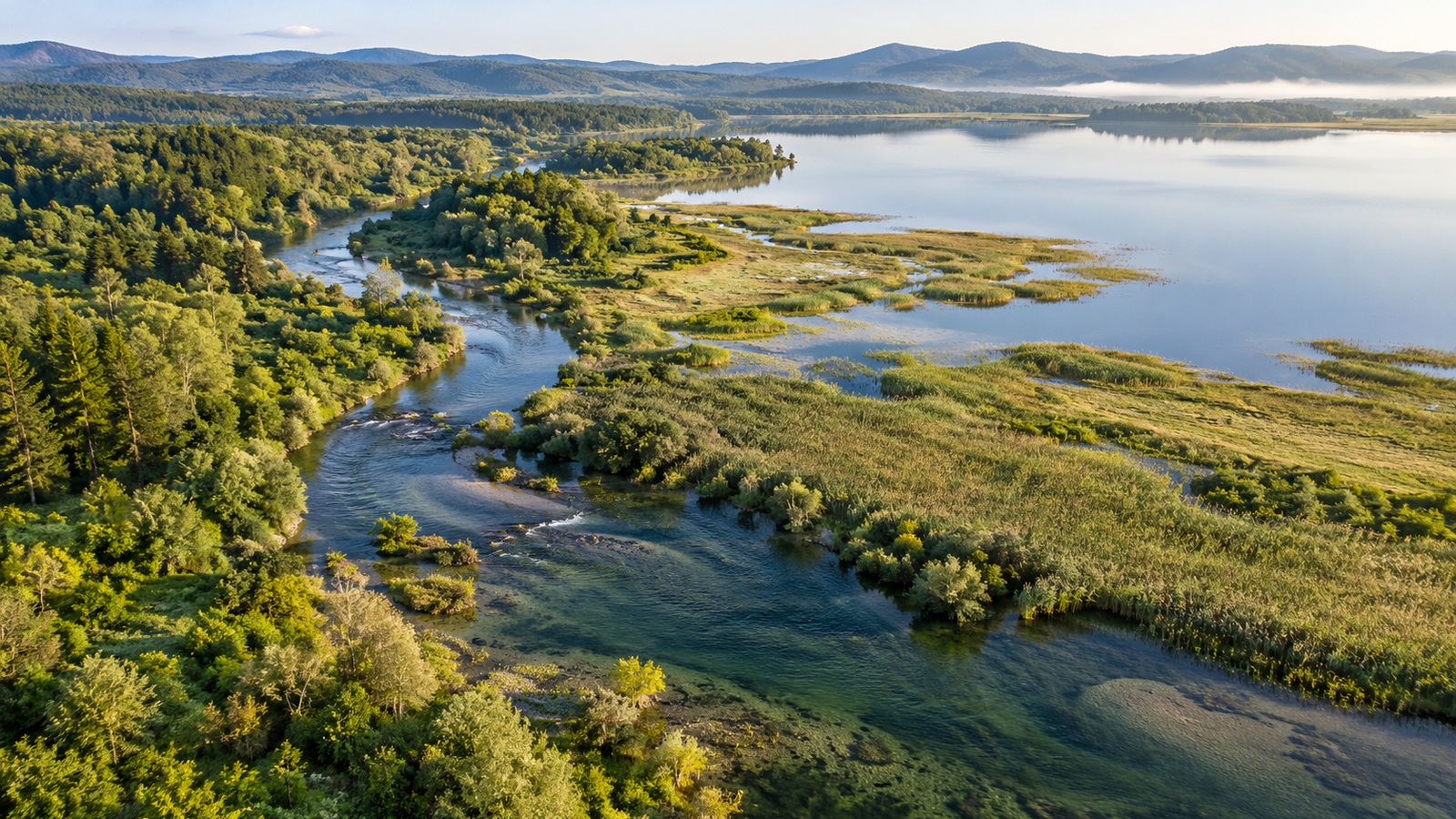
Water retained in a river supports habitat, dilution, sediment transport, temperature patterns, and connections to downstream environments. Those functions can benefit people indirectly through fisheries, recreation, cultural life, or the maintenance of conditions supporting future supply. Describing that water as unused overlooks what it is already doing. An extraction decision therefore needs to consider changes to the functioning system, not only the immediate benefit at a pump or diversion.
Tradeoffs can be difficult during drought, when ecological needs and human demands face the same reduced supply. Clear priorities, careful accounting, protection of essential services, and attention to vulnerable communities help make decisions more transparent. There is no universal percentage that solves every basin’s allocation problem. The relevant requirements depend on the ecosystem, the timing of shortage, available alternatives, and existing commitments. Recognizing ecological needs early can preserve more options than waiting until a river or wetland has already lost the conditions needed for recovery.
Salmon and emerging insects carry a stream's influence onto land
Freshwater’s ecological value becomes visible when organisms cross its edge. Returning salmon bring material accumulated during their ocean lives into freshwater spawning systems. Bears can move some of that material onto land through feeding and waste. A USGS-listed study on Alaska’s Kenai Peninsula quantified this redistribution of salmon-derived nitrogen. A stream in that setting is part of a route connecting ocean production with a terrestrial ecosystem. Suitable spawning access consequently supports relationships extending beyond the fish themselves.
Aquatic insects provide a different route. Their immature stages can grow in water before adults emerge into the air, becoming available to animals feeding along the bank. Research on giant salmonfly emergence describes a short, concentrated annual pulse that can supply terrestrial food webs and detrital material. The timing matters: a brief emergence delivers resources differently from a steady trickle throughout the summer. Water temperature, flow, and habitat during the earlier aquatic stage help shape an event people later see above the surface. A bird catching an adult insect is using the products of that underwater history.
These examples add living detail to the wider role of freshwater. Water inside cells enables chemistry; water moving through soil supplies roots; a channel provides space for feeding, growth, and reproduction. Those roles depend on condition and timing as well as quantity. A stream left with water can continue supporting prey, passage, and nutrient movements that extraction alone would not capture in an economic account. Caring for it involves protecting the particular relationships at stake: a spawning route, an insect’s developing habitat, a cool refuge, or the vegetation shading a bank. The resulting goal is more precise than keeping a pleasant view or maximizing the amount available to pump. Enough suitable water, in the places and seasons organisms need it, sustains the opportunities through which life develops and connects. Dependable human use belongs within that same system, alongside the food, habitats, and ecological continuity that water makes possible.