Polar survival means solving several problems at once
Cold is only one challenge at the ends of the Earth. Polar organisms also face long changes in daylight, short windows for growth or breeding, shifting ice, and food that may be abundant in one season and scarce in another. Some remain through the difficult months; others migrate, become less active, or rely on resources stored earlier. Their strategies differ because the Arctic and Antarctica are not matching copies of one frozen habitat. An ocean surrounded by northern landmasses supports different communities from a southern ice-covered continent surrounded by ocean. Within each region, coastlines, open water, sea ice, tundra, rocks, and sheltered soils create further contrasts. Understanding polar ecosystems therefore means following how organisms fit their particular environment, rather than assuming that every cold-adapted animal or plant shares the same solution to life in the freezer.
A: Their geography, communities, and human histories differ.
A: Insulation reduces loss while metabolism still requires resources.
A: Growth and breeding must fit short resource opportunities.
A: Algae can grow in and near suitable ice habitats.
A: No. Some organisms tolerate freezing, while others avoid it or keep their tissues warm; cold-survival mechanisms differ widely.
A: It can represent a slow-growing specialized community.
A: Migration itself can be an effective seasonal strategy.
A: Different life histories depend on different habitat conditions.
A: Effects may first appear in reproduction or young survival.
A: A rapid change can disrupt the environmental relationship it depends on.
The two poles have different ecological foundations
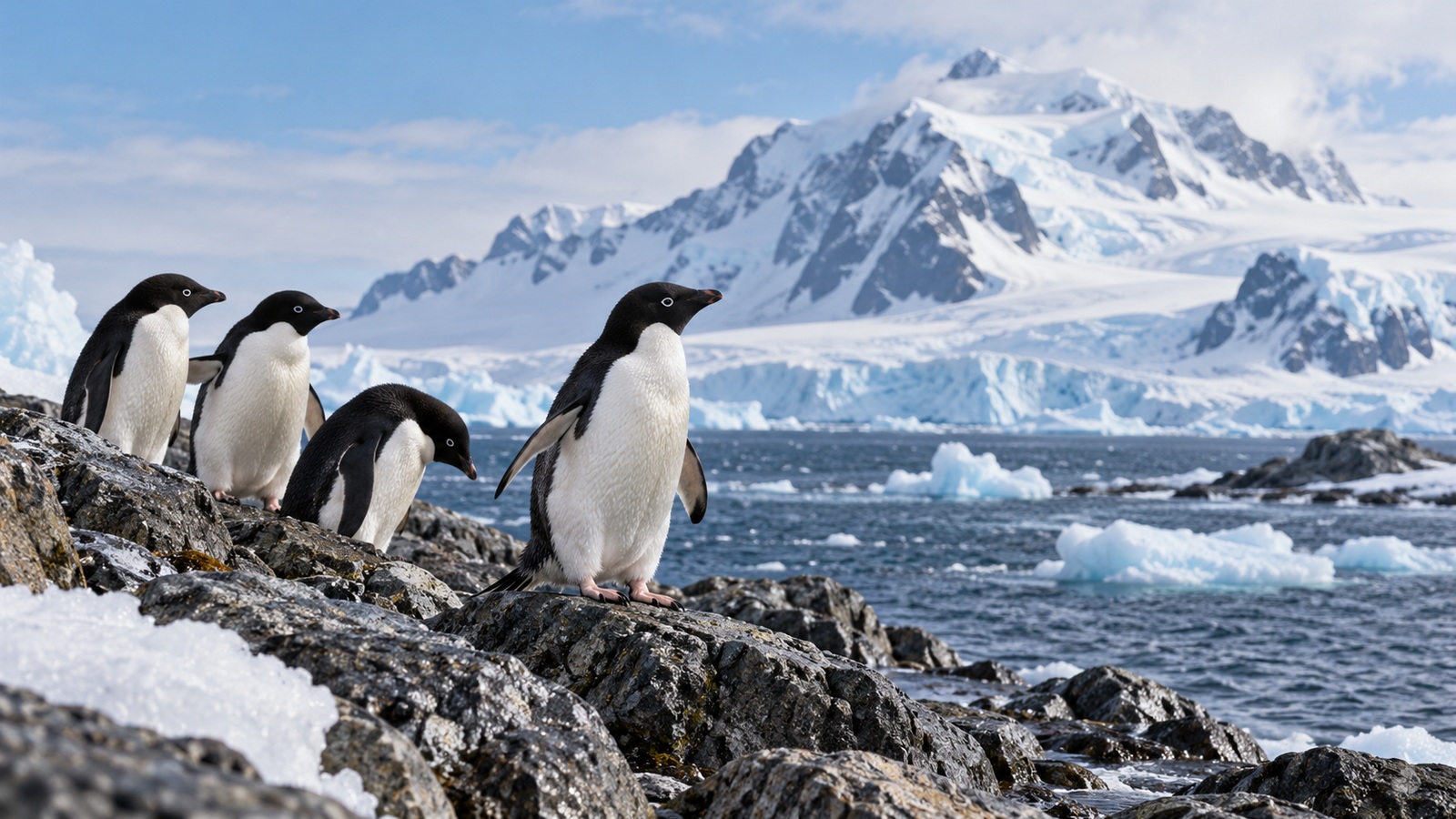
The Arctic includes an ocean bordered by continents and islands, with extensive terrestrial environments and long-established human communities. Antarctica is a continent surrounded by the Southern Ocean, with much of its land covered by ice and comparatively limited exposed habitats. Geography affects movement, climate, and the connections between land and sea. It also explains why characteristic animals differ. Polar bears belong to the Arctic, while wild penguins occupy Southern Hemisphere habitats rather than sharing northern sea ice with them.
A coastal tundra wetland differs from an Antarctic dry valley, and a productive ice edge differs from deep water beneath thick cover. Wind, snow, liquid water, and shelter create variation over short distances. A small hollow can retain moisture that an exposed ridge loses, while snow can insulate ground below air that is much colder. Organisms live within those local combinations. Their growth or survival can change when wind redistributes snow or water drains differently, even if the broader region remains a polar landscape.
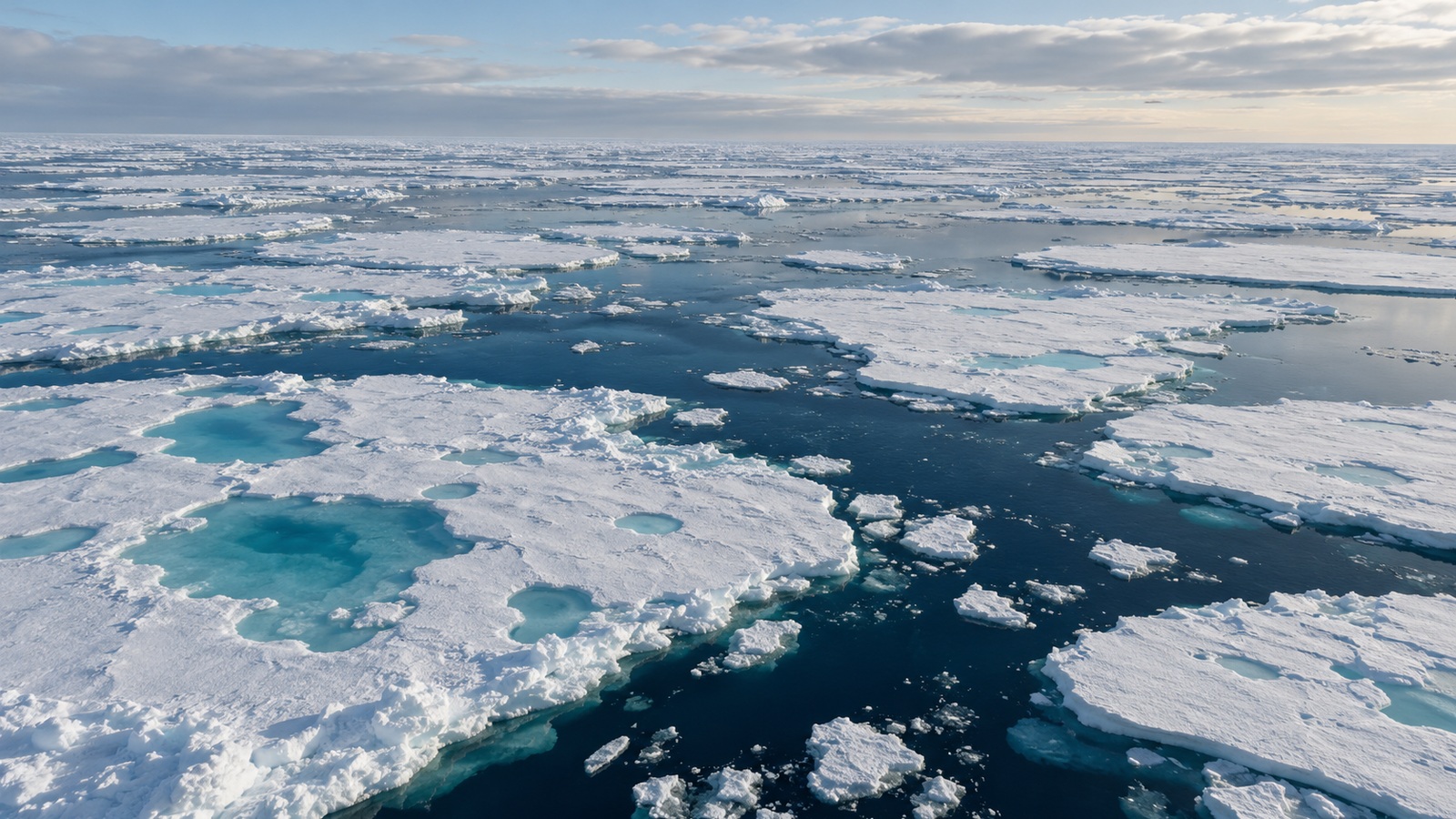
Land ice, snow, and sea ice play different roles. Glacial ice forms on land, seasonal snow can cover vegetation and shelter ground-level life, and seawater freezing at the ocean surface creates sea ice. Ice in one location does not replace habitat lost from another. An animal resting on a seasonal marine platform needs access to that platform at the right time, while a plant emerging from snow needs exposed ground and liquid water. Their lives follow different parts of the frozen landscape.
Light governs the calendar of biological opportunity
At high latitudes, the seasonal cycle includes long summer daylight and long winter darkness, with the exact pattern changing by latitude. Photosynthetic organisms must take advantage of suitable light while also finding sufficient water, nutrients, and tolerable temperatures. Consumers depend on the production that follows, either directly or through intermediate prey. The calendar matters because reproduction and growth can demand resources during a short period. An organism that reaches a breeding site after a food pulse has passed may face difficulty even if that location was highly productive earlier in the season. Polar adaptation therefore includes timing as well as resistance to cold, and a shift in the schedule of ice retreat or snowmelt can change the relationship between organisms that formerly used the same seasonal opportunity.
Insulation slows heat loss without creating energy
Fur, feathers, and blubber reduce heat transfer from animals to a colder environment, but their effectiveness depends on structure, condition, and whether the animal is in air or water. Dense fur can trap insulating air, while blubber supports marine mammals in settings where heat is lost rapidly. Waterproofing and the maintenance of plumage can be important to birds. An animal’s insulation must work together with metabolism, behavior, and access to food; it does not make the costs of staying warm disappear.
Body form can influence those costs. The relationship between exposed surface and body volume affects heat exchange, while appendages and blood flow can be regulated in species-specific ways. Some animals use countercurrent heat exchange to reduce losses through extremities, though no single mechanism describes every polar resident. These features represent inherited biological relationships developed over generations. They are not deliberate choices made by an individual anticipating a cold winter.
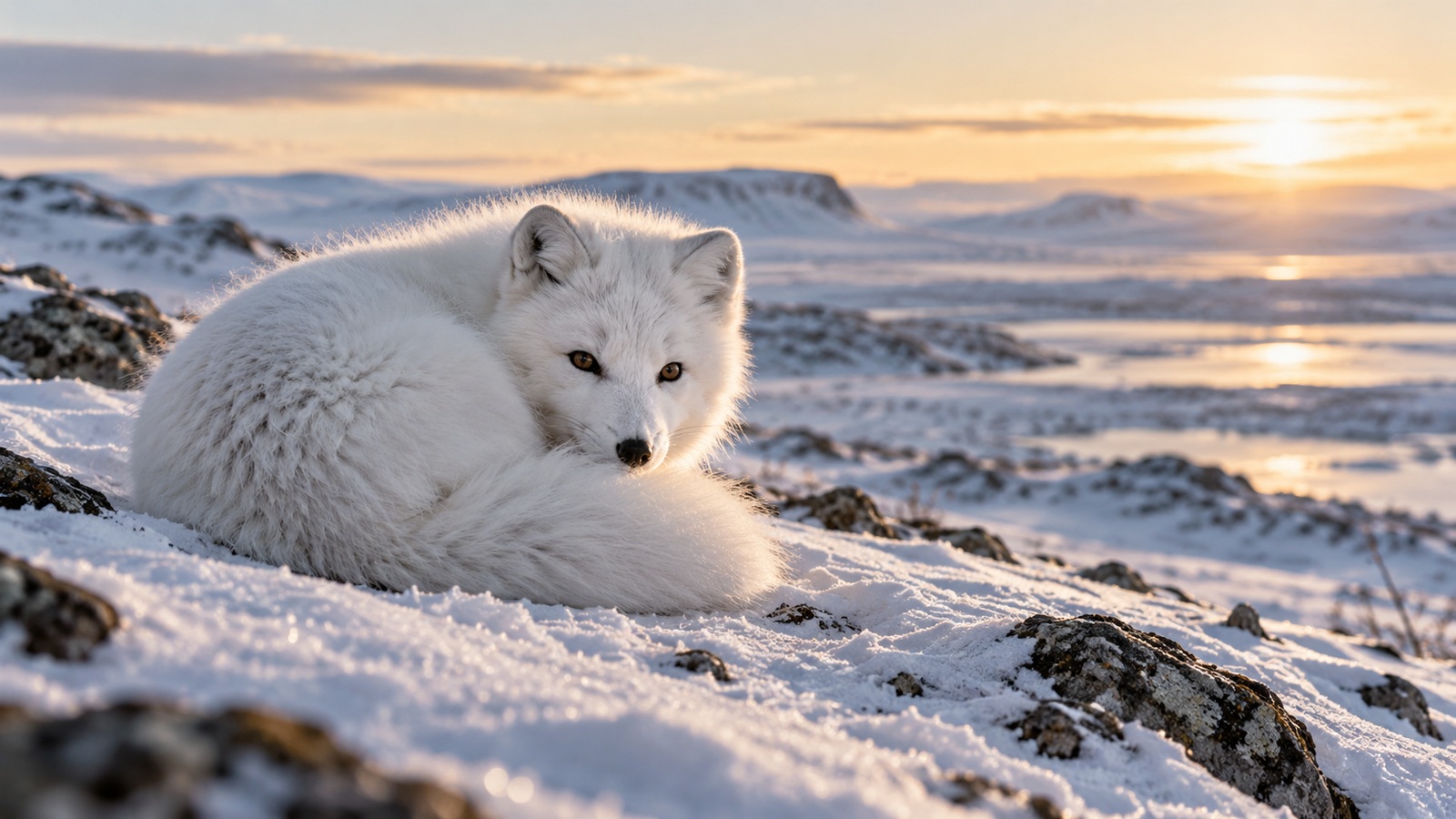
Behavior adds another layer. Seeking shelter, adjusting posture, clustering with others, or selecting favorable resting sites can reduce exposure. An Arctic fox curling its body and tail can change the surface exposed to wind, while some penguins use collective behavior in demanding breeding conditions. The details differ, but the principle is shared: animals use the physical structure of their environment and their own behavior alongside anatomy. Disturbance that removes resting sites or forces unnecessary movement can therefore impose costs even without directly injuring an animal.
Small organisms use strategies unlike those of large mammals
Much polar life is small enough to be missed from a distance. Microbes and invertebrates occupy suitable soils, water, and sheltered surfaces alongside the more conspicuous birds and mammals described in the British Antarctic Survey’s wildlife overview. Some reduce activity or tolerate dehydration during unfavorable periods, while others use protective compounds or particular cold-survival mechanisms. Avoiding freezing and surviving some internal freezing are different strategies. A small organism may withstand one kind of cold exposure yet be vulnerable to repeated thawing or a changed moisture regime. The community therefore depends on local physical conditions as well as on the physiological abilities of its residents.
Sea ice is a habitat with life inside and below it
Sea ice contains channels and pockets of brine that can support microorganisms, while algae associated with ice contribute to marine production when light and other conditions permit. The ice underside and surrounding water are therefore more than a boundary between frozen and liquid environments. They form part of a food web used by grazers and other consumers. The contribution varies by region and season, and it interacts with production in open water rather than replacing every other source of food.
Ice also provides a physical platform or shelter for particular animals. Some seals use it for breeding or resting, and polar bears use it in accessing prey. In the Southern Ocean, relationships involving sea ice and Antarctic krill can influence pathways supporting predators. These are distinct ecological stories, not interchangeable examples from a single polar system. The National Snow and Ice Data Center explains why ice matters to organisms above, below, and within it. Losing a seasonal platform can change access to food or breeding habitat even if open water remains available.
Land plants grow within narrow opportunities
Arctic tundra supports varied plant communities adapted to short growing seasons, cold soils, and local moisture conditions. Low growth forms can reduce exposure and keep tissues near a relatively sheltered surface, while perennial structures allow some plants to resume activity without rebuilding from seed each year. Antarctic land vegetation is more limited and strongly dependent on exposed, suitable locations. Mosses, lichens, and microscopic communities occupy sites where water and shelter permit persistence. Lichens are partnerships rather than individual plants in the ordinary sense, and their tolerances do not make them immune to disturbance. A small patch may represent slow development under difficult conditions, so physical damage can outlast the brief visit that caused it. The apparent sparseness of a polar surface should not be confused with a lack of ecological value.
Migration and stored resources help bridge seasonal shortages
Many birds visit high latitudes during productive periods and spend other seasons elsewhere. Their journeys connect polar habitats with distant feeding and resting areas. Remaining in one region is not automatically the more adapted strategy; migration can allow organisms to use seasonal resources while avoiding conditions that would make year-round residence costly. It also creates dependence on a network of places, any of which may become a limiting link in the annual cycle.
Residents use other combinations of resources and behavior. Body reserves can support periods of reduced feeding, and some animals change diet or foraging locations as conditions shift. These strategies have limits determined by the duration of shortage and the costs of movement, maintenance, and reproduction. An animal that survives one difficult season may still have fewer resources for breeding. Population effects can therefore appear through reproduction or juvenile survival before a visible collapse among adults.
A migrant experiences different seasonal cues along its route. Conditions at departure may favor the usual travel schedule while snowmelt or prey timing has already shifted at the destination. The animal can then arrive before enough food is available or after a short feeding opportunity has passed. Flexible timing can help some species, but the journey still requires suitable weather, resting places, and enough energy. The annual cycle links those requirements across locations, making a change far from the breeding ground relevant to what happens there later.
Adapted to cold does not mean protected from rapid change
A specialized organism succeeds under a particular range of conditions. Changing the range can weaken that fit, especially when temperature changes arrive with altered snow, ice, water, or food relationships. Less ice may increase open-water opportunities for some organisms while reducing habitat or access for others. There is no reason to expect every part of a polar community to benefit from a longer warm season. The response depends on the complete set of conditions supporting each life history.
Temperature changes also alter interactions between organisms. New competitors or predators can reach a habitat, while changing snow or ice rearranges access to food. Thawing ground changes drainage, leaving one patch wetter and another drier; marine changes shift the places where prey gathers. An animal may continue tolerating the temperature while finding fewer feeding opportunities, and a plant may encounter unsuitable moisture despite a longer warm season. The fit between organism and habitat depends on that complete set of relationships.
Human relationships are part of the northern ecological story
Arctic lands and waters are home to Indigenous Peoples and other northern communities with long-standing food systems, travel routes, and cultural relationships. Changes affecting wildlife can alter access to food, while changing ice conditions affect journeys across familiar water. Community knowledge connects observations with the places, seasons, and responsibilities in which they matter. Scientific partnerships work within those relationships and the authority of the people sharing knowledge. Antarctica has a different human setting, with research stations and visitors operating on a continent without an equivalent Indigenous resident population. Human activity affects both regions, but through different histories, institutions, and daily relationships with the environment.
A Weddell seal needs access to air as well as protection from cold
A Weddell seal foraging below Antarctic ice must return to air between dives. Its insulation and physiology support activity in cold water, while its behavior keeps a breathing route available. The Australian Antarctic Program’s species account describes the use of teeth to maintain openings through forming ice. A feeding area is usable only while the seal can find prey and reach air again. The same ice can provide a sheltered environment and create a barrier, with the opening connecting the two. Losing access changes the animal’s options even if cold-water food remains beneath the surface.
Other polar organisms face different combinations of opportunity and constraint. A low-growing tundra plant needs liquid water and a workable growing season; an ice-associated alga needs light in its particular marine habitat; a visiting bird needs enough food to breed before leaving again. These lives overlap through seasonal food webs and physical places rather than sharing a single cold-survival solution. As snow, sea ice, and water conditions shift, some opportunities expand while others narrow. Reducing avoidable disturbance protects the places organisms use now, while limiting warming reduces the scale of change those relationships must withstand. Polar ecosystems persist through that variety, with each organism’s survival connected to more than its ability to resist the cold.