Antarctica’s different forms of ice tell different climate stories
Antarctica is often represented by one white shape at the bottom of a map, but its climate response involves distinct environments and processes. Grounded ice covers the continent, floating shelves extend from it, and seasonal sea ice forms on the surrounding ocean. Changes in one do not automatically mean the same change in another. Warm ocean water can affect the underside of an ice shelf, snowfall can add mass inland, and changing sea-ice conditions can influence marine food webs. Regional contrasts are substantial, and living communities respond to more than temperature alone. Understanding these differences explains why Antarctica matters to global sea level while also revealing the ecological consequences within the region itself. It replaces an image of an isolated frozen block with a connected system whose ice, ocean, atmosphere, and organisms interact on very different schedules.
A: Geography and atmospheric and ocean influences create regional contrasts.
A: Previously land-supported ice transfers water into the ocean.
A: Its restraint can influence upstream glacier flow.
A: Melting occurs at the underside of ice, including floating shelves.
A: The full balance also includes discharge and other losses.
A: Emperor colonies can depend on persistent ice beneath developing chicks, while Adélies nest on exposed land and face a different combination of access and feeding needs.
A: Its location or timing can make it inaccessible.
A: Colonization and functioning communities develop over time.
A: Introductions add avoidable pressures that can interact with warming.
A: Future forcing still influences the scale and course of change.
Antarctic regions experience different ocean and atmospheric conditions
The Antarctic Peninsula, West Antarctica, and East Antarctica have different geography, elevations, ice configurations, and exposure to the ocean. Coastal glaciers interact with water and winds near the margin, while the high interior has a colder, more isolated surface setting. Snowfall can add material in one place as ice discharge removes it elsewhere. Atmospheric circulation and ocean pathways distribute heat unevenly around the continent. These contrasts allow nearby systems to follow different trajectories rather than responding as one uniform block of ice.
Air, ocean water, snow, and moving glaciers exchange energy and material through different routes. A period of increased snowfall adds to an ice sheet’s surface, while warmer water at a coastal margin can remove ice from below. An interior surface can remain frozen while a glacier transports more ice toward the sea. Sea ice on the surrounding ocean follows its own freezing, melting, and movement cycle. The continent’s changing condition is the combined outcome of those processes, which need not increase or decrease together during a particular interval.
Extreme weather can alter one part of that system rapidly. A warm episode can change snow or surface conditions locally, while strong winds move sea ice and change the water beside a breeding colony. Organisms experience the habitat immediately around them, including the timing of breakup and their distance from feeding water. Conditions elsewhere on the continent can remain different during the same event. Repeated local stresses can then interact with longer changes, affecting whether an ice feature or biological community returns to its earlier condition before the next difficult season.
Grounded ice connects the continent to global sea level
Grounded Antarctic ice adds water to the ocean when losses exceed additions to the ice sheet. Snowfall supplies mass, while ice flows toward the coast and can cross into the floating part of the system. Surface melt is another loss pathway where conditions permit. A glacier can therefore lose mass through faster discharge even while much of its surface remains cold and snowy. More snowfall in another area offsets some of that loss but does not stop the flow at the affected margin. The sea-level contribution develops from these combined additions and departures over time, connecting events at particular glaciers with the amount of water entering the ocean.
Floating shelves can restrain the ice flowing behind them
Ice shelves are floating extensions of grounded ice. Because they already displace seawater, their direct loss has a different sea-level effect from transferring previously grounded ice into the ocean. Their larger significance can lie in the resistance they provide to upstream flow. Where shelf geometry and contact with surrounding features create buttressing, weakening or loss can reduce that restraint. The response depends on the particular glacier system rather than a universal rule that every shelf affects every upstream area equally.
Ocean water can reach the underside of an ice shelf and supply heat that melts it from below. The route depends on currents, winds, seabed shape, and openings that allow water into the cavity. Thinning can change the shelf’s contact with surrounding features and weaken the resistance it provides to inland flow. In some settings, surface melt and fractures add other routes of weakening. These processes occur around an ice structure that is still moving, so the shelf’s shape, stresses, and exposure continue changing together. The sequence can connect a relatively local ocean pathway with a much larger glacier system.
At Thwaites Glacier in West Antarctica, British Antarctic Survey research follows connections between the bed, ocean, grounding zone, and floating ice. The shape beneath the glacier affects how retreat proceeds, while water reaching its margin changes melting conditions. Reduced restraint and a changed grounding position can influence the flow of ice farther inland. These interactions unfold over time rather than requiring the whole glacier to disappear in one event. Changes already under way matter to sea level, while the future rate depends on how the physical system and its climate setting develop.
The grounding line is a boundary with dynamical consequences
The grounding line is the transition from ice resting on its bed to ice floating in water. When that line retreats, the supported and floating parts of the glacier change shape. In some configurations, a bed that deepens inland allows retreat to expose thicker ice near the margin, increasing discharge and favoring further retreat. Shallower areas or other features can slow or alter that response. Ocean heat, friction, and the forces within the ice remain part of the moving system. Different glaciers consequently respond differently even under related climate pressures, because their hidden beds and coastal geometry create different routes for change.
Sea ice changes the habitat around the continent
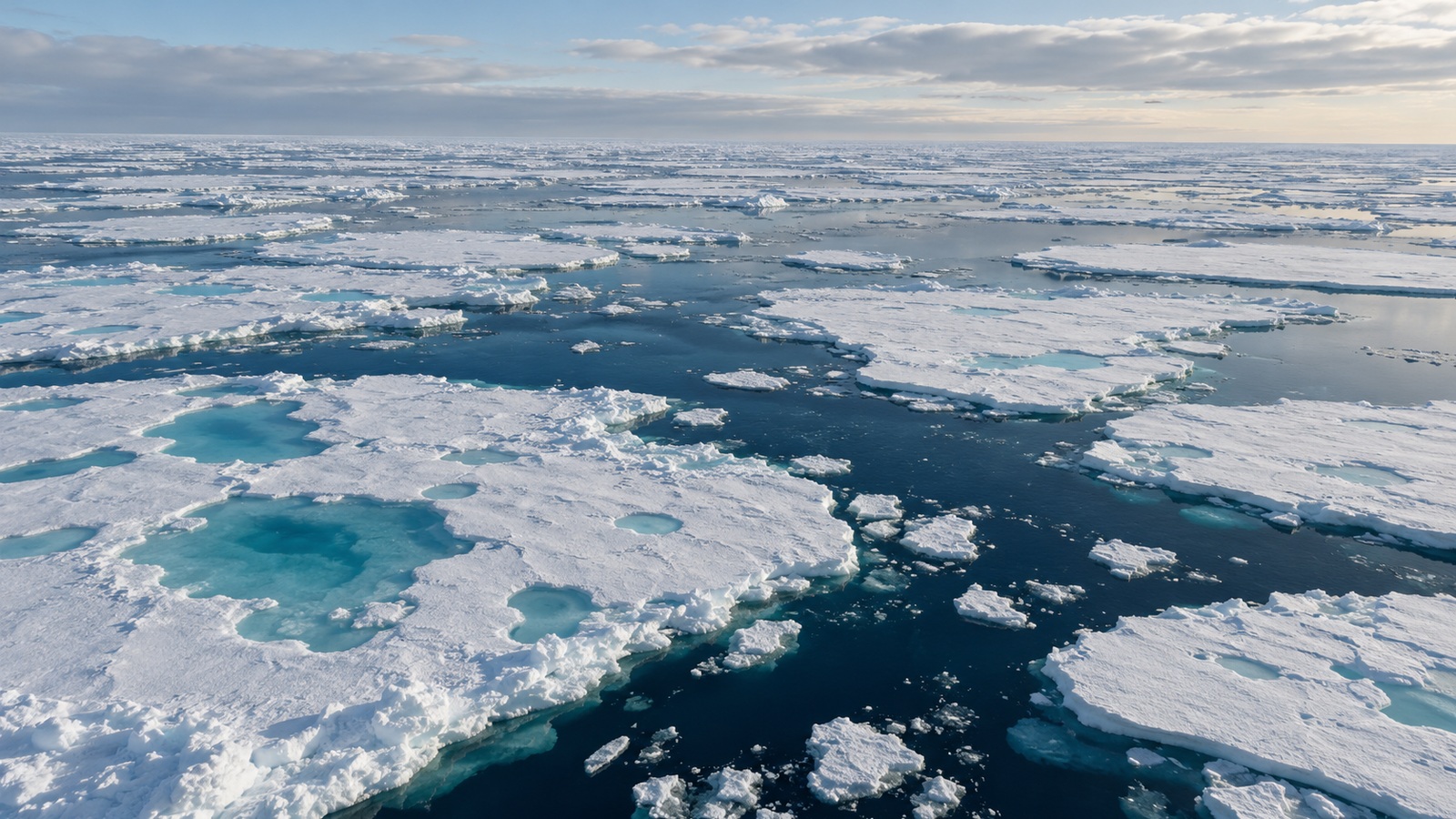
Sea ice expands and contracts over the Southern Ocean as seawater freezes and melts through the seasons. Winds move and spread the cover, while currents and ocean heat affect where it persists. A coastal breeding site may retain suitable ice for a different length of time from water farther offshore. Snow on the ice changes light and insulation, and nearby openings alter an animal’s route to feeding water. The habitat therefore changes in position and condition throughout the year. Its seasonal timing helps determine which organisms can use a place and whether a breeding attempt can continue long enough for young to develop.
The ice supports associated organisms and influences access for animals using it as a platform or as part of their feeding environment. Changing conditions can affect different species or life stages in different ways. Some need access to open water near a breeding site, while others depend on suitable ice that persists long enough. More ice is consequently not a universal ecological improvement, and less ice is not a universal expansion of useful habitat. The outcome depends on the particular relationship being maintained.
Food-web effects travel through small organisms
Phytoplankton and ice-associated algae supply organic material to Southern Ocean food webs. Zooplankton, including Antarctic krill, consume some of that production and become prey for fish, penguins, seals, and whales through several feeding routes. Light, nutrients, ice conditions, and water movement influence where production develops. A colony raising young cannot use prey equally well wherever it occurs: distance and travel time affect how much food adults can bring back. A shift in the location or timing of a resource can consequently reduce breeding opportunities without the prey disappearing from the broader ocean. Small organisms connect the changing physical environment with those larger predators.
Emperor and Adélie penguins depend on different breeding settings
Emperor penguins commonly breed on sea ice that must persist while their chicks develop. In the central and eastern Bellingshausen Sea, a British Antarctic Survey study published in 2023 found a high probability of total breeding failure at four of five known colonies during 2022. Ice broke up before chicks were ready for life in the water. This was a specific regional result, rather than a count of every emperor colony around the continent. Its mechanism explains why the season matters: the loss of a breeding platform can be decisive even when adult birds remain present.
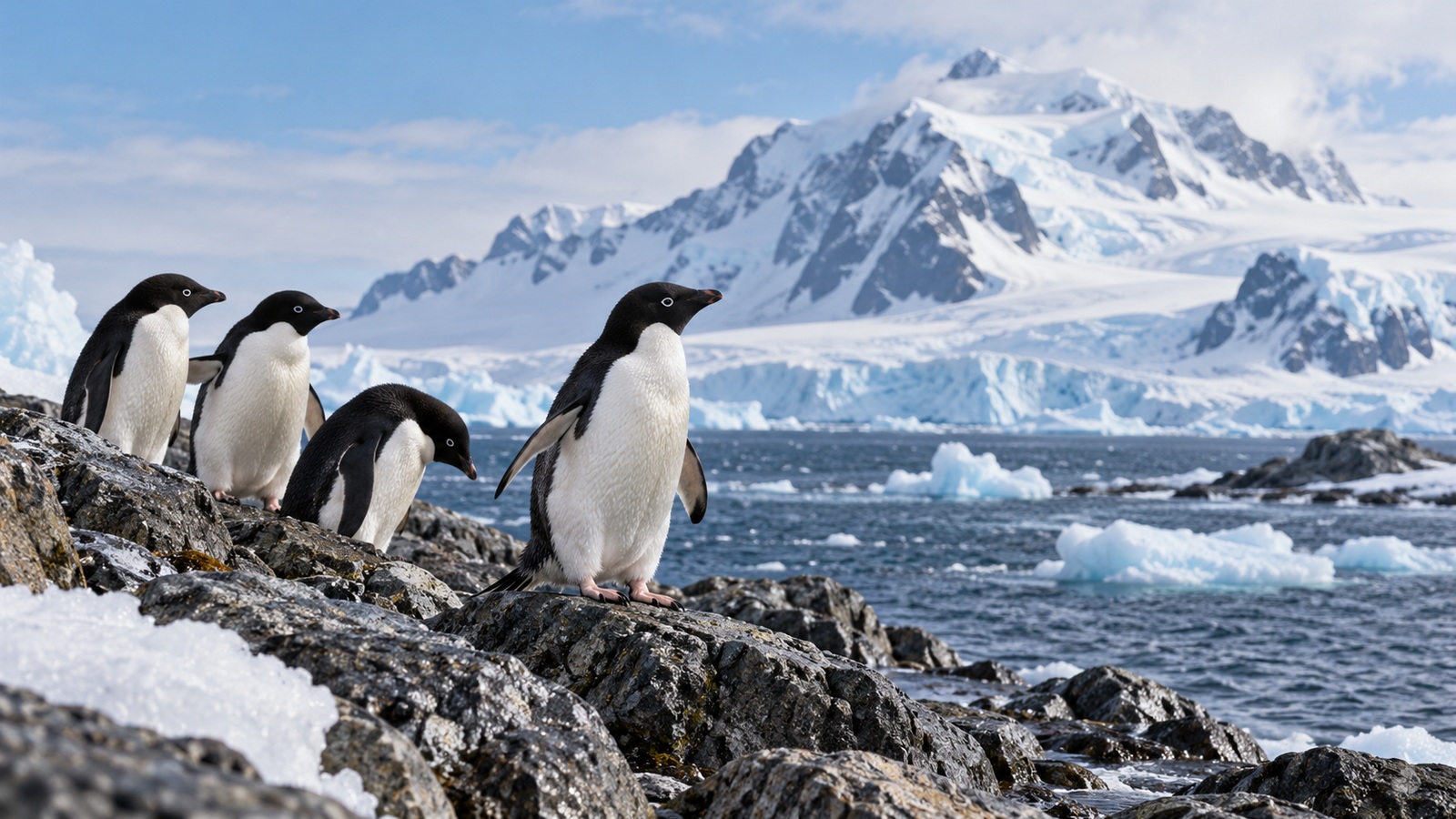
Adélie penguins breed on exposed coastal rock and islands, building pebble nests in the setting described by the Australian Antarctic Program. They still need marine food and usable routes to reach it, but their nesting surface differs from an emperor colony’s sea ice. Snow can cover potential nest sites, and water or ice conditions can lengthen the journey between a chick and its parents’ feeding grounds. A change that removes an emperor breeding platform can therefore affect an Adélie colony through a different set of relationships. Both species depend on the season being long and workable enough for adults to feed and chicks to develop.
Small terrestrial habitats can face large changes in conditions
Ice-free Antarctic areas support specialized communities where moisture, temperature, substrate, and shelter permit life. These include microbes, small invertebrates, mosses, lichens, and limited flowering vegetation in suitable regions. Warming or changing snow cover can alter the length and quality of periods available for activity. More exposed ground does not instantly become an equivalent functioning ecosystem. Colonization, soil development, water access, and interactions determine which organisms establish and whether they persist.
Increased human movement can also introduce disturbance or transport non-native organisms, creating pressures that interact with climate conditions. Biosecurity and careful site practices remain relevant even when climate change is the broader concern. A resilient response cannot be limited to reducing one temperature-related pressure while allowing avoidable local damage. These terrestrial communities occupy a small fraction of the continent’s visible area but can contain distinctive biological relationships deserving attention in their own right.
Small patches of exposed ground contain their own contrasts. A sheltered moist hollow can support organisms unable to persist on a nearby dry, wind-scoured surface. Changes in snow affect when those patches receive water and when they become exposed, while newly arriving organisms encounter the community already present. Vegetation can increase in one location while another loses suitable moisture. Expansion of visible cover therefore accompanies changes in which organisms grow there, how they interact, and how stable the local water supply remains through the active season.
Southern Ocean changes extend beyond Antarctica
The surrounding ocean participates in the storage and transport of heat and carbon, while circulation connects Antarctic waters with other basins. Changing stratification, freshwater inputs, and ocean chemistry can influence these processes and the organisms living within them. The consequences involve both physical exchanges and ecological responses, and they may occur on different timescales. Understanding the Southern Ocean is therefore central to understanding Antarctica’s wider role, rather than an optional addition to a discussion focused only on the ice resting above land.
Ice, oceans, and living communities change on different schedules
Heat stored in the ocean can continue affecting ice after the conditions that first added it have changed. A large glacier also adjusts through movement, thinning, and changing contact with its bed. Those slow responses mean that some consequences outlast an immediate change in atmospheric forcing. Further emissions still influence the heat entering the system and the extent of future change. Antarctica’s different regions combine that long physical memory with seasonal events that animals experience much more quickly, from one breeding season to the next.
Limiting warming reduces pressure on both the ice system and its living communities. Managing disturbance, fishing, and introductions addresses additional local pressures, while continued observation follows the physical and ecological changes already happening. The sea-level contribution reaches coasts far away; changes in food and breeding habitat reach organisms within the region. A floating shelf, a grounded glacier, and seasonal sea ice remain connected through water, energy, and movement, but each does different work. Their combined future depends on that physical setting and on the climate pathway shaping it.