The word severe hides several different wildfire changes
After a destructive fire season, the explanation often arrives as a single sentence: wildfires are getting worse. That sentence can describe a genuine change while leaving its meaning unresolved. More land might have burned, flames might have released energy faster, a greater share of trees might have died, or more homes might have stood in the fire's path. Those outcomes overlap, but they are not interchangeable, and they do not necessarily move together everywhere. In many fuel-rich forests, warming and drying are making conditions more favorable for extensive burning and substantial ecological change. Land management, vegetation history, human ignitions, and development can add other pressures or alter the resulting damage. A useful answer therefore begins by separating the measurements, then connecting each one to the processes that can change it. The aim is neither to attribute every fire entirely to climate change nor to dismiss warming because another factor also contributed. It is to understand how several causes can operate at once.
A: No. Extent and ecological change are separate measures that can rise or fall independently.
A: More vulnerable buildings and infrastructure may be exposed to fire, increasing damage for a given hazard.
A: Parks and Abatzoglou assessed severity trends and climate relationships in western US forests from 1985 to 2017.
A: Yes, in some ecosystems. Frequency, patch structure, and conditions for recovery determine its longer-term significance.
A: No. Attribution evaluates an influence on a defined outcome, while ignition sources require separate evidence.
A: Their life histories and historical fire patterns differ; frequent reburning can damage communities adapted to longer intervals.
A: Reduced burning in extensive grassland or savanna regions can outweigh increases elsewhere in an aggregated total.
A: It may temporarily reduce fire activity without erasing the background warming trend.
A: Its results depend on assumptions about climate, vegetation, fuel supply, and human land use.
A: They address different mechanisms and can be complementary when management matches the ecosystem.
Four measurements that should not share one headline
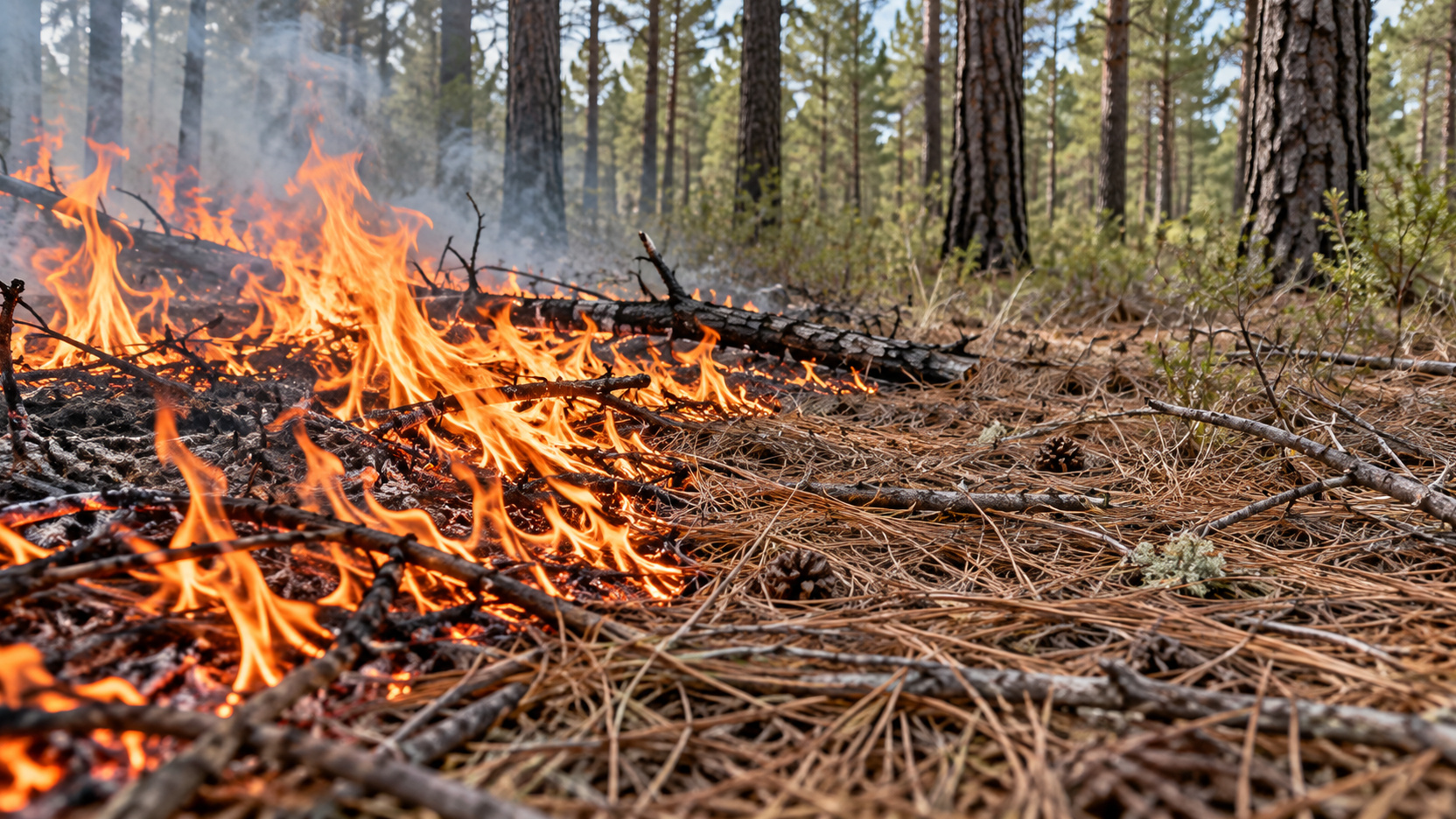
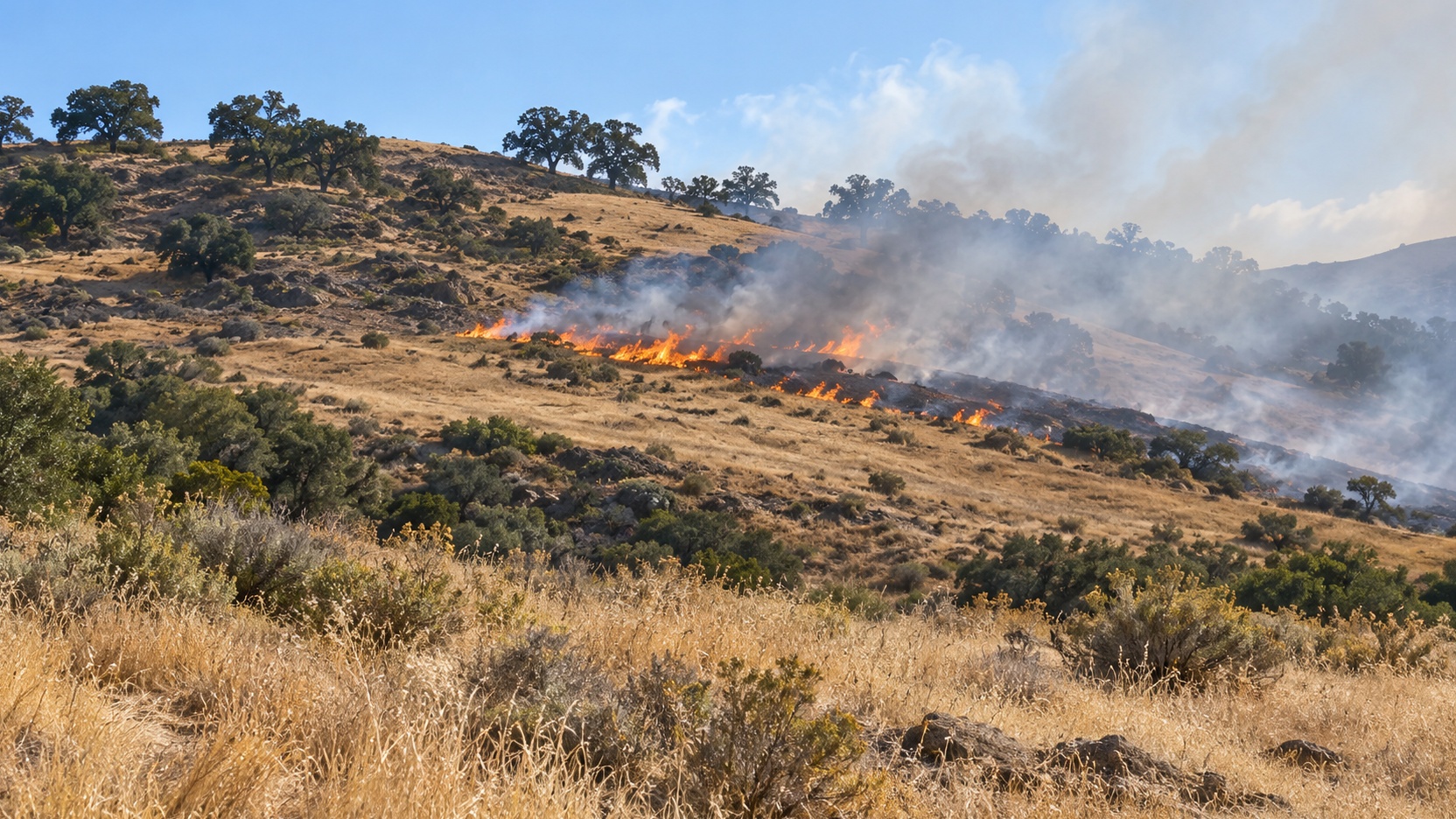
Burned area measures the extent affected over a specified event or period. Fire intensity describes energy release, often considered along an advancing fire front. Burn severity measures ecological or physical changes after burning, such as canopy mortality or consumption of an organic soil layer. Disaster losses describe consequences for people and property. A fire can score high on one dimension and comparatively low on another. A broad grass fire may burn substantial area without killing a forest canopy because no canopy was present. A smaller fire near buildings can cause a major disaster even when its ecological footprint is limited. Using the correct term is the first step toward identifying a plausible cause.
Even severity has several meanings in research. A vegetation-based assessment can emphasize changes in living cover, while a soil assessment addresses a different layer and different processes. Measurements made immediately after burning can differ from assessments that include delayed tree death or subsequent recovery. The reference condition matters too: losing most trees in a sparse woodland is not the same physical change as consuming a deep peat deposit. These distinctions are not pedantic obstacles to understanding. They prevent a reader from treating every darker patch on a satellite image as evidence of the same process, or assuming that one regional result describes the entire planet.
Warming changes the dryness background
Temperature influences the atmosphere's capacity for water vapor. When warming raises that capacity without a matching rise in actual moisture, vapor pressure deficit increases: the air has a larger gap between its existing vapor and saturation. Under suitable conditions, that gap promotes drying of vegetation and soils. Fuel moisture, rather than air temperature alone, determines much of the immediate effect on combustion. A hot day after soaking rain need not resemble a hot day following prolonged drought. Repeated drying conditions can also affect material that does not respond fully within a single afternoon. In fuel-rich settings, more combustible material can become available during a fire, and favorable burning conditions can extend over a longer window. Abatzoglou and Williams's 2016 western US forest study used multiple aridity measures and climate modeling to identify a human-caused contribution to increased fuel dryness and forest area burned. Its geographic and ecosystem scope is important: it provides evidence for western forests, not a universal numerical multiplier for all vegetation or every individual fire. The physical mechanism is broadly relevant, but its expression depends on the local water balance and fuel supply.
Severe ecological effects need their own evidence
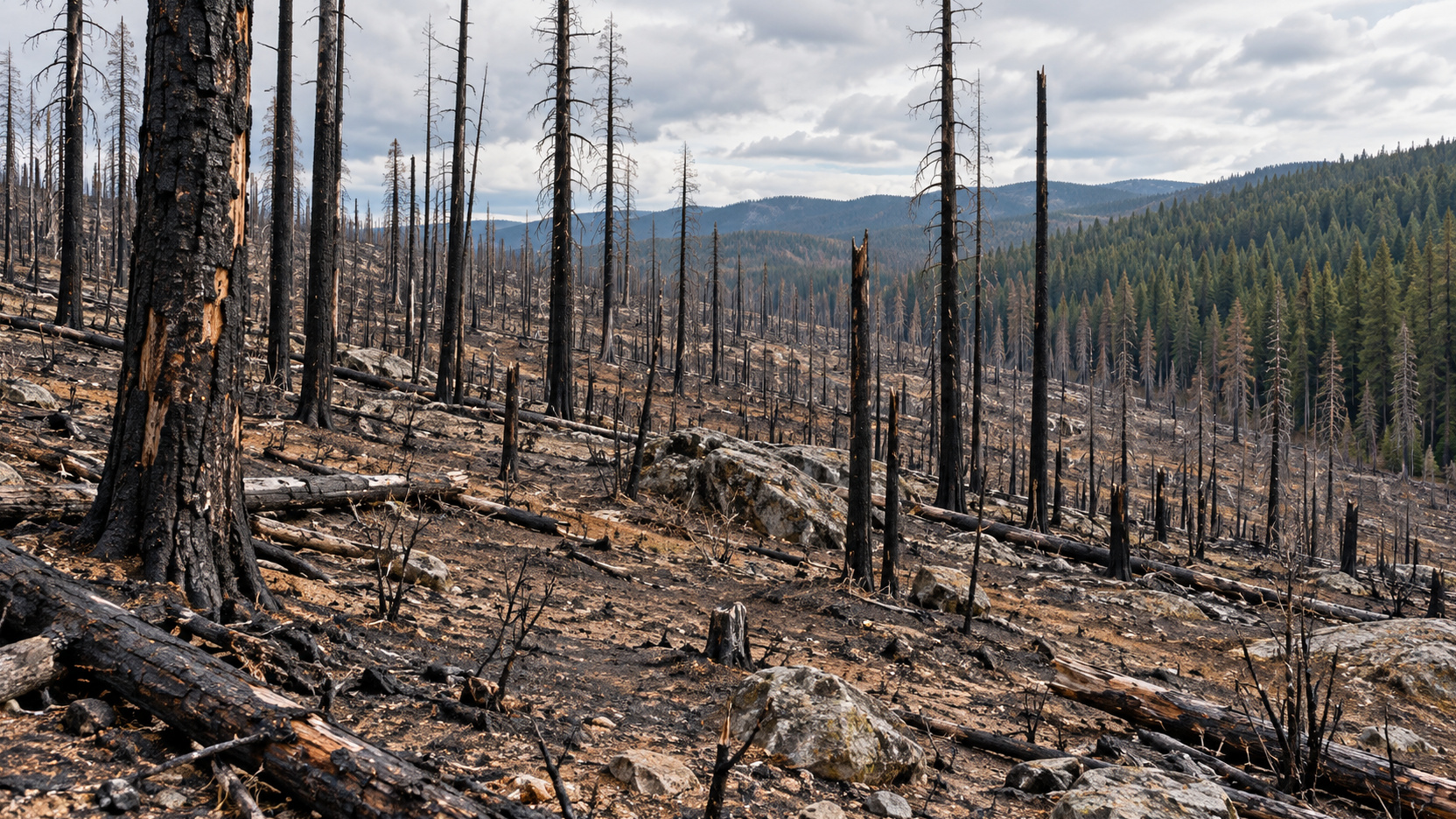
A longer season of fire-conducive weather does not, by definition, prove higher burn severity. Researchers must examine the effects left on the landscape and ask how they relate to weather, vegetation, and other conditions. Parks and Abatzoglou's 2020 analysis examined western US forests from 1985 through 2017 and found increases in annual area burned at high severity across most studied ecoregions. Warmer, drier fire seasons were associated with higher-severity outcomes in many of those forests. This is more specific evidence than simply observing that total burned area rose. It connects a defined ecological measure with climate conditions over a defined historical period.
Two quantities within that result deserve separation. The total area affected at high severity can increase because more land burns, because a larger fraction of each fire burns at high severity, or because both change. A regional graph showing high-severity hectares does not automatically reveal which contribution dominated. Conversely, a stable high-severity fraction could still accompany a larger total ecological footprint if overall burned area increased. That distinction matters for recovery: seed-source distances and the arrangement of surviving forest depend on the size and shape of severely affected patches, not only on their percentage within a perimeter.
High-severity fire is also not inherently an ecological mistake. Some forests have long been shaped by occasional events that kill much of the mature canopy and initiate new cohorts. The concern is whether the frequency, extent, patch structure, and postfire climate remain compatible with regeneration and other ecosystem functions. A familiar disturbance can become disruptive when another arrives before trees reproduce, or when seedlings face conditions unlike those in which their parents established. The historical occurrence of severe fire therefore does not eliminate the possibility of a harmful contemporary shift in its regime.
Land-use legacies change the material available to burn
In some forests historically maintained by frequent surface fire, prolonged fire exclusion has allowed more small trees and understory vegetation to accumulate. That can change both fuel quantity and the vertical connections that allow flames to reach crowns. Removing recurrent disturbance also changes competition for water and light, so the resulting forest is not simply the same stand with extra litter beneath it. These legacies can interact with hotter drought conditions. However, this explanation cannot be transferred indiscriminately to forests that naturally burned infrequently at high severity, or to shrublands where repeated burning itself may be the major ecological threat.
Other land uses alter fire through different routes. Harvesting can leave residues, change stand structure, or create younger vegetation; its effects depend on treatment details and subsequent management. Grazing can reduce herbaceous fuel in one setting while changing plant composition and soil condition in another. Roads can fragment vegetation and improve suppression access while also bringing ignition opportunities. No single label such as managed, untouched, logged, or natural predicts an outcome adequately. The relevant questions concern the material left on the ground, its connectivity, the disturbance history, and the weather under which it eventually burns.
Ignition and exposure belong in the explanation too
Fire weather creates an opportunity, but an ignition is still needed. Human activities can place starts in locations and seasons where lightning would be less likely to initiate burning. The significance of an extra start depends on whether receptive fuel exists and whether the fire escapes early containment. A region can have many small ignitions without extensive burned area, or relatively few starts that grow during exceptionally favorable conditions. Counting ignitions alone therefore gives an incomplete picture of changing fire activity.
Meanwhile, development changes who and what encounters the hazard. Buildings, roads, utility systems, and settlement patterns can increase losses even without a comparable increase in ecological severity. Once structures ignite, combustible building materials and close spacing can introduce spread processes beyond those in surrounding vegetation. A disaster report is consequently not a substitute for a vegetation-severity study. It answers an important but different question: what happened where the fire met people and their infrastructure?
This distinction also changes the response. Reducing greenhouse gas emissions addresses the warming background, and appropriately designed vegetation management can modify fuels in suitable ecosystems. Preventing avoidable ignitions and improving the built environment address other links in the chain. These measures are complementary because they act on different causes. Treating them as rivals encourages a false choice between climate and land management, when a damaging event may reflect both a more favorable burning environment and vulnerable development.
A global total can conceal opposing regional trajectories
Earth's burned-area total combines very different ecosystems and land uses. Large areas of grassland and savanna can dominate that measure, so changes there can outweigh increases in some forest regions. Agricultural expansion, fragmentation, grazing, and suppression can reduce the amount of continuous vegetation available to burn in parts of the world. At the same time, forest fire activity can rise elsewhere under worsening drying conditions. Global empirical research distinguishes controls on burned area, fire size, and intensity precisely because these outcomes need not respond identically. A declining total would not demonstrate that every region became safer, just as a rising forest total would not establish the same trend in every desert or agricultural landscape. The meaningful scale is the one appropriate to the claim. Local residents need place-specific risk information; ecological research needs defined vegetation and severity measures; global carbon analysis requires quantities related to consumption and emissions. Mixing those scales can make an apparently contradictory pair of findings look incompatible when both are measuring real, different changes.
Attribution asks what changed the odds or outcome
Attribution research compares observed conditions with an estimate of a world lacking a particular influence, often human-caused warming. That comparison can concern fuel aridity, fire weather, burned area, or another defined outcome. The answer depends on the method, the region, and the period under examination. A study estimating the warming contribution to a drying trend does not directly assign a fraction of destroyed buildings to climate change. Additional links would need to be studied to reach that conclusion. Keeping the target variable visible prevents a powerful result from becoming an unsupported claim.
Natural climate variability still produces unusually wet or dry years on top of the warming trend. A wet interval can temporarily reduce activity without removing the underlying influence, and a drought can combine natural variability with human-caused warming. Wind extremes, ignition placement, and suppression circumstances can dominate details of an individual event. Multiple contributing causes do not cancel one another. The scientifically useful question is how each factor changed conditions or consequences relative to a defensible comparison, rather than which single explanation deserves ownership of the entire fire.
Read the claim at the scale of the evidence
A strong explanation names the location, the ecosystem, the period, and the quantity that changed. It distinguishes observations from projections and acknowledges whether future estimates assume particular land-use patterns or vegetation responses. Models can help explore warming, but their results are conditional on fuel remaining available and on how people alter landscapes. Those qualifications do not make the results unimportant. They identify the circumstances in which a mechanism operates and the choices that might change its expression.
It is equally important to describe the consequence being avoided. Preserving a seed source, reducing intense flame exposure near a community, limiting soil consumption, and lowering smoke exposure are different objectives. A measure effective for one may not deliver all the others. Monitoring outcomes against explicit objectives is more informative than promising to eliminate severe wildfire altogether. Fire remains part of many ecosystems, and some degree of ecological change is neither preventable everywhere nor necessarily undesirable.
The answer to the title is therefore qualified but substantial. In many fuel-rich forests, human-caused warming increases drying pressure, while weather events and land-use legacies can favor extensive or severe burning. Evidence supports real changes in particular regions; it does not support collapsing the whole world's fire activity into one uniform trend. Human losses also depend strongly on ignition and exposure. Understanding those distinctions makes the problem more actionable: it reveals several processes that can be addressed, rather than turning every devastating fire into either a climate-only story or a management-only argument.