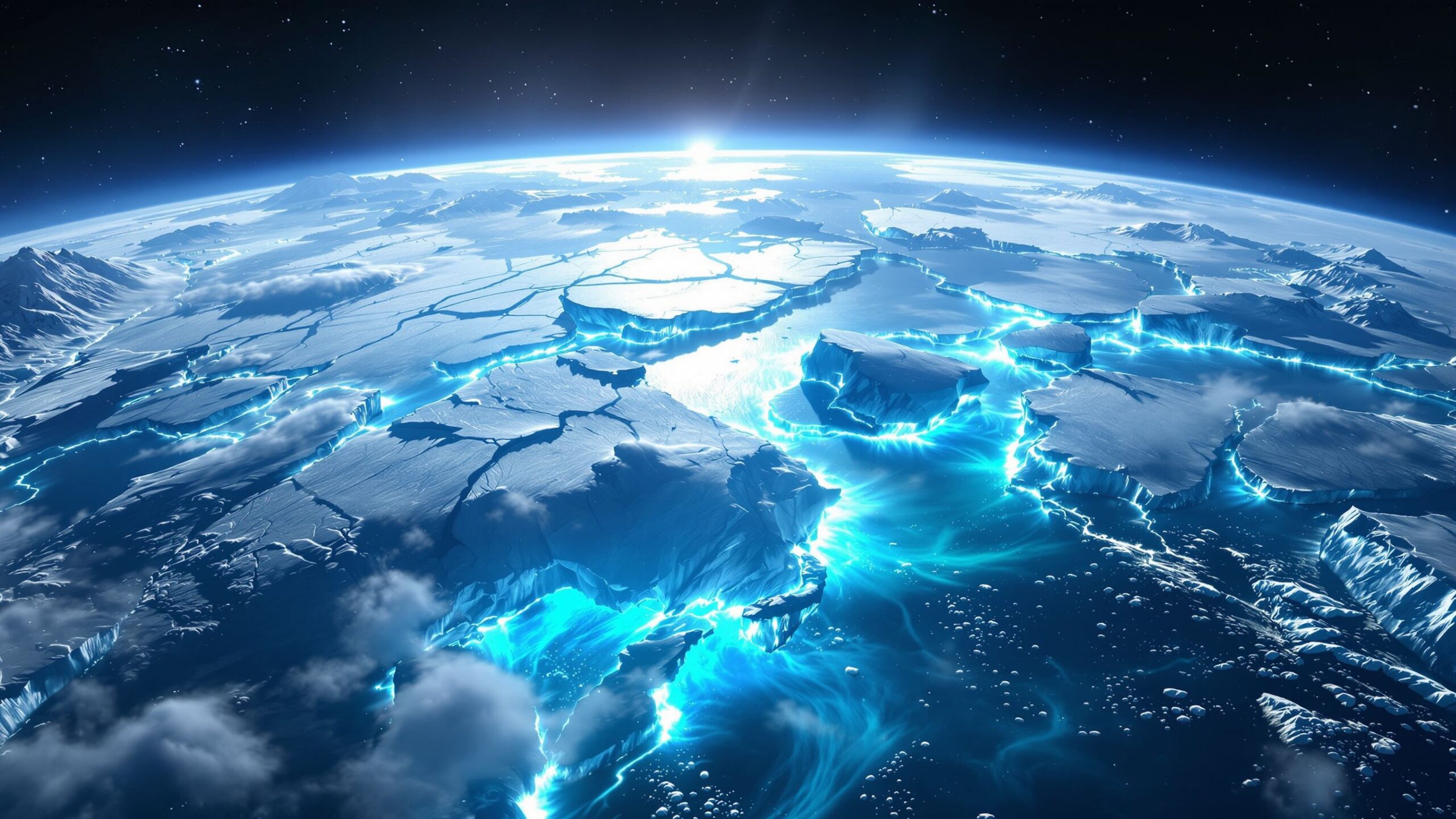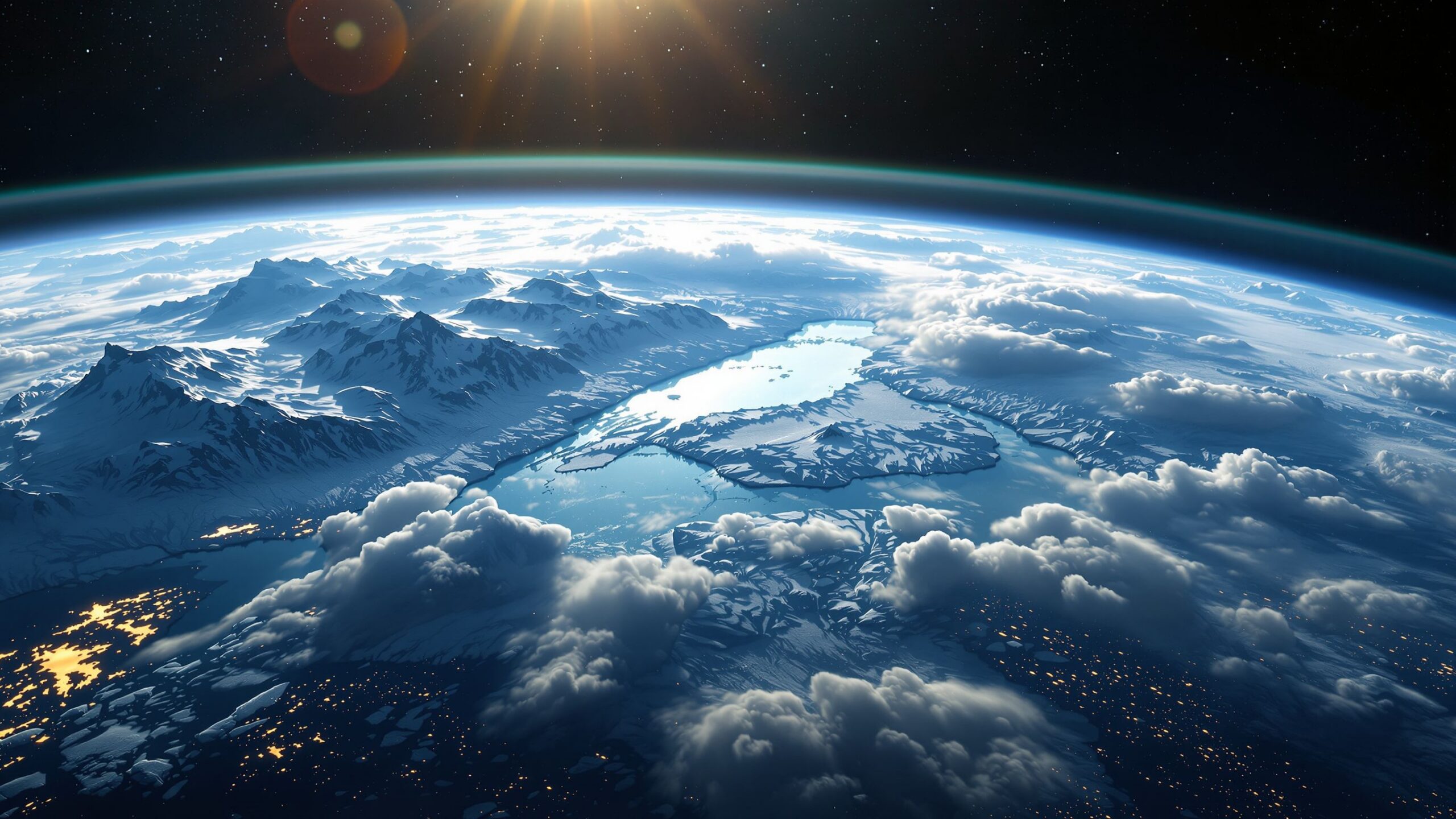
Earth’s climate is powered by a massive interconnected network of systems that constantly move heat, water, and energy around the planet. Among the most important of these systems are the oceans and the cryosphere. Together, they form one of the most powerful climate-regulating mechanisms on Earth. Oceans cover more than 70 percent of the planet’s surface, while the cryosphere includes all of Earth’s frozen water, including glaciers, sea ice, ice sheets, snow cover, permafrost, and frozen ground. These systems are deeply connected and play a critical role in shaping weather, climate, sea levels, ecosystems, and global temperature balance. The oceans act like giant reservoirs of heat and moisture, absorbing enormous amounts of solar energy and redistributing it around the world through powerful currents. The cryosphere, meanwhile, reflects sunlight back into space, stores freshwater in frozen form, and influences atmospheric circulation through its effects on temperature and pressure patterns. Together, ocean and cryosphere systems regulate Earth’s climate and help maintain conditions that make life possible. Scientists study these systems closely because they are changing rapidly as global temperatures rise. Melting glaciers, shrinking sea ice, warming oceans, and thawing permafrost are already affecting weather patterns, coastlines, ecosystems, and communities around the world. Understanding ocean and cryosphere systems is essential for understanding both Earth’s climate history and its future.
A: The cryosphere includes all frozen water on Earth such as glaciers, snow, sea ice, and ice sheets.
A: Oceans store heat, move energy, absorb carbon dioxide, and influence global weather patterns.
A: Melting land ice and expanding warmer ocean water both contribute to rising seas.
A: Sea ice forms when ocean water freezes in polar regions.
A: Glaciers form when snowfall accumulates, compresses, and slowly turns into dense ice over time.
A: It is a global ocean circulation system driven by temperature and salinity differences.
A: Melting ice can raise sea levels, alter ecosystems, and affect ocean circulation patterns.
A: Permafrost is ground that stays frozen for at least two consecutive years.
A: Scientists use satellites, ice cores, research stations, ocean sensors, and climate models.
A: Oceans and frozen regions exchange heat, freshwater, and energy that shape Earth’s climate system.
Understanding Earth’s Oceans
Earth’s oceans are the largest connected body of water on the planet. Although they are divided into five named oceans including the Pacific, Atlantic, Indian, Southern, and Arctic Oceans, they function together as one enormous global ocean system. Oceans influence nearly every part of Earth’s climate and environmental balance.
Oceans absorb vast amounts of solar energy because water has a high heat capacity. This means oceans can store and transport heat much more effectively than land surfaces. During the day and throughout the seasons, oceans slowly absorb heat and release it gradually over time. This process helps moderate temperatures and prevents Earth from experiencing even more extreme climate conditions.
Ocean currents act like massive conveyor belts that transport warm and cold water around the globe. Warm currents carry tropical heat toward higher latitudes, while cold currents move cooler water toward the equator. These movements influence regional climates, rainfall patterns, and marine ecosystems. For example, the Gulf Stream helps keep Western Europe much warmer than many other places located at similar latitudes.
Oceans also play a major role in the global water cycle. Water evaporates from the ocean surface into the atmosphere, forming clouds and precipitation. This process helps distribute freshwater across continents and supports ecosystems around the world.
What Is the Cryosphere?
The cryosphere includes all frozen water on Earth. This includes glaciers, polar ice sheets, sea ice, snow cover, ice caps, frozen lakes and rivers, and permanently frozen ground known as permafrost. Although these frozen regions may appear distant or isolated, the cryosphere has enormous influence on global climate and environmental systems.
One of the cryosphere’s most important functions is reflecting sunlight back into space through a process called the albedo effect. Ice and snow are highly reflective surfaces, meaning they absorb far less solar energy than darker surfaces like oceans or forests. This reflection helps keep Earth cooler by reducing the amount of heat absorbed at the surface.
The cryosphere also stores the majority of Earth’s freshwater. Massive ice sheets in Greenland and Antarctica contain enormous amounts of frozen water. If all this ice were to melt, global sea levels would rise dramatically and reshape coastlines around the world.
Frozen regions strongly influence atmospheric circulation and weather patterns as well. Cold air masses form over ice-covered regions and help drive large-scale climate systems. Changes in the cryosphere can therefore affect temperatures, storms, and rainfall far beyond polar regions.
Sea Ice and Polar Environments
Sea ice forms when ocean water freezes near the poles. Unlike glaciers and ice sheets, sea ice floats on the ocean surface rather than resting on land. Sea ice expands during winter and shrinks during summer, creating seasonal changes that strongly influence polar ecosystems and climate systems.
Sea ice acts as an insulating layer between the atmosphere and ocean. It slows heat transfer and helps maintain cold conditions in polar regions. Because sea ice reflects sunlight efficiently, it also contributes to Earth’s overall cooling effect.
The Arctic has experienced dramatic declines in sea ice coverage over recent decades due to rising global temperatures. As sea ice melts, darker ocean water becomes exposed and absorbs more solar energy. This creates a feedback loop that accelerates warming and further ice loss. Scientists call this process Arctic amplification because warming occurs faster in polar regions than in many other parts of the planet.
Sea ice is also essential for many polar species including polar bears, seals, and penguins. Changes in sea ice coverage disrupt ecosystems, migration patterns, and food chains throughout the Arctic and Antarctic regions.
Glaciers and Ice Sheets
Glaciers are large masses of slowly moving ice formed from compacted snow over long periods of time. They exist in mountain ranges and polar regions across the world. Ice sheets are even larger masses of ice covering extensive land areas, primarily in Greenland and Antarctica.
Glaciers and ice sheets are incredibly important because they store freshwater and influence sea levels. When temperatures rise, glaciers melt and release water into rivers, lakes, and oceans. In some regions, glacier meltwater provides essential freshwater supplies for millions of people.
However, rapid glacier melting also contributes to sea-level rise. As land-based ice enters the oceans, global sea levels gradually increase. Coastal cities, islands, and low-lying communities are particularly vulnerable to these rising waters.
Ice sheets are especially important because they contain enormous quantities of frozen water. Antarctica alone holds enough ice to raise global sea levels by many feet if significant melting were to occur. Scientists closely monitor ice sheet stability because changes there could have major global consequences.
Glaciers also shape landscapes through erosion and sediment movement. Over thousands of years, glaciers carve valleys, create lakes, and transform mountain environments. Many landscapes visible today were shaped by ancient glaciers during past ice ages.
Ocean Currents and Climate Regulation
Ocean currents are one of the most important ways oceans regulate Earth’s climate. These currents move warm and cold water across the globe, redistributing thermal energy between regions. Winds, Earth’s rotation, temperature differences, and salinity all contribute to ocean circulation patterns.
Surface currents are largely driven by global wind systems. Trade winds and westerlies push water across ocean basins, creating large rotating systems known as gyres. Deep ocean currents are driven by differences in water density caused by temperature and salinity variations. This process is often called thermohaline circulation.
One of the most important circulation systems is the Atlantic Meridional Overturning Circulation, which includes the Gulf Stream. Warm salty water moves northward near the surface while colder denser water sinks and flows southward deep beneath the ocean. This system helps transport heat around the planet and strongly influences climate conditions in Europe and North America.
Changes in ocean circulation can significantly affect weather patterns and global climate. Scientists are studying whether climate change could weaken major circulation systems and alter regional climates in the future.
Oceans and the Carbon Cycle
Oceans play a critical role in Earth’s carbon cycle by absorbing carbon dioxide from the atmosphere. Marine plants, algae, and phytoplankton use carbon dioxide during photosynthesis, helping remove greenhouse gases from the atmosphere.
The oceans absorb roughly a quarter of the carbon dioxide produced by human activities. While this helps slow atmospheric warming, it also creates challenges for marine ecosystems. As oceans absorb more carbon dioxide, seawater becomes more acidic in a process called ocean acidification.
Ocean acidification affects coral reefs, shell-forming organisms, and marine food webs. Many marine species struggle to build shells or skeletons in more acidic conditions. Because oceans support enormous biodiversity and global fisheries, these changes may have widespread ecological and economic consequences.
The ability of oceans to absorb heat and carbon has helped moderate some impacts of climate change so far, but warming oceans are also becoming less efficient at absorbing additional carbon dioxide over time.
Permafrost and Frozen Ground
Permafrost refers to ground that remains frozen for at least two consecutive years. Large areas of the Arctic contain permafrost, sometimes extending hundreds of feet below the surface. Permafrost stores enormous amounts of organic material and carbon accumulated over thousands of years.
As temperatures rise, permafrost begins to thaw. This thawing can release greenhouse gases such as carbon dioxide and methane into the atmosphere. Methane is especially concerning because it is far more effective at trapping heat than carbon dioxide over shorter periods.
Thawing permafrost also damages infrastructure including roads, pipelines, and buildings in Arctic communities. Frozen ground that once remained stable year-round becomes unstable and prone to collapse as ice within the soil melts.
Scientists consider permafrost thaw one of the most important climate feedback systems because greenhouse gas releases from thawing frozen ground could accelerate future warming.
Ocean and Cryosphere Interactions
The oceans and cryosphere constantly interact with one another. Warm ocean currents can melt glaciers and ice shelves from below, while melting ice adds freshwater to the oceans and alters salinity patterns. These interactions influence sea levels, ocean circulation, and climate stability.
Melting ice from Greenland and Antarctica is already contributing to rising sea levels. Freshwater entering the oceans can also affect circulation systems by changing water density and reducing the formation of deep ocean currents.
Storms and waves erode coastlines more rapidly as sea ice declines and protective ice barriers disappear. Coastal Arctic communities are experiencing increasing erosion and environmental change because of these interactions.
The relationship between oceans and ice is one of the most important parts of Earth’s climate system. Small changes in one component can produce major effects throughout the entire global environment.
Climate Change and Rapid Environmental Change
Climate change is affecting both oceans and the cryosphere at extraordinary rates. Oceans are warming, sea levels are rising, glaciers are retreating, Arctic sea ice is shrinking, and permafrost is thawing across large regions of the world.
Warmer oceans contribute to stronger hurricanes, coral bleaching, and changing marine ecosystems. Rising sea temperatures also influence weather patterns and atmospheric circulation. Meanwhile, shrinking ice coverage reduces Earth’s ability to reflect sunlight, accelerating warming even further.
Scientists use satellites, ocean sensors, climate models, and polar research stations to monitor these rapid changes. Understanding how ocean and cryosphere systems respond to climate change is essential for predicting future environmental conditions and helping societies adapt.
Many impacts are already visible today. Coastal flooding is increasing, glaciers are disappearing, and Arctic ecosystems are transforming. These changes demonstrate how closely connected Earth’s climate systems truly are.
The Frozen and Flowing Systems That Shape Earth
Ocean and cryosphere systems are among the most powerful forces regulating Earth’s climate. Oceans store and transport heat while frozen regions reflect sunlight, preserve freshwater, and stabilize global temperature patterns. Together, they influence weather, sea levels, ecosystems, atmospheric circulation, and life across the planet.
Although oceans and ice may seem like separate environments, they are deeply interconnected parts of a single climate system. Changes in one area quickly influence the other, creating feedback loops that can either stabilize or intensify environmental change.
As global temperatures continue rising, understanding ocean and cryosphere systems has become more important than ever. Scientists continue studying how warming oceans, melting glaciers, shrinking sea ice, and thawing permafrost may shape Earth’s future climate.
These frozen and flowing systems are not distant environmental features disconnected from daily life. They are essential components of the planetary engine that controls weather, water resources, coastlines, ecosystems, and the stability of Earth’s climate itself.